According to Ibrahim Al Jarwan, Chairman of the Emirates Astronomy Society, temperatures across the UAE are running 3–4 degrees Celsius above the seasonal norm. Although autumn has started relatively dry, precipitation exceeding average levels is expected.
Speaking on Dubai Radio, Al Jarwan noted that residents continue to experience warmer than usual conditions, despite the general improvement in weather as the country transitions into cooler months.
He linked the current weather conditions to the El Niño phenomenon, a natural climatic event associated with warming in the equatorial Pacific Ocean, and suggested that this phenomenon will intensify in October, November, and early December. Furthermore, rainfall above the average level is anticipated.
Al Jarwan reported that during the first week of October, daytime highs typically reach the mid-thirties Celsius, while nighttime lows fluctuate around 22–23°C. However, he mentioned that recent maximum temperatures in most parts of the country have ranged from 37°C to 43°C, citing reports from the National Center for Meteorology (NCM).
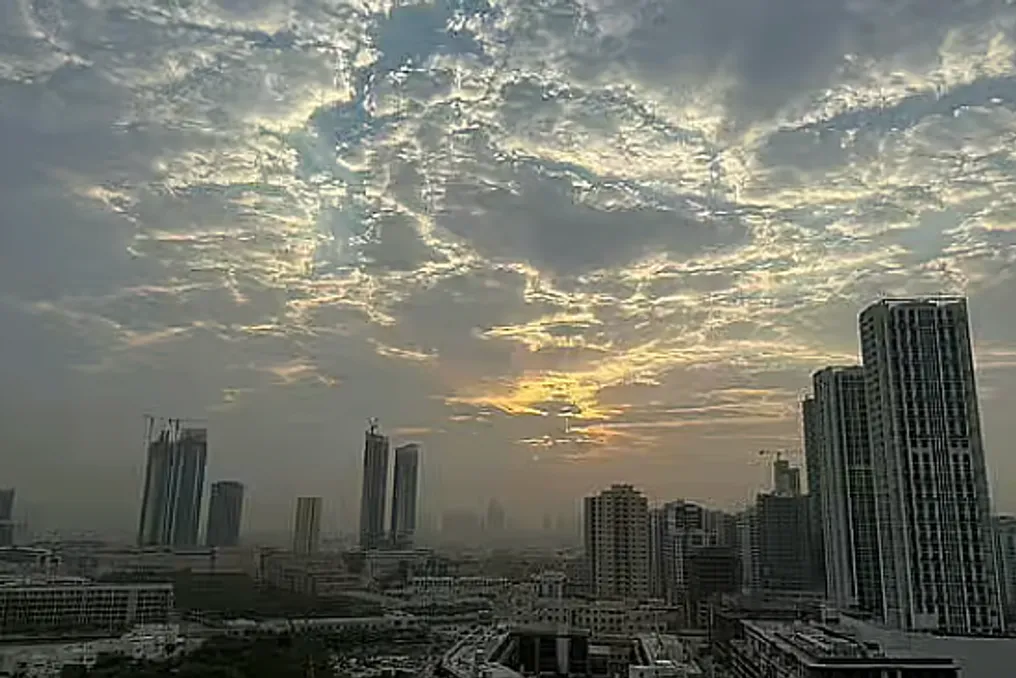
The persistent warmth aligns with the relatively dry autumn conditions he previously predicted. High humidity during this time of year is not unusual; it can exceed 80% in coastal areas and over 70% inland, contributing to morning fog formation.
Al Jarwan explained that fog is characteristic of October and November, occurring for more than ten days in each month. He emphasized that while fog and high humidity are natural phenomena, temperatures remain above average.
Explaining this phenomenon, Al Jarwan noted that temperature changes in the Pacific Ocean can influence weather patterns far beyond the ocean itself. He connected El Niño to increased rainfall in several regions worldwide, including the Arabian Peninsula, but stressed that its impact varies depending on the location.
A stronger episode may be accompanied by more pronounced weather extremes, ranging from drought in some regions to heavy rains or storms in others. He emphasized that El Niño is part of a natural climate cycle, not an environmental problem comparable to ozone depletion.
When Will Conditions Become More Moderate?
Al Jarwan added that as the UAE progresses through the autumn transition period, temperatures are expected to become more moderate. He referred to the local traditional calendar, stating that the country is in the period of 'Durr al-Sittin' and will approach 'Durr al-Sab'in' around mid-October—a time of milder weather before winter, which differs from the period of severe cold in the northern Arabian Peninsula.
Increased cooling may lead to strong winds and rain-bearing systems, although the seasonal wind event he mentioned has not yet occurred.
Previously, in an interview with Khaleej Times, NCM expert Dr. Ahmed Habib had predicted a hotter summer in the UAE compared to previous years. Habib linked the overall regional warming to El Niño but insisted that actual temperatures would depend on the weather systems affecting the country at any given time.
He also explained that the thermal minimum associated with the Indian monsoon system directed hot air towards the southern parts of the UAE, leading to daytime temperatures of 47–48°C at that time. Habib noted that northwesterly winds carrying dry desert air limited cloud formation and rainfall. He added that the main rainy season in the UAE usually occurs from mid-July to mid-August, when the shift of the tropical convergence zone northward allows moisture to reach the country and supports the development of rain clouds, especially in eastern areas and sometimes around Liwa.