CAIR introduces CARES 4.0—a multimodal clinical agent that provides doctors with recommendations, not final verdicts
Read more
Pandaily
pandaily.com

CAIR introduces CARES 4.0—a multimodal clinical agent that provides doctors with recommendations, not final verdicts

The Center for Artificial Intelligence and Robotics (CAIR), part of the Hong Kong Institute of Science and Innovation of the Chinese Academy of Sciences, has introduced CARES 4.0—a multimodal clinical AI agent system. The launch took place at the IV Symposium on Clinical Robotics and Embodied AI, organized by CAIR in collaboration with the Hong Kong Science and Technology Parks Corporation at the Hong Kong Science Park.

CAIR announced the release of the agent framework and general toolkit, as well as the gradual implementation of medical tools. Models for ultrasound and surgical videos will be available on the platform free of charge.

CAIR Director Liu Hongbin told Leiphone that the changes are qualitative rather than quantitative. Previous versions, from 1.0 to 3.0, were tools that answered questions about images or videos, which doctors had to use independently. Version 4.0 is an agent capable of performing tasks.

For example, a department head who needed a report on surgical volume, consumable usage, and patient composition for the previous month previously required assistance from CARES 3.0; now, the agent can compile this report by clarifying the required type of analysis.

The system is built on the Harness agent framework and CAIR's proprietary foundational models for CT, MRI, ultrasound, endoscopy, and EEG. CAIR confirms that the system has been validated in several leading hospitals across three areas: assistance in the diagnostic process from complaint to pathology, answering natural language questions about departmental operational activities (such as equipment loading and case composition), and conducting statistical analysis and simple machine learning models on specialized datasets.

Liu emphasized that CARES functions as an assistant and provides recommendations. He acknowledged that AI can sometimes hallucinate and noted that the primary task is minimizing this risk, especially when providing decision-making advice. The system is designed to follow clinicians' logic by using guidelines and fresh literature structured as data, and every recommendation is accompanied by a chain of reasoning and sources.

Liu stated: 'The doctor is the final decision-maker.' One function already used in clinical practice is spatial risk warning during procedures, which alerts the doctor when an instrument approaches major blood vessels or nerves. For instance, during bronchoscopy at Sun Yat-sen University First Affiliated Hospital, the system might note that a visible thickening on the airway wall is actually part of a blood vessel, and a biopsy in that location could damage an artery.

Liu added that CAIR systems, mostly earlier tools, are used in over 30 hospitals, including workstations for laryngoscopy in more than 10, bronchoscopy in more than four, and ultrasound in more than 10. According to doctors, the most frequent requests relate to reducing effort and clearer information display so that the AI's output is not misinterpreted.

Similar stories

Teenager Rescued from Cliff in Canada After Using Artificial Intelligence for Route Planning
Read more
getaway.co.za

Teenager Rescued from Cliff in Canada After Using Artificial Intelligence for Route Planning

A sixteen-year-old tourist was rescued by helicopter after getting trapped on a steep cliff in British Columbia, Canada. Reports indicate that he used an artificial intelligence (AI) assistant to plan his mountain route.

According to People Magazine, the incident occurred on Saturday, October 3rd. North Shore Rescue received a call about the teenager who was in distress on Mount Crown, near Vancouver.

The teenager, identified by The New York Times as Bryce Vincent Gouriluk, set out from Grouse Mountain intending to tackle a challenging route on Mount Crown, which typically takes seven to eight hours. However, it became known that he used Claude AI along with Google Maps and other tools to plan the trip.

Circumstances of the Incident

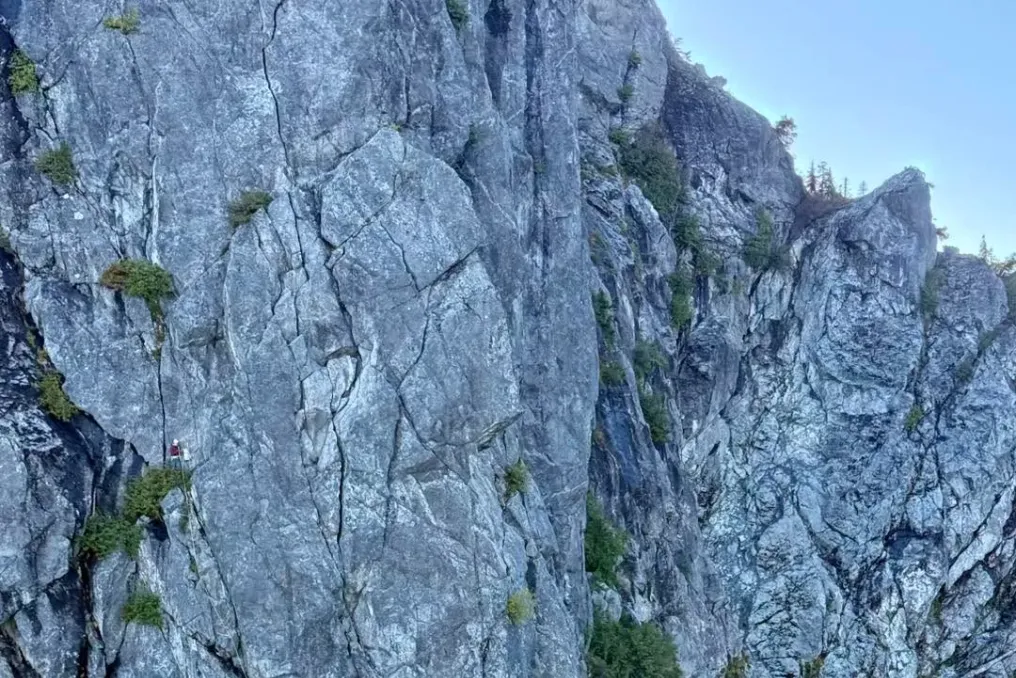
According to search manager Paul Markey of North Shore Rescue, the route led him into difficult terrain where he got stuck on an ascent known as Widowmaker Arete. North Shore Rescue reported that the teenager deviated from the usual tourist path and ended up near the base of the final wall of this route.

Realizing he was in trouble, he cautiously moved forward until the terrain became too dangerous to traverse. He eventually found himself trapped on a ledge along a nearly vertical cliff, where a fall could have resulted in serious injury or death.

The rescue team received the call around 3:30 PM. Due to the steep and inaccessible terrain, a helicopter was required to reach the stranded teenager. Even then, rescuers could not land directly at his location. A rescue technician landed above him and used ropes and additional safety equipment to descend the cliff and reach him.

The teenager was moved to a suitable evacuation point, after which he was lifted into the helicopter. Reports state that he was transported to the rescue base near the Cleveland Dam. Markey told local media that during this ordeal, the teenager was frightened and feared for his life.

Warnings Regarding AI Use

This case has prompted new warnings about the risks of using AI tools to plan nature hikes without independently verifying the route and its difficulty. Markey cautioned tourists against blindly relying on AI-generated instructions, explaining that an AI-based assistant lacks personal experience of the terrain or a specific recommended route.

The teenager admitted that he made a mistake by entering a dangerous climbing zone and did not place the blame solely on the AI tool. His mother, Joelle, told The New York Times that he went out with good intentions, but receiving a call that her son needed a rescue helicopter is not what any parent would want to experience.

The incident underscores the importance of consulting reliable hiking maps, checking official trail information, and understanding the route's complexity before starting a hike. Tourists should also carry appropriate navigation equipment, assess changing conditions, and avoid continuing when the terrain becomes unsafe. While AI tools can assist in preliminary travel research, they should not replace verified trail information, local expertise, or proper preparation when exploring unfamiliar mountainous areas.

Anthropic launches Claude Haiku 5.5, a faster and more economical AI model
Read more
tecnoblog.net

Anthropic launches Claude Haiku 5.5, a faster and more economical AI model

Anthropic has unveiled Claude Haiku 5.5, presenting it as its most accessible and fastest artificial intelligence to date. This launch follows the Opus 5.5 and Sonnet 5.5 models.

The new model demonstrates potential for various applications, including auxiliary programming tasks, development of customer support agents, and web research.

A notable aspect is the cost-benefit ratio. While Sonnet 5.5, released at the end of September, costs approximately US$ 2 (R$ 10) per hundred thousand tokens, Haiku 5.5 presents 95% lower costs, costing only US$ 0.10 (R$ 0.50) for comparable requests.

In addition to internal comparisons, Anthropic provided data indicating that Haiku 5.5 surpasses GPT-6 Luna, the corresponding version from competitor OpenAI. Access to the new model is already available on the Anthropic platform under the identifier “claude-haiku-5-5”.

Haiku 5.5 represents almost double the capacity of Haiku 4.5. Anthropic's agentic AI functionality allows activities to be executed agilely and with low expenditure, making it advantageous for individuals and corporations using customer service bots. Similarly, everyday queries can be performed faster and at a lower cost.

The pricing established by Anthropic for different types of work deserves emphasis. Essentially, any consumption below one hundred thousand tokens costs less than US$ 0.50 (R$ 2.50), a significantly lower value compared to other AIs available on the market. It is crucial to note that this model is not intended for extensive or deep work, which justifies the usage price.

SpaceX Crew-12 Mission Returns to Earth After Nearly Eight Months on ISS
Read more
cgtn.com

SpaceX Crew-12 Mission Returns to Earth After Nearly Eight Months on ISS

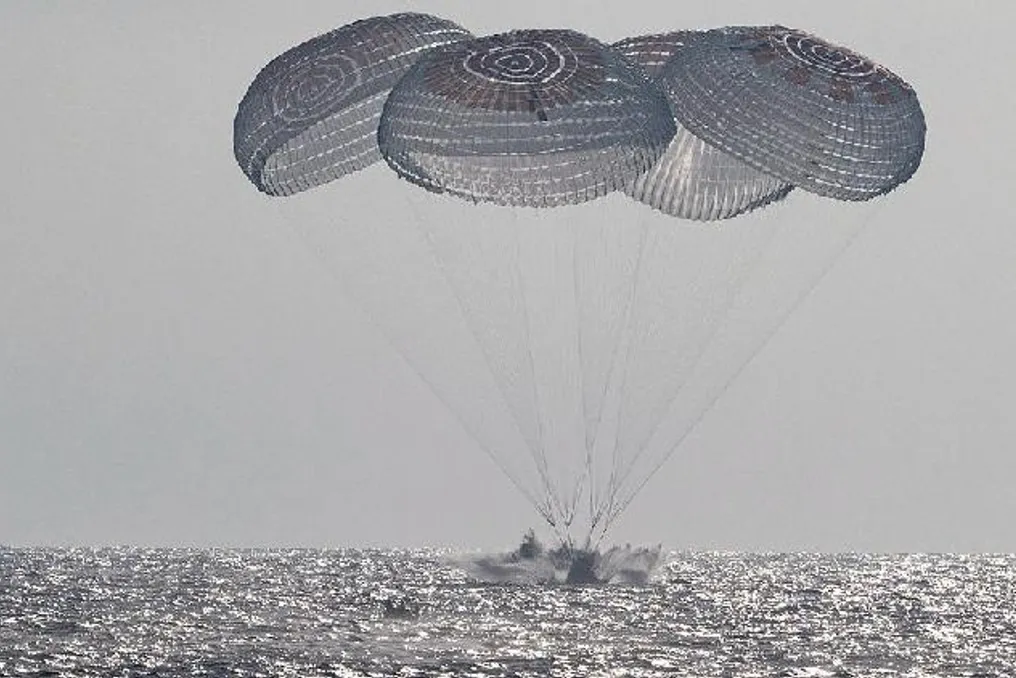
According to NASA data, the SpaceX Crew-12 mission completed its flight and returned to Earth on Thursday, having spent nearly eight months aboard the International Space Station (ISS). Four crew members safely landed in the Pacific Ocean.

The SpaceX Dragon spacecraft detached from the ISS on Wednesday at 8:05 AM Eastern Time (12:05 GMT) and completed a journey of over 27 hours, landing at 11:34 AM Eastern Time (15:34 GMT) off the coast of Los Angeles, California, marking the end of the mission.

The crew included NASA astronauts Jessica Meir, the mission commander, and Jack Hathi; European Space Agency astronaut Sophie Adeno, and Roscosmos cosmonaut Andrey Fedyaev. They were brought out of the capsule one by one.

Jessica Meir expressed joy upon returning to Earth after an 'incredible mission on the International Space Station.'

The crew launched from Cape Canaveral Air Force Base in Florida on February 13 and spent 237 days on the ISS conducting scientific research and technology demonstrations.

During the mission, Sophie Adeno became the first French female astronaut to perform an extravehicular activity outside the station. She performed three such spacewalks on August 18, August 25, and September 1.

Last week, four more new crew members arrived at the ISS, who are expected to remain on the orbital laboratory for approximately six months.

The ISS, which has been continuously inhabited for the last quarter of a century, is scheduled to be deorbited and plunged into one of Earth's oceans around 2030.

Popular