The Career of Cricketer Thami Solekile: Debut for South Africa and Subsequent 12-Year Ban
Read more
Aaj Tak
www.aajtak.in

The Career of Cricketer Thami Solekile: Debut for South Africa and Subsequent 12-Year Ban

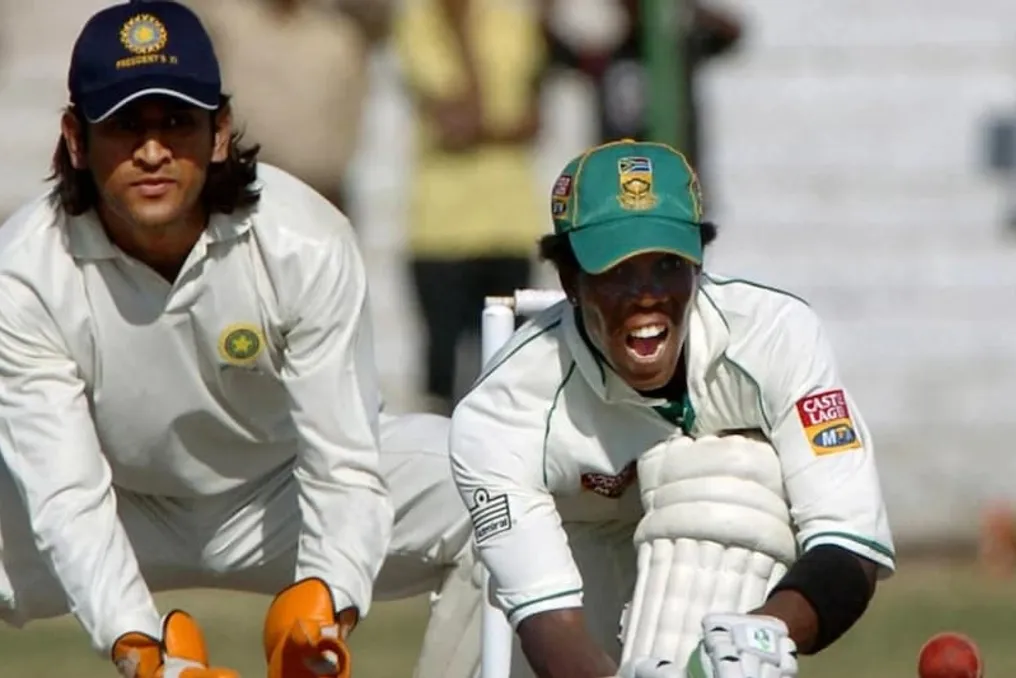
The career path of former South African wicketkeeper Thami Solekile can be compared to the plot of a film. This athlete, who began his journey in the townships of Cape Town and set school cricket records, played for South Africa in Test matches and showed strong results at the domestic level. However, his career ended with a scandal that changed his fate.

Thami Solekile celebrated his 46th birthday on October 9. In 2016, Cricket South Africa imposed a 12-year ban on him. The accusation involved participation in a match-fixing conspiracy during the 2015 Ram Slam T20 Challenge tournament and concealing information about contacts he had.

Solekile grew up in the Langa area of Cape Town and was initially a talented footballer, nicknamed 'Mara' by his friends. His sporting career was built upon a scholarship at Pinelands School, where he made a splash with his skills in attack and goalkeeping. He set numerous key records in Cape Town school cricket, some of which previously belonged to the great South African batsman Jax Callis.

Interestingly, besides cricket, Thami Solekile also showed outstanding results in hockey, representing the South African senior team and scoring a goal in his international debut. Nevertheless, he ultimately decided to make cricket his main profession.

Solekile first played in 2000 as a 19-year-old in first-class format. The following year, he was entrusted with the captaincy of the South African U-19 youth team. His technique and impressive performance behind the stumps attracted selectors' attention. In 2003, he proved his readiness to play for the senior team during the tour of Australia against South Africa A. After this, he was included in the South African Test squad for the trip to England.

In 2004, Thami Solekile got the opportunity to debut in a Test match against India. At that time, after Mark Boucher's exclusion, he was assigned the role of wicketkeeper. He played only three Test matches for South Africa, accumulating 47 points. He could not leave a mark in international cricket as a batsman and soon left the team. After this, his career was suspended for a period, but Solekile returned to domestic cricket and began showing consistently good results, joining the Lions team in 2009.

He also took on the responsibility of captaining the South Africa A team. In 2012, following a serious eye injury to Mark Boucher, Thami Solekile returned to the South African Test squad as a reserve wicketkeeper. It was a chance to prove his abilities once again, but this time he also failed to make the main squad. After this, his international career was practically over.

The darkest phase in Thami Solekile's career occurred in 2016. Cricket South Africa found him guilty of a case related to match-fixing in the 2015 Ram Slam T20 Challenge and imposed a two-year ban on him. He was accused of participating in a conspiracy aimed at influencing the match, as well as concealing information about the fixing-related contacts.

Despite playing only three Test matches for South Africa, his domestic career was quite long and significant. He represented teams such as Western Province, Cape Cobra, and Lions. In 160 first-class matches, he accumulated 5844 runs and made over 500 saves as a wicketkeeper. He is also known as the first Black specialist wicketkeeper to play Test matches for South Africa.
Similar stories

Son's Cricket Memories: From Apartheid Barriers to Farewell
Read more
iol.co.za

Son's Cricket Memories: From Apartheid Barriers to Farewell

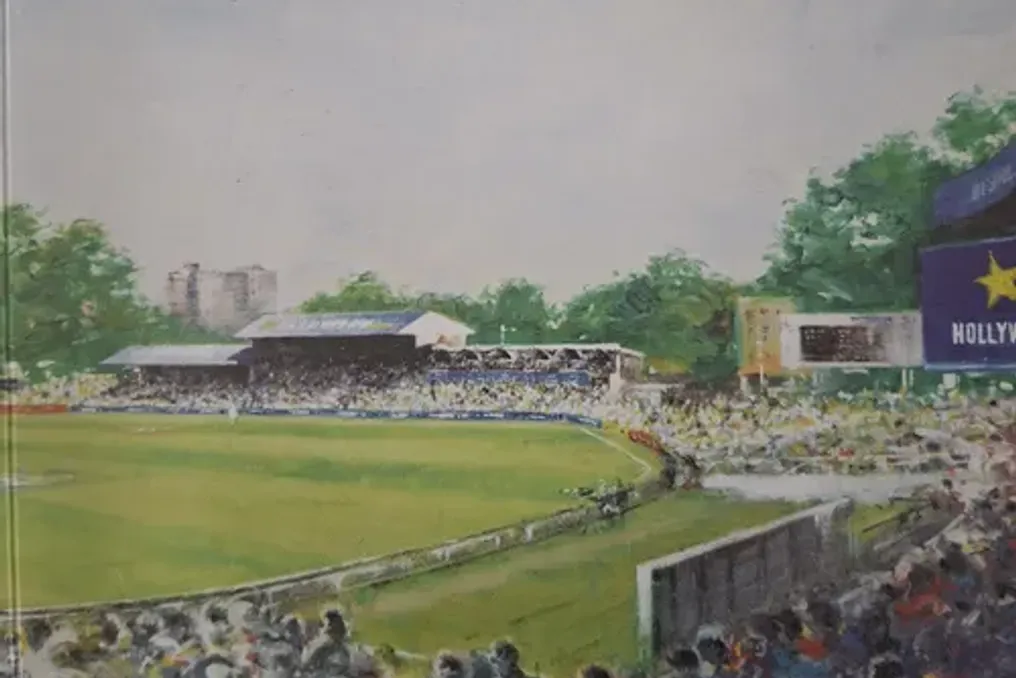
The author shares cricket memories that began back in 1970 when an Australian team visited the local stadium. His mother prepared sandwiches with cheese and tomatoes. At that time, Black people were only allowed a narrow strip of grass to watch the match, limited by hours.

Being the youngest, the author watched the game leaning against the green fence separating the white zone from their spot. He ate the first two sandwiches, carefully packing the rest during the lunch break.

Opinion

In 1992, during a parade through Durban, the author recalls Barry Richards stepping onto the field and taking a stance. The author had already seen Richards play for Natal, noting his ability to pierce the dense field coverage with accuracy comparable to a slipper thrown by the neighbor Auntie Saras. Mike Procter explained that Richards honed his reflexes at school by throwing a ball against the wall and then batting it.

Test cricket was considered a rather formal pursuit, but when Barry Richards was eighty years old, a buzz arose around him. It was interesting whether he would score a century before lunch, as the last such player had been in 1930. Captain Bill Lowry slowed the game while tying his shoelaces, and Ali Baher played the final over before lunch, swinging desperately, and was dismissed.

Richards finished lunch with 94 runs. This impressive innings was overshadowed by Graham Pollock's innings of 274 runs, which surpassed Jackie McGlew's record of 225 not out. Nevertheless, in the author's eleven-year-old mind, Richards' innings, featuring twenty-four fours and one six, was the greatest during the apartheid era at Kingsmead.

The author describes watching a boundary shot and how the players danced along the path toward the so-called mysterious spinner Johnny Giles, who was like a pirouette on a pin. In the humid atmosphere of Durban, all Black people gathered in their zone between the hips and elbows. When Richards batted, Graham Pollock, with an open stance, displayed strength similar to his colleague the artist Jackson, who was said to 'throw pigment onto the canvas like pies.'

While Barry was having lunch, the author searched for his sandwich, discovering ants the size of broad beans had settled under the covers. The tea room for Black people was closed. He wandered around as if hit by Mike Procter's bouncer. A large cricket enthusiast from the other side of the racial divide leaned over and gave him a fatty sausage with sticky sauce, which the author later learned was boerewors.

After lunch, Richards began to dominate. He scored 140 runs off 164 balls, averaging a rate of over 85. Before the author could lick his fingers, he left the field. His father accompanied him on the third or fourth day, and the author desperately wanted Barry Richards' autograph. However, his father placed a hand on his shoulder and forbade him from taking a pen and paper.

The author wonders how his father could explain to his son, who taught him the subtleties of gentlemanly play, that there were boundaries in cricket inaccessible to both of them. He remembers Richards, whose late delivery was simultaneously a stiletto and a chisel, 'that fragile moment,' as Barthes might say, 'when the world freezes, touching both silence and applause.'

It was Richards' last match at Kingsmead. It was also his personal moment, as the boycott of 'apartheid cricket' was gaining momentum. Father and son left for Springfield on Saturday and Sunday. The atmosphere and setting at Springfield Stadium were vastly different from Kingsmead. They spread a mat on the field. The holes were huge, and attempting to run quickly often resulted in getting stuck, so they had to run along the field, moving towards the cover, and then returning to the pitch.

They played cricket, but ran like baseball players. It was impossible to play ground shots because the grass was covered in holes and mounds, and a square drive could bounce back to the wicketkeeper or simply fail to travel two meters. To score runs, the ball had to be lofted high. This created its own problems: when a strong batsman was on the field, the fielders in the adjacent field had to look backward.

Since the fields were situated one above the other without screens, you could sometimes see two bowlers approaching you at sunset. The culmination was lunch with a portion of biryani. His father took a portion, ensuring the author had a potato serving. Like the wicket in Springfield, this piece of starch dissolved at the slightest touch.

When India came to visit, his father and author visited Old Kingsmead. His father behaved like a child, absorbing everything around them while sitting high on the Umgeni side. After a 22-year absence, their first embrace was hesitant, but soon they stood together, as if returning after a long lunch break.

The game ended. His father noticed other men in the stands with whom he had competed in the 1960s and 1970s. They hugged, stared at the empty field for a long time, and then bid farewell. Men who played this game with such dignity under conditions that mocked them. When he took my hand, we did not know that he would never see Kingsmead again, as Parkinson enveloped his body and eventually took his life.

Cricket. Regardless of how well you see the ball or how well you play, your innings will end due to the lack of a reliable partner on the other side. In life, we think a partner can be a friend or even a lover. But what if it is our own father or parent? The person we find already on the field with a respectable fifty runs when we, trembling, take a stance? Someone who calms our nerves with encouragement, whispering advice on how the field plays. Cricket tells stories of wonderful father-son pairs. Stories of feats on the field, honor beyond the boundaries that made generations sigh and cheer. Stories that have also given rise to controversy and debate. Bitterness and regret. For all of us, these stories cannot be forgotten, or we will condemn ourselves to loneliness without history, without home, without playing partners.

Luan Dre Prietorius sets T20 record, surpassing Chris Gayle's achievement
Read more
www.aajtak.in

Luan Dre Prietorius sets T20 record, surpassing Chris Gayle's achievement

In a match within the CSA T20 Challenge, held on Friday (October 2nd), an incredible display in the world of cricket was demonstrated. A young South African player, Luan Dre Prietorius, created a real storm with the bat, breaking a 13-year record.

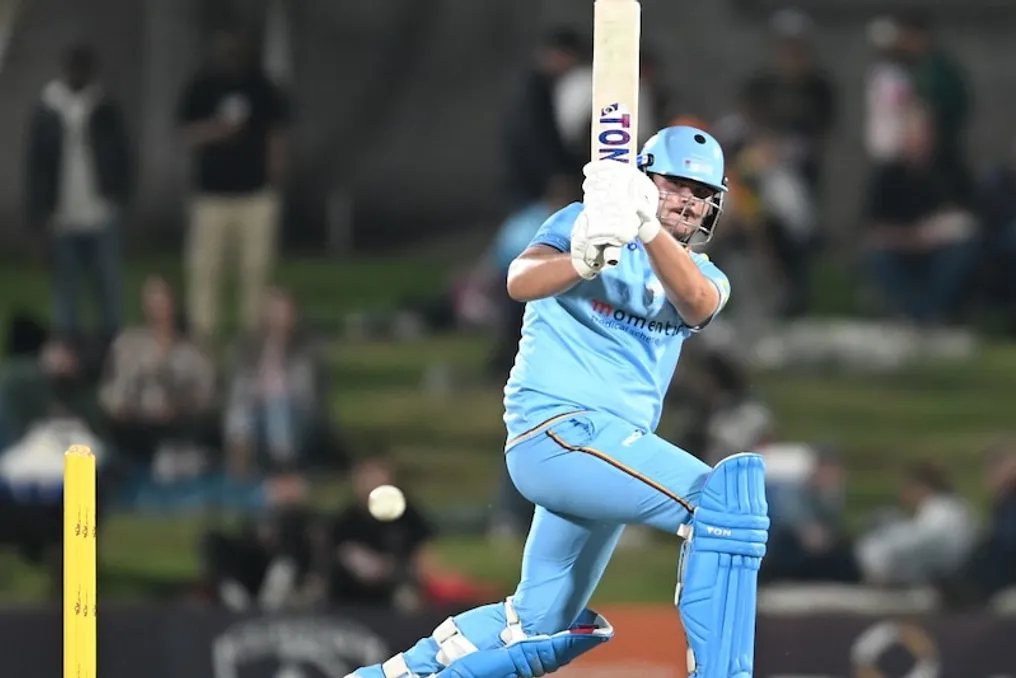
During the game at Mangungu Oval in Bloemfontein, playing for the Titans against the Knights, Prietorius scored 188 runs without getting out in just 79 balls. This left-hander hit 15 fours and 13 sixes in his innings. Through boundaries alone, the 20-year-old Luan Dre Prietorius earned 138 runs.

Thanks to this explosive performance, the Titans managed to score a substantial total of 267 runs, losing only 3 batsmen in 20 overs. In response, the Knights managed to score only 143 runs, allowing the Titans to win by a margin of 124 runs.

Luan Dre Prietorius set a new record for the highest score in a single T20 cricket innings. Previously, this record belonged to the explosive West Indian batsman, Chris Gayle. Gayle achieved this feat in 2013 during the Indian Premier League (IPL), playing for Royal Challengers Bengaluru (RCB) against Pune Warriors, where he scored 175 runs without being dismissed.

Now, after 13 years, Prietorius has surpassed this mark. Luan Dre Prietorius is part of the Rajasthan Royals (RR) team in the Indian Premier League, where Vaibhav Suryavanshi also plays, who showed outstanding performance in IPL 2026. Spectators expected Prietorius to score two hundred runs, given his style of play. He constantly hit powerful shots and kept the Knights players under constant pressure.

However, since the 20 overs were completed, and Prietorius did not receive additional balls to reach the 200-run mark, he fell slightly short of achieving a double century in T20 cricket. His game demonstrated not only aggression but also consistency in scoring. The Titans' score of 267 runs in the innings testifies to Prietorius's high level of play. He single-handedly set the pace of the innings, making it extremely unlikely for the opposing bowlers to recover.

This match also holds special significance for Luan Dre Prietorius, as his career has recently suffered due to injuries. Despite this, he continues to show impressive results after returning to the field. Last month, in a T20 friendly match against Namibia, Prietorius also scored a magnificent century, accumulating 101 runs off 53 balls.

Yudhendra Chahal announced retirement from first-class cricket but will continue playing in white balls
Read more
www.aajtak.in

Yudhendra Chahal announced retirement from first-class cricket but will continue playing in white balls

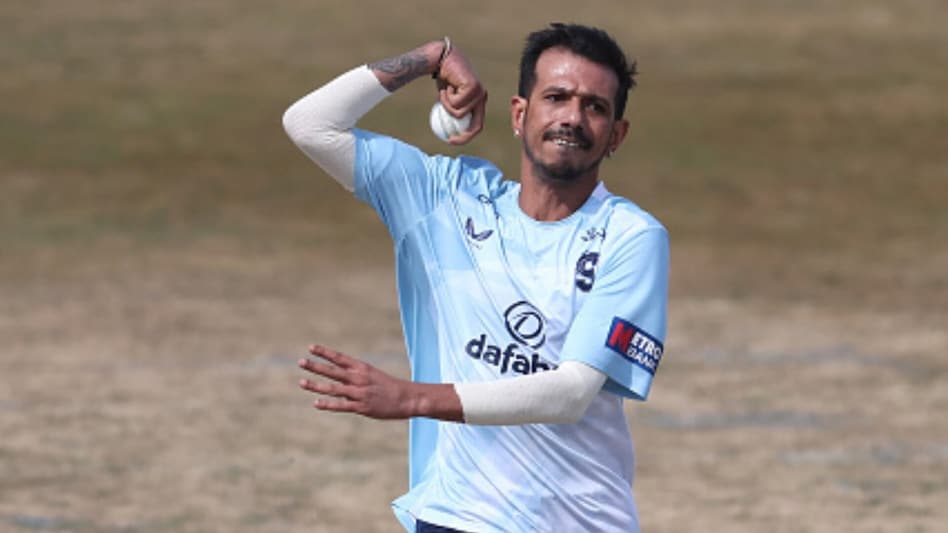
Star Indian leg-spinner Yudhendra Chahal has announced his departure from the first-class format, and this decision takes immediate effect. However, he clarified that he will continue to participate in white-ball games.

Chahal played his last first-class match for Northamptonshire at the historic Lord's ground. Thus, his journey in red-ball cricket is concluded, but he plans to continue playing in white formats.

He shared information about his departure on social media. During his first-class career, Yudhendra Chahal played 49 matches, featuring in 79 innings and taking 148 wickets. He also scored 4777 runs off 9154 balls, with an average bowling figure of 32.27, an economy rate of 3.13, and an average strike rate of 61.8. In first-class cricket, he took five wickets six times and four wickets eight times. His best performance was 6/44, and his best match figures were 9/99.

In his post, Chahal emphasized that his journey in red-ball cricket is over, but he is not leaving ODIs and T20s yet. He stated that his desire to play for his country remains, and he will put forth all effort to get a chance to return to these two formats.

What Chahal wrote in the post about retiring from first-class cricket

He recalled how at the age of ten he first held a red ball, and at that time, he had no idea how deep his love for this sport would become. For him, the red ball was never just another format; it was here that he understood the true joy of patience, character, the ability to fight, and to battle for every run and every wicket, spending many hours on the field.

Chahal noted that his last first-class match was at Lord's, and this word evokes strong emotions for him, as wearing the captain's cap in Tests has always been his dream. Although this dream may not have been fully realized, he is sincerely satisfied with his journey and very grateful for every opportunity he received in this format. Red ball cricket gave him the most beautiful memories of his life, and no one can take that away.

However, he added that his journey is not over. The desire to play for his country is still alive. He is confident that there is still play left in him, and he is ready to give everything to get another chance in ODI and T20 formats.

He expressed special gratitude to the Haryana Cricket Association, Mr. Ranbir Singh Mahindra, and Mr. Aniruddh Singh Choudhary for their constant support, trust, and maintaining his faith throughout his journey. He concluded that the transition from holding a red ball at the age of ten to playing his last first-class match was truly a magnificent journey.

The buzz around the 'The Last Dance' post

Yudhendra Chahal's social media post caused a stir in the cricketing world on September 23rd. He shared photos from the historic Lord's cricket ground in London, where he was seen among the players, and captioned it simply: 'The Last Dance'. At the time, the meaning of this phrase was unclear, although it began to be linked to his departure from the sport on social media. One user asked a question under his post: 'RIP bhai? (Retirement in plan bhai)'.

Chahal's long absence from the Indian team

Chahal's long absence from the Indian squad was also one of the reasons for speculation. His last ODI match for India was on January 24, 2023, against New Zealand, and his last T20I was on August 13, 2023, against West Indies. Chahal played 72 ODIs and 80 T20Is for India. He was part of the Indian team at the 2024 T20 World Cup but could not play a single match during the tournament. He did not return to the Indian squad until February 2026.

Could 'The Last Dance' mean something else?

While many linked Chahal's post to retiring from sports, this was considered premature. There was another reason. Chahal played for Northamptonshire in the 2026 County Championship season, and this post might have been related to the last match of his county period. Chahal remained active in franchise cricket, rejoining Northamptonshire for the 2026 season. In the IPL, he played for Mumbai Indians (2011-13), Royal Challengers Bangalore (2014-21), Rajasthan Royals (2022-24), and Punjab Kings (since 2025). In county cricket, he played for Kent in 2023, and then for Northamptonshire from 2024.

Popular