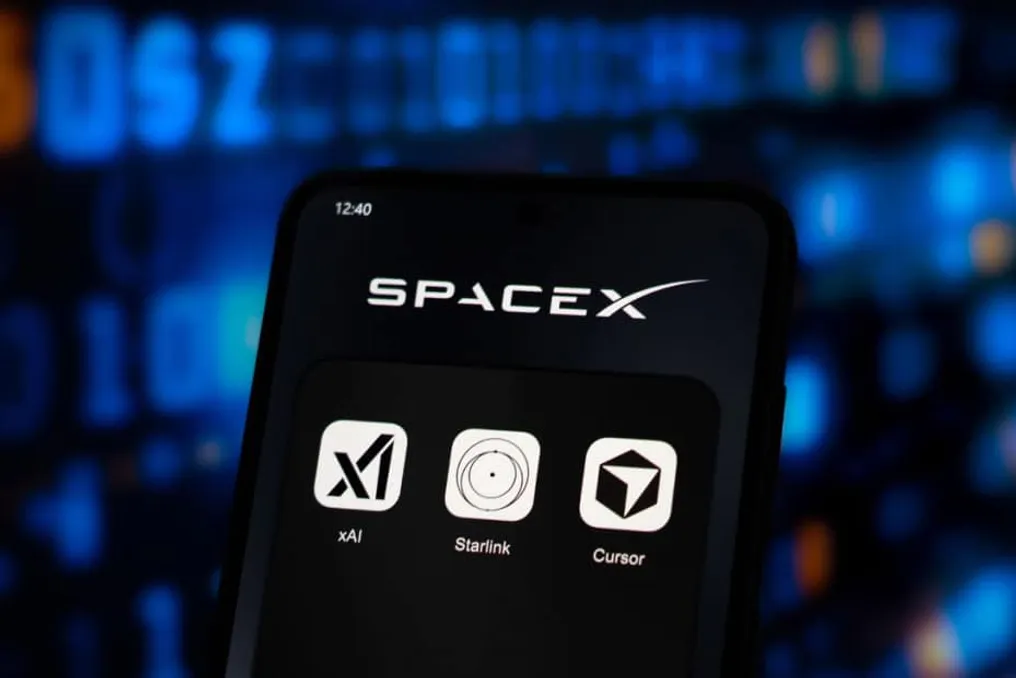
SpaceX acquires spectrum portfolio in the US to expand Starlink Mobile
Read more
Olhar Digital
olhardigital.com.br

SpaceX acquires spectrum portfolio in the US to expand Starlink Mobile

SpaceX recently announced an agreement to acquire a national spectrum portfolio in the United States. This move aims to bring the Starlink satellite internet service closer to the telecommunications market, placing the company in greater competition with major carriers such as AT&T, Verizon, and T-Mobile.

Following the announcement, the shares of the three carriers dropped during trading after the market closed. The deal involves purchasing the spectrum portfolio belonging to Grain Management, a company specializing in digital infrastructure. The completion of this operation is subject to approval from the U.S. Federal Communications Commission (FCC).

According to SpaceX, this portfolio covers licenses for up to 14 MHz of paired spectrum in the 800 MHz band. The company considers this frequency crucial for the development of Starlink Mobile, as low-frequency spectrum resolves one of the main remaining technical deficiencies for the service to establish itself as a major mobile carrier in the US.

Elon Musk, CEO of SpaceX, described the deal as a 'very big deal' in a post on the X platform.

Telecommunications Sector Context

This advancement by SpaceX occurs during a period of transformation in the American telecommunications sector. The previous week, T-Mobile, AT&T, and Verizon established a joint venture focused on expanding coverage in currently underserved regions, utilizing both satellite and direct device communication technologies. Starlink did not participate in this initiative.

Additionally, T-Mobile had already removed mentions of Starlink from its promotional materials regarding the T-Satellite service. The new agreement signals SpaceX's intention to increase Starlink's presence and compete directly with major American carriers, rather than relying solely on collaborations with them.

Tim Farrar, a consultant at TMF Associates, commented that the transaction intensifies the rivalry between SpaceX and mobile carriers, stating: 'This further increases the competition between SpaceX and mobile carriers.' However, Farrar noted that the amount of acquired spectrum is still limited. He pointed out that, to ensure stable coverage inside buildings in urban areas, SpaceX would need to install ground antennas.

Despite this limitation, the acquisition represents another significant step for SpaceX to expand the reach of Starlink Mobile and compete directly in the United States mobile telephony market.

Similar stories

Starlink to receive 15 thousand new satellites to compete with telecommunications operators
Read more
tecnoblog.net

Starlink to receive 15 thousand new satellites to compete with telecommunications operators

Starlink has obtained approval from the US regulatory agency to place an additional 15 thousand satellites into Earth orbit. This new satellite configuration will include functionalities previously exclusive to phone operators, such as native calls and access to streaming services, in addition to broadband internet.

The Federal Communications Commission (FCC), the equivalent body to Anatel, granted permission for these new launches last Tuesday, October 6th. These devices signal the beginning of Starlink Mobile, a SpaceX service focused on mobile telephony. In the United States, the company will directly compete with major companies such as AT&T, Verizon, and T-Mobile.

In Brazil, Starlink recently surpassed TIM in fixed broadband, registering 65 thousand new connections in August alone, according to data released by Anatel.

Elon Musk's satellite provider is now authorized to offer mobile services through its new fleet. According to TechSpot, at least half of these 15 thousand approved satellites should be launched by 2032, although the first shipment is only expected to enter orbit starting in 2027.

The intention is that, with this expansion, connection speeds will match those offered by the country's three main operators, but in a direct-to-device format. This modality promises global coverage, eliminating issues like dead zones, and offering greater stability regardless of location.

Currently, the company provides telephony services in the United States in collaboration with T-Mobile, using 650 satellites located in Low Earth Orbit (LEO).

Starlink's traditional internet service will also be improved soon. A previous approval, made in January, already anticipated the deployment of second-generation broadband satellites.

With these two lines of work, SpaceX is authorized to launch a total of 30 thousand units across both services, adding to the fleet already operating in Earth orbit. Currently, there are approximately 24.5 thousand satellites, including first-generation models and 13 thousand new devices sent at the beginning of this October.

The large volume of satellites operating in Low Earth Orbit raises concerns among astronomers due to interference with celestial observation, in addition to issues such as increased space debris and object reentry into the atmosphere.

India calls Musk's accusations of Starlink blocking unfounded
Read more
www.khaleejtimes.com

India calls Musk's accusations of Starlink blocking unfounded

India has responded to Elon Musk's statements that his satellite internet services are being 'blocked' in the country.

The industrialist claimed that some oligarchs are obstructing access to the service to maintain their monopolistic control, but he did not name the individuals he accused.

The Bureau of Indian Press Information responded to Musk's publication by issuing a statement that the government has established a 'fair and non-discriminatory authorization system for all telecommunication services, including satellite communication services.'

In this message, while calling these claims 'unfounded and erroneous,' there was no direct response to Musk; instead, it addressed a post circulating on social media regarding the fairness of India's regulatory framework for satellite communications.

It was further clarified that each licensee is obliged to demonstrate compliance with security requirements, which aims to 'ensure the fulfillment of various security requirements provided by the services' for data protection. It was added that a security assessment is currently underway for all three licensees.

The Ministry of Communications also reported that after this process is completed, licensees will be able to apply for spectrum allocation. It was noted that all three organizations applying for a license 'are at approximately the same regulatory stage.'

Musk's Starlink is available in over 150 countries worldwide and recently received approval from UAE authorities.

Popular