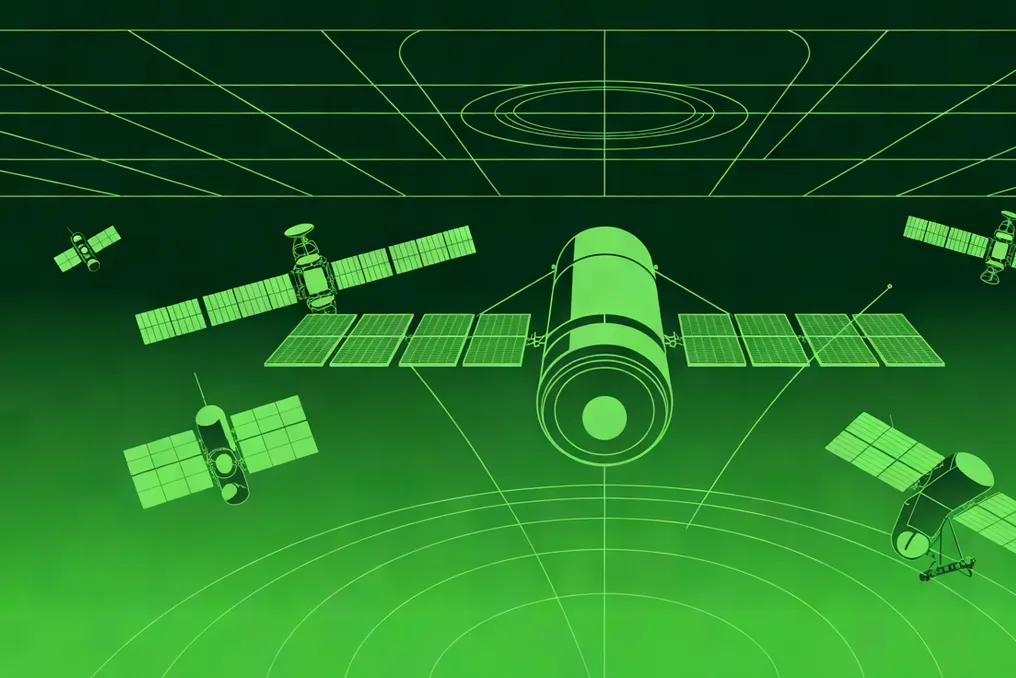
Fortastra, a space technology company based in California, has successfully raised $30 million in a Series A funding round. The round was led by First In, with participation from Upfront Ventures, Space Capital, Rsquared, Side Door Ventures, and ATX Ventures; existing investors also participated in the financing.
Fortastra plans to use the capital raised to accelerate the development of its spacecraft and expand its operational activities. The company develops maneuverable satellites designed to ensure orbital security and meet national defense needs. These spacecraft are intended to protect critical space infrastructure from emerging threats.
The company's satellites are positioned near key orbital assets, conducting surveillance and being ready to respond if abnormal situations are detected. The main goal is to provide continuous protection across various orbital zones, not just in one. To achieve this, the company is focused on the rapid production of a large number of spacecraft.
Fortastra's approach combines intelligent autonomy with modular design, allowing for the efficient deployment of fleets and coverage of a large area. This platform is designed for faster production and greater mission flexibility. The company's headquarters are located in Torrance, California.
Founder and CEO Mike Smyde leads the company following previous work on complex aerospace projects. Fortastra has already achieved several early successes, including the launch of the Watchdog V0 platform and securing initial government contracts.
The Series A funding will support Fortastra's growing engineering and operational teams. The company places significant emphasis on onboard software, navigation systems, and autonomy, while also developing advanced perception systems for spacecraft. These systems will allow for the identification of surrounding objects and real-time situational assessment.
Rendezvous operations remain a central element of the company's technological strategy. Fortastra aims to reduce the time interval between spacecraft design, manufacturing, and launch. Furthermore, the company is expanding its production base to increase the rate of vehicle output.
Fortastra recently signed a memorandum with Hadrian. This partnership will focus on exploring high-precision machining and additive manufacturing for national security satellites. The company has also appointed Scott Klempner as Director of National Security Product.
Demand for orbital security capabilities is growing in parallel with the development of space infrastructure. Governments and commercial operators now rely on satellites to perform vital services, leading to increasing concern over potential orbital disruptions.
Fortastra believes that its spacecraft can offer more flexible defensive solutions, moving beyond expensive and limited satellite creation programs. The company's long-term strategy is focused on mass-producing protective satellites.
The company expects commercial satellite operators to begin demanding similar capabilities, which, according to Fortastra, may happen sooner than current industry forecasts suggest. This approach also reflects broader changes in national security procurement.
Fortastra intends to transition from early operational success to full-scale production. The new funding will help create the necessary infrastructure for this transition. The company has demonstrated its technologies in initial missions and now plans to develop a more mature spacecraft platform for future deployments.
Fortastra's systems are expected to integrate sensors, propulsion, and onboard autonomy. These features will enable the spacecraft to monitor assets and react to changing conditions. The company is also striving to create a scalable manufacturing architecture. Its long-term vision includes deploying hundreds of spacecraft annually.
This strategy will ensure continuous security coverage across multiple orbital environments and position production speed as a key competitive advantage. Fortastra's latest funding provides additional resources to realize this vision. The company will focus on engineering, autonomy, manufacturing, and mission readiness.