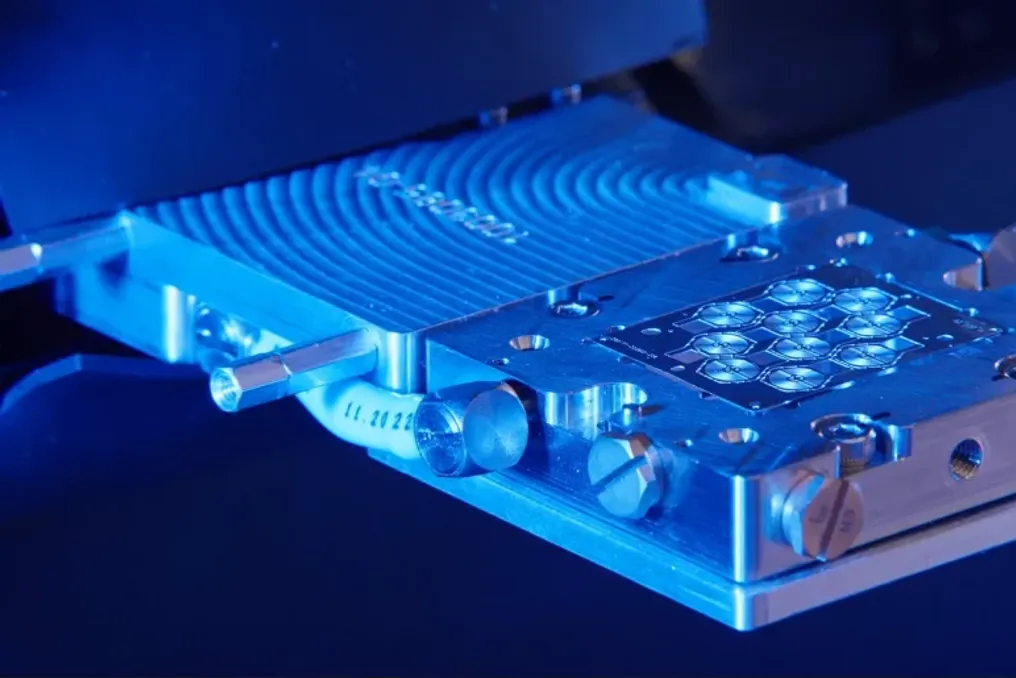
A North American startup, Atomic Machines, is applying artificial intelligence to design and manufacture microscopic components. The company has developed a system called the 'matter compiler,' which converts digital blueprints into physical parts.
According to The New York Times, the first application of this technology is a small electrical switch for data center equipment. Atomic Machines plans to expand the use of the technology to microdrones, motors, and devices capable of conducting medical examinations using a small amount of blood.
The process begins with thousands of experiments. Artificial intelligence analyzes the behavior of various materials when mixed, heated, combined, and tested. Based on the resulting data, the system generates a design, which is then fed into the 'matter compiler'—a sequence of 13 automated machines responsible for manufacturing and testing the components.
As Jeff Holden, founder of Atomic Machines, stated: 'The software compiler yields a digital result. The matter compiler yields a physical result.'
However, automation does not yet cover all stages. Engineers still need to move components between machines and assist in the final assembly of the device. The company aims for the apparatuses themselves to be able to reproduce the design more autonomously in the future.
The technology arose from a specific need. Michel Moeger, who works with power supply equipment in data centers, required a switch capable of quickly detecting dangerous surges and interrupting current. Existing options involved compromises: mechanical models were larger and slower, while silicon ones could cut off current quickly but consumed more energy and generated significant heat.
This scenario led to the component from Atomic Machines. It is small enough to fit on a fingertip, combines speed and efficiency, and can withstand up to 150 amps of direct current, which is sufficient to charge three Tesla cars simultaneously. Its parts are so tiny that they require observation through a microscope.
To achieve this result, the company also used a different approach compared to the traditional method of manufacturing MEMS (microelectromechanical systems), which integrate miniature electrical and mechanical components into one device. Such technologies are already used in everyday products, such as motion sensors in smartphones and microphones in hearing aids.
The next stage involves the possibility of manufacturing even smaller and more complex structures. Jeff Holden envisions gears and motors capable of controlling 'microdrones.' Among the applications stated by the company is the following:
Eric Meshot, Director of Process Technologies at Atomic Machines, noted that each new device provides an opportunity to expand the database used in the process. 'We are creating real devices. And as we advance, we collect data that can improve this process.'
Currently, human involvement remains necessary. The company's focus is on using the accumulated data from producing new devices to perfect the technology until the machines can perform the majority of the work independently.