Renault presents E-Space Concept, electric minivan that revisits the original design
Read more
AutoPapo
autopapo.com.br

Renault presents E-Space Concept, electric minivan that revisits the original design

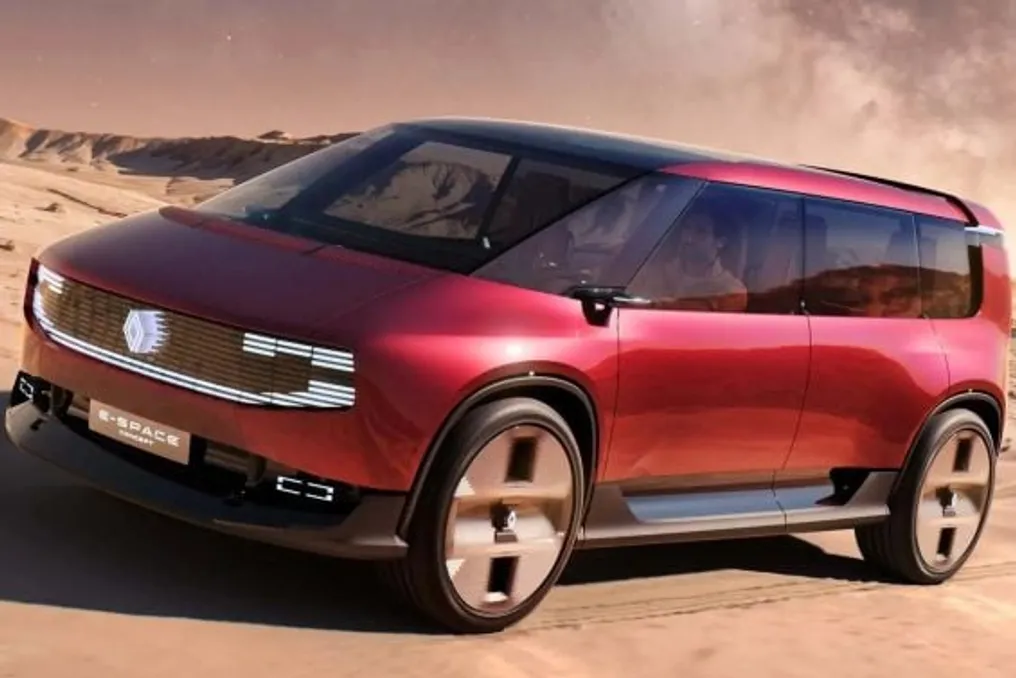
Renault plans to exhibit the E-Space Concept at the Paris Motor Show, an event starting on the 12th. This concept vehicle is an electric minivan aiming to revive the spirit of the original Espace, launched in 1984, bringing back the minivan silhouette in a context where the Espace itself has evolved into an SUV.

Currently, the manufacturer has no production plans for this model; the E-Space was conceived to investigate potential solutions for electric family vehicles. The name combines the 'E' from the E-Tech electric line with the initial letter of the previous name, separated by a hyphen.

The only available image reveals the front section with a sharp incline integrated into the windshield, and the rear section almost vertical, reminiscent of the first generation. The concept features 23-inch wheels, measures 4.70 meters in length, 2.02 meters in width, and 1.67 meters in height, and is presented in Rubis Noir paint.

At the front, there are U-shaped light strips, and the Renault emblem is illuminated, surrounded by light points simulating pixels. This reinterpretation of the past is not new to Renault, which recently relaunched the classic 5 and 4 models as series electric cars.

At the same stand in Paris, Renault will also display the 8 Gordini and 4 JP4x4 concepts. Although the interior has not yet been revealed, the brand has anticipated that it will feature six individual and uniform seats, arranged in three rows on a completely flat floor. The seats have the ability to rotate slightly to facilitate occupant access and exit.

The instrument panel will be dominated by a curved screen measuring 1.13 meters wide by 11 centimeters high. According to the manufacturer, this configuration will be used in future high-end electric models. The original Espace was fundamental in popularizing minivans in Europe, offering up to seven seats with a high roof, elongated cabin, short hood, and movable seats. However, its initial launch faced difficulties, registering sales of only nine units in the first month.

Similar stories

Piketberg business fears new shopping center on N7 highway will undermine city trade
Read more
iol.co.za

Piketberg business fears new shopping center on N7 highway will undermine city trade

Business owners in Piketberg are expressing strong dissatisfaction with the proposal to build a shopping center on the opposite side of the national highway N7. This project involves placing a shopping center, relocating a bus station, and a diesel depot on a plot of about 7.5 hectares along the national road, away from the city center.

Some entrepreneurs are threatening to vote for the opposition or abstain entirely in the local elections on November 4th. Their concern is that motorists and shoppers will stop at the new center on the national road and continue driving further, leading to a decrease in customers for shops and restaurants located in the city center.

Dine Yankielson, whose family owns the Piquetberg Mall shopping center and Spar supermarket, stated that he might not vote at all, and reported that other property owners he spoke with would either support the opposition or abstain from the election.

However, Isaac Rumboll, a surveyor from the firm CK Rumboll & Partners, which submitted the application for the shopping center construction, argued that this development would benefit the entire city. He cited the proverb that 'the rising tide lifts all boats' and emphasized that city stagnation is a problem that should be welcomed.

Local authorities noted that residents can voice objections or file appeals, which has been done, and the decision will be made by the council.

2021 City Center Protection Plan

The municipality's plan recorded the need to 'protect the central business district and existing businesses.' The goal of this plan was to turn Piketberg 'into a destination, not just a stop.'

Lack of Safe Crossing Over N7

People cross the N7 highway without official crossings, which was described as 'very dangerous' in the 2021 plan. Although a pedestrian bridge costing 21 million Rand was designed in 2015, it was never built.

Piketberg is located approximately 130 km north of Cape Town on the N7 highway and serves farms growing wheat, citrus, fruits, and rooibos in the surrounding areas. Farmers and their families travel there from all over the district for shopping from Friday to Sunday. The N7 highway, being the main road between Cape Town and Namibia, also attracts a constant flow of long-distance drivers, many of whom stop at the Winkelshoek petrol station and Spur, rather than in the city, with the Intercape bus using this station as its stop in Piketberg.

The city population was 12,075 according to the 2011 census, with 93% of residents listing Afrikaans as their first language. The wider Bergrivier municipality grew to 70,276 people by the 2022 census.

A Declining Town

During a drive through the town on Wednesday, people were seen living in unsafe conditions in a dilapidated old golf club on the outskirts of the city near the N7. Windows were boarded up, there was a crack on the exterior wall, and a fire was burning in the yard. Inside, tiled shower stalls were scorched by fire, an old sleeping rug lay on the concrete floor, and the walls were covered in graffiti. Two women were drying wet clothes on a line outside.

Richard Yantjies said they live there for free, and that the municipality 'gives them nothing and no help.' Another man sitting nearby, wearing a Freedom Front Plus cap, was asked about his plans to vote for anyone else in the upcoming elections, and both pointed to the cap.

At high temperatures, both of the city's public pools remain empty. The city roads are mostly free of potholes, while old buildings along Voortrekker Street have been renovated by business owners and now house restaurants, guesthouses, and small shops. Residents noted that these improvements were funded and maintained by the businesses themselves, not the municipality.

On the Winkelshoek site, where the shopping center, relocated bus station, and diesel depot are planned, replacing existing shops on an area of about 7.5 hectares, there is a petrol station and a stop.

Center of Outrage

The center of taxpayer indignation is Winkelshoek—a petrol station and restaurant stop at the corner of N7 and R44, opposite the city center. According to a municipal notice dated September 13, 2025, CK Rumboll & Partners acted on behalf of the landowners Winkelshoek Eiendomme and Piquetberg Retail Centre to subdivide, rezone, and consolidate about 7.5 hectares of land. Attached plans showed a new shopping center with restaurants, a relocated bus station, and a diesel depot, with the existing shops on the site slated for demolition. IOL learned that the national supermarket chain Checkers would be the anchor of the new center.

The notice was sent to neighboring property owners, who had until October 13, 2025, to lodge objections. Taxpayers stated that the application had been approved by the municipal planning tribunal, which makes decisions on land use applications, and it is currently being challenged. They claimed they had no influence on the matter.

Van Roo, the administrator head, stated that there are supporters and opponents of this development. He clarified that as an advisor, he does not participate in the discussion and will only be involved if the application is not approved or if an appeal is lodged after approval, when he can consider the appeal as mayor. He noted that the objection is that businesses will be pushed out of the city, and that the objecting parties were given the opportunity to present their arguments.

Van Roo also reported that the municipality did more than just email neighbors about the Winkelshoek application. 'We advertised it in the local newspaper Weslander and on our website,' he said. 'Interested parties were also notified, and information boards were erected.' He added that the homeless settled themselves in the old golf club. 'The homeless entered there themselves. The golf club no longer exists,' he stated. 'As a council, we decided to apply for expropriation of the land to bring it back under municipal control.'

Rumboll, who grew up in Piketberg, noted that the impact of the new shopping center outside the traditional city center had been discussed multiple times. He emphasized that stimulating the city and its economy has a ripple effect and questioned whether the city should be limited to only one shopping center, given that they live in a democracy. He cited Velddrif, also within the Bergrivier municipality, where De Drift Mall is located, and the town of Yzerfontein on the West Coast.

Opponents refer to the district plan developed for the municipality in February 2021 as part of the National Department of Agriculture, Land Reform, and Rural Development project. This plan stipulated that 'the central business district functions well, offering a reasonable range of retail, business, and social amenities to serve the community.' It also reflected residents' calls to 'protect the central business district and existing businesses' during a workshop in January 2020. Furthermore, it repeated strategies in the municipality's spatial development framework, including prioritizing undeveloped land within the city for development 'compared to peripheral land,' and promoting Piketberg 'as a destination, not just a stop' when implementing traffic calming and parking measures to support transit.

Yankielson, who has worked in Piketberg for almost 40 years, has not hidden his interest in this fight. His family opened the first Spar in the city in 1987 and spent about 150 million Rands expanding Piquetberg Mall in the city center, and the new supermarket in Winkelshoek will directly compete with his store. He noted that the mall provides employment for about 450 people among 48 tenants, and his objection was not about the appearance of a new supermarket in Piketberg, but its location. He compared it to Robertson and Worcester, where there are suburban shopping centers, and stated that no one enters the city anymore, and the CBD is turning into a 'ghost town' and declining. He accused the council of being unable to protect its CBD. He also pointed out the lack of one of the two public pools and the unsanitary conditions on the streets. He stated that the municipality fenced off the park to prevent homelessness instead of relocating them, and that about five men in the city using wheelchairs are forced to travel on the road because the sidewalks are unusable. He also noted that the email notification was the only information received by property owners about the Winkelshoek development, and that he, like two schools, lodged an objection. His son Philip checked the 2021 district plan page by page and found that the boundary of the city center ended before N7. Philip stated: 'They specifically designate this area and say: protect the CBD and existing businesses,' and added that they invested based on this.

} , 3.
South African National Consumer Commission reports tens of thousands of vehicle recalls in the last six months
Read more
iol.co.za

South African National Consumer Commission reports tens of thousands of vehicle recalls in the last six months

Over the past six months, the National Consumer Commission (NCC) in South Africa has recalled thousands of vehicles across the country due to safety issues. Manufacturers continue to notify the NCC about mechanical malfunctions or software glitches in already sold vehicles, causing concern among drivers.

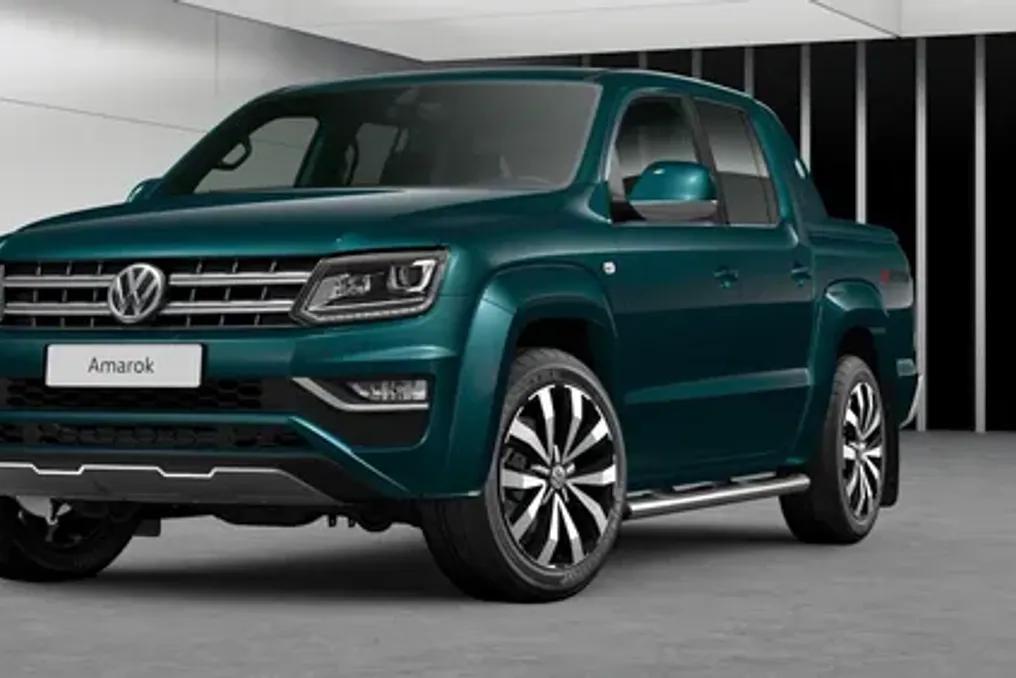
Reports from the last six months revealed numerous instances of recalls across various models. For example, the latest notification involved the recall of nearly 300 VW Amarok vehicles. Volkswagen Group Africa (Pty) Ltd informed the Commission about this recall. A commission representative, Fethu Ntaba, stated that the affected vehicles were sold nationwide between June 2, 2026, and September 15, 2026. The recall affects 291 vehicles in South Africa.

Ntaba explained that according to the supplier, in a side or frontal collision, the curtain airbag might not fully deploy due to contact with an interior cabin component. There is also a risk that sharp plastic parts could detach or remain in the airbag, reducing protection for the driver and front passenger. Furthermore, sharp edges of the guide element could separate or remain in the head or neck contact area, increasing the risk of injury in an accident.

Additionally, over 500 Suzuki Grand Vitara vehicles were recalled due to a fuel warning issue. This recall concerns 543 Suzuki Grand Vitara vehicles that were available for sale through Suzuki dealerships nationwide starting in May 2025. Ntaba noted that the manufacturer warned the commission that the low fuel indicator might fail to illuminate as the fuel level decreases. This could result in the driver not receiving a low fuel warning, potentially leading to engine stalling and inability to restart.

More than 2,500 Toyota Land Cruiser Prado, Lexus GX, Lexus UX, and Jeep Grand Cherokee (WL) vehicles were recalled due to software errors. A total of 2,279 Toyota Land Cruiser Prado vehicles were affected. Ntaba explained that the recall is related to a software error in the instrument cluster. Upon starting, the 3D graphics microcontroller unit may not initialize completely, resulting in a blank image in the 3D graphics area, which is part of the instrument panel.

255 Jeep Grand Cherokee (WL) vehicles were recalled, of which 251 units were sold nationwide between 2023 and 2025. Ntaba added that four vehicles are still with the manufacturer. According to Stellantis South Africa, the airbag control module might have been manufactured with software that can cause persistent pressure sensor failures on the door airbag throughout the sensor's service life.

Also, 41 Lexus GX and Lexus UX vehicles were recalled. These vehicles were available from April 17, 2024, to September 8, 2025, and were sold nationally. Lexus reported that the module in the affected vehicles might have been created with software that can cause persistent pressure sensor failures on the door airbag throughout the sensor's service life.

In August, over 500 Toyota vehicles were recalled. The recall concerned an instrument cluster reprogramming issue, affecting a total of 16 Toyota RAV4 PHEV, four Corolla Cross, 391 Corolla Hatchback, 12 Crown, and 86 GR Corolla. These vehicles were sold through the Toyota dealer network nationwide and were manufactured on the following dates: RAV4 PHEV – from July 8, 2024; Corolla Cross – from July 2, 2024; Corolla Hatchback – from October 7, 2022; Crown – from October 17, 2022; GR Corolla – from February 16, 2023.

NCC representative Fethu Ntaba stated that the affected vehicles are equipped with an instrument cluster system that displays various vehicle data, including indicators and warning signs, sensors, and messages, on a 12.3-inch display monitor located on the dashboard. He clarified that due to incorrect instrument cluster programming, unnecessary data might be repeatedly written to the memory during the instrument's operation, which could lead to premature wear of this device.

In July, the NCC recalled certain models of Nissan Qashqai Sport Utility Vehicle (SUV), Toyota Land Cruiser 300, and Lexus LX600 based on notifications from respective suppliers. Nissan recalled 314 vehicles. According to Nissan, there is a possibility of the fuel tube shifting inside the retaining clip in the engine bay while the engine is running. This movement could lead to fuel tube wear, potentially causing perforation and fuel leakage.

The vehicles were available between May 4, 2021, and September 17, 2024. Toyota recalled 507 Toyota Land Cruiser 300 vehicles, and Lexus SA Motors Pty (Ltd) recalled 124 Lexus LX600 models. According to the suppliers, the affected Land Cruiser vehicles were sold from December 13, 2022, to May 7, 2024, while the Lexus vehicles were sold from December 15, 2022, to May 7, 2024, and exported to Botswana and Namibia.

Ntaba explained that both Lexus and Land Cruiser are equipped with the V35A engine, which contains crankshaft main bearings allowing the shaft to rotate in the engine while running. During a specific production period, manufacturing residues might not have been completely removed during assembly, leading to contamination of the engine unit. If manufacturing residues adhere to the main bearings and the engine continues to run under increased loads, the bearings could fail. This could cause engine knocking, rough engine running, starting difficulties, or engine stalling. Engine stalling while driving can lead to loss of traction, increasing the risk of an accident at high speeds.

BMW recalled nearly 11,000 vehicles due to starter problems. The recall covers BMW 3 Series, 4 Series, 5 Series, 7 Series, X3, and X4 vehicles sold in South Africa since 2016. The recall affects 10,961 vehicles equipped with a Pinion Starter. Fethu Ntaba reported that due to manufacturing factors, the affected vehicles might experience increased wear of the electromagnetic switch after many start cycles. As a result, the engine's ability to start deteriorates, and under certain circumstances, the engine may fail to start.

In June, over 6,500 Toyota and Lexus vehicles were recalled for safety reasons. The recall affects 4,858 Toyota and 1,667 Lexus vehicles sold across South Africa. Affected vehicles include Toyota Crown, Land Cruiser 300 (LC300), Land Cruiser Prado, RAV4, and bZ4X, which were available for sale between 2022 and 2025. Among the affected Lexus vehicles are the ES, GX, LC500, LX500/700, LX600/500d, NX, RX, and RZ, which were sold between 2021 and 2025.

These recalled vehicles are equipped with an Electronic Parking Control Unit (ECU), which is part of the Panoramic View Monitor (PVM) system displaying the rear camera image. The supplier discovered that the software in the electronic parking ECU could cause a brief freezing of the rear view image when selecting reverse shortly after starting the vehicle. In some cases, the rear view image may not display at all.

The NCC also recalled over 300 Hyundai Tucson NX4 N-Line vehicles for safety reasons. The recall affected 337 vehicles sold across South Africa in 2023. The supplier reported that the affected vehicles might have an issue related to the Forward Collision Avoidance System (FCA). Some vehicles may experience unintended emergency braking due to the sensitive operation of the FCA, which could pose a safety threat to passengers and other road users and increase the likelihood of a collision.

The NCC also recalled certain 2022–2026 Range Rover and Range Rover Sport models. This occurred after discovering a manufacturing defect in the side elements of the panoramic roof, which might have been improperly secured during factory repairs. The NCC noted that poor adhesion could lead to the trim weakening or detaching over time, posing a potential risk to road users.

The Audi e-tron GT model was recalled. A safety recall was issued in April for 40 Audi e-tron GT vehicles across South Africa. The vehicles were sold nationally between November 2, 2021, and March 20, 2026. Audi SA informed the National Commission that the recall is related to the bolt connection between the brake pedal input shaft and the brake servo actuator rod, which may loosen. If the connection completely disconnects, braking will only be possible using the controlled emergency braking function.

In the same month, over 100 Land Rover Defender and Jaguar I-Pace vehicles were recalled due to safety issues. Specifically, 60 Land Rover Defender 2026 vehicles sold through authorized dealerships between November 3, 2025, and February 21, 2026, were affected. The supplier reported that the third-row seatbelt anchor might contain a weld pin of insufficient strength due to material contamination during production. This defect could impede the proper functioning of the seatbelt in an accident, increasing the risk of passenger injury.

Jaguar recalled certain 2019–2021 Jaguar I-Pace vehicles sold nationally from June 23, 2019, to June 18, 2021, affecting 67 units. The supplier identified a potential issue affecting the high-voltage battery pack. Under certain circumstances, the battery may overheat, potentially leading to smoke or fire. As a temporary measure, an over-the-air software update was provided to the affected Jaguar I-Pace vehicles, limiting the maximum battery charge level to 90%. Consumers were advised to limit charging to 90%, park vehicles away from buildings, and charge them outdoors where possible.

Among the recalled vehicles was the 2025 Ford Ranger XLT. Over 400 Ford Ranger XLT, Wildtrak, Puma, and Toyota Hino vehicles were also recalled in April. Ford notified the Commission about the recall of 438 units of 2025 Ford Ranger XLT and Wildtrak due to safety issues. The recall concerned vehicles available for sale between February 18, 2025, and March 18, 2025, distributed nationwide. Ford reported that the Exhaust Gas Recirculation (EGR) valve in some affected vehicles might fail, potentially leading to a loss of engine power, typically at speeds below 15 mph (24 km/h). Drivers may also notice warning indicators, such as the check engine light illuminating on the dashboard, sluggish acceleration, engine vibration, or inability to start. Loss of engine power while driving can increase the risk of an accident.
Popular