Five Lessons from Paulo Coelho's 'The Alchemist' on Finding Your Path
Read more
YourStory [india, en]
yourstory.com

Five Lessons from Paulo Coelho's 'The Alchemist' on Finding Your Path

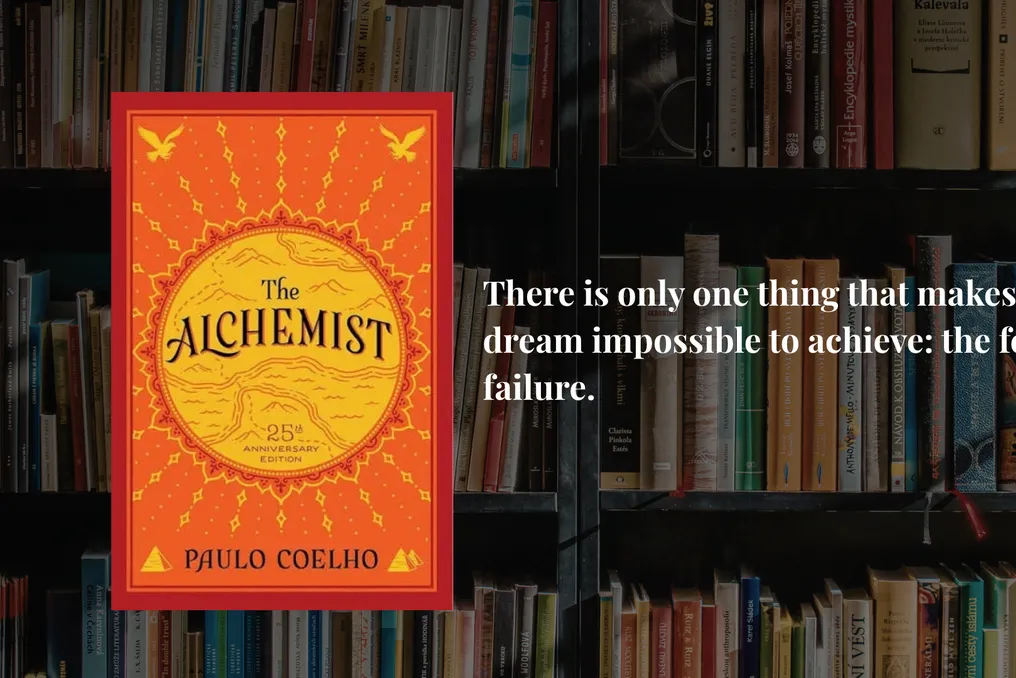
Paulo Coelho's novel 'The Alchemist' deeply inspires readers around the world. Originally published in 1988, the plot follows Santiago, a young shepherd who leaves his familiar life in search of treasure seen in a recurring dream.

Along the way, Santiago meets mentors, faces difficulties, setbacks, and moments of self-discovery that ultimately change his view of life. Although the novel is often perceived as a simple adventure story, its lasting appeal lies in the wisdom woven into Santiago's journey.

The lessons he learns continue to resonate with readers searching for direction, purpose, and meaning in their own lives. Below are five significant lessons from 'The Alchemist' on how to find your path.

At the beginning of the novel, Santiago leads a steady shepherd's life, but he feels drawn to something more. Instead of ignoring his dream, he decides to follow it despite the uncertainty and risk.

One of the book's key ideas is that many people know what they truly want but hesitate due to fear, expectations, or comfort. The search for one's path often begins with close attention to goals and dreams that constantly return to consciousness.

The novel encourages readers to trust their curiosity and take their aspirations seriously, rather than dismissing them as unrealistic.

Santiago's journey requires him to leave behind everything familiar. He travels through unfamiliar cities, takes a new job, and encounters unforeseen obstacles.

His experiences underscore an important truth: personal growth rarely happens when everything remains unchanged. New opportunities often require entering situations that feel uncertain or uncomfortable.

The difficulties Santiago faces are not roadblocks on his path, but an integral part of it. The book suggests that finding one's path often involves accepting change rather than resisting it.

Throughout his travels, Santiago experiences losses, disappointments, and moments when giving up seems like the easier option. Nevertheless, every failure teaches him a valuable lesson.

He gains wisdom through failures, learns resilience through hardships, and develops confidence by overcoming trials.

The novel reminds readers that progress is rarely linear. Sometimes the experiences that seem most frustrating at the moment turn out to be those that teach us the most about ourselves and our life direction.

One reason people struggle to achieve significant goals is the desire for absolute certainty before taking action. Santiago rarely knows what will happen next, yet he keeps moving forward.

The story emphasizes the importance of trusting the process itself. Not every step will immediately make sense, and not every answer will come when desired.

Finding one's path often requires patience and belief that the lessons, opportunities, and connections one encounters will ultimately help them reach the right place.

Although Santiago begins his journey seeking material wealth, he gradually discovers something far more valuable—self-knowledge. By the end of the novel, he has gained courage, wisdom, resilience, and a deeper understanding of himself and the world around him. The treasure itself matters, but the transformation is far more important.

This lesson resonates with many readers because success is often measured only by final outcomes. 'The Alchemist' asserts that the person you become in the process of achieving a goal can be the greatest reward.

'The Alchemist' continues to inspire because its message goes beyond Santiago's adventure. It is directed at anyone standing at a crossroads, doubting the next step, or searching for a deeper meaning to existence.

Its message is simple yet powerful: listen to your dreams, embrace uncertainty, learn from failures, trust the journey, and remember that growth is often the greatest treasure. By doing so, you may discover that finding your path is not about having all the answers, but about the courage to keep moving forward.


Similar stories

Seven books to help make more informed decisions in life
Read more
yourstory.com

Seven books to help make more informed decisions in life

Every day we make decisions that shape our lives. Some of these are minor and quickly forgotten, while others affect our finances, relationships, career, and personal development. However, making the right decisions is rarely simple, as judgments are often distorted by emotions, biases, uncertainty, and external pressure, leading to impulsive actions or ignoring important information.

Fortunately, many outstanding thinkers have explored the mechanisms of human choice-making and ways to improve these choices. The books presented in this list offer practical lessons on critical thinking, psychology, habits, and the decision-making process. They can help readers make wiser decisions, whether they are facing major life changes or simply striving to think more clearly.

Nobel laureate in psychology, Daniel Kahneman, explains the existence of two systems governing human thought: one fast, intuitive, and emotional, and another slow, analytical, and deliberate. His book reveals common cognitive biases that influence decisions without us noticing. By understanding these mental shortcuts, readers can become more aware of errors in judgment and make more thoughtful choices.

The book 'Decisive,' dedicated solely to decision-making, provides a practical framework for improving choices. The Heath brothers explain why people often fall into predictable traps when making decisions and offer strategies to avoid them. From expanding options to testing assumptions, the book provides actionable tools applicable to daily life, although its focus is on finance, the lessons extend far beyond monetary matters.

Morgan Housel examines how emotions, experience, and personal biases influence the decision-making process. His stories demonstrate that success often depends less on intelligence than on behavior, patience, and long-term vision. Naval Ravikant's collection of ideas covers topics such as wealth, happiness, learning, and decision-making. Naval emphasizes the importance of independent thinking, leverage, and long-term perspective, urging readers to focus on what truly matters and avoid decisions based solely on social expectations or short-term gain.

Rolf Dobelli examines dozens of cognitive biases that affect daily decisions. Through short, engaging chapters, he explains why people often misjudge risks, follow the crowd, or become overly confident in their beliefs. Recognizing these biases helps readers make more rational and well-founded choices.

Many decisions become complicated due to the feeling of pressure to do everything at once. Oliver Burkeman offers a fresh perspective, reminding readers of the finiteness of time. His book encourages prioritizing what is most important instead of constantly chasing productivity, providing valuable insights into making decisions aligned with personal values and long-term goals.

Behavioral scientist Katy Milkman investigates why it is difficult for people to make decisions that support their goals and what can be done to correct the situation. Based on psychology and real-life examples, she explains how habits form, why motivation wavers, and how small adjustments can lead to sustainable change. This book is particularly useful for those who strive to consistently make better decisions.

Wise decisions are rarely the result of luck; they arise from understanding how we think, recognizing our biases, considering long-term consequences, and learning from experience. Although the books on this list approach decision-making from different angles, they share a common goal: to help readers think more clearly and choose more wisely. Whether the decisions concern your career, finances, relationships, or personal growth, these books offer valuable knowledge to help you navigate life with greater confidence and clarity.

Five Lessons from Elon Musk on Taking Big Risks and Achieving Growth
Read more
yourstory.com

Five Lessons from Elon Musk on Taking Big Risks and Achieving Growth

Most people strive for growth, but few are willing to take the risks that often accompany this process. Whether it involves starting a business, changing careers, implementing an unconventional idea, or dedicating time to a difficult goal, uncertainty can cause significant fear. It is often the fear of failure that prevents people from taking the first step.

Entrepreneur Elon Musk has earned a reputation as someone who pursues ambitious projects that many considered impossible. His career is marked by bold decisions and significant risks spanning areas such as electric vehicles, reusable rockets, artificial intelligence, and space exploration.

Although not all his endeavors have gone smoothly, his journey offers valuable lessons about perseverance, innovation, and the ability to think outside conventional boundaries. Below are five key lessons from Elon Musk regarding taking major risks and achieving development.

Many people tend to wait for the perfect moment before pursuing their goals. However, Musk's career shows that such a moment rarely exists. When he founded companies in industries where he lacked direct experience, he learned on the job instead of waiting for a complete understanding of all aspects.

This principle emphasizes the importance of taking action. Growth often comes from acquired experience rather than just preparation. While planning is important, endlessly waiting for absolute certainty can become an obstacle to progress.

Elon often spoke about the role of failures in creating something new. For instance, several early rocket launches by SpaceX failed before the company succeeded. These failures were costly, public, and demoralizing, but they became opportunities for learning and improvement.

Taking risks does not guarantee success in itself. Nevertheless, completely avoiding risks can limit growth potential. Viewing failure as feedback rather than a final verdict facilitates further movement forward.

Major risks often require patience. Many of Musk's projects took several years before yielding tangible results. During this time, there were periods of criticism, financial pressure, and uncertainty.

A long-term perspective helps maintain commitment when progress seems slow. Instead of focusing solely on immediate results, it is useful to assess whether daily actions are moving toward a larger goal.

One reason Musk's projects attract attention is that they often challenge conventional assumptions. Whether it is the transition of electric vehicles to mass production or the launch of rockets by private companies, many of his ideas initially met with skepticism.

Development often begins by asking different questions and exploring alternatives. Although not every unconventional idea succeeds, the willingness to think independently can open doors to new solutions and opportunities.

Musk is known for his deep focus on projects he believes in. While his approach is not one everyone will want to replicate, it demonstrates the value of total dedication. Significant goals usually require constant effort. Taking a risk becomes more manageable when supported by consistent work, learning, and persistence. Commitment helps bridge the gap between ambition and achievement.

Taking big risks does not mean acting recklessly. It means being willing to pursue significant opportunities despite uncertainty. Elon Musk's path shows that growth often involves failures, complex decisions, and a willingness to go beyond the familiar.

Whether you are building a career, starting a project, or working on a personal goal, these lessons remind us that progress is rarely achieved in the comfort zone. Sometimes the biggest opportunities arise when a person is ready to take a calculated risk and learn from the outcome.

Popular