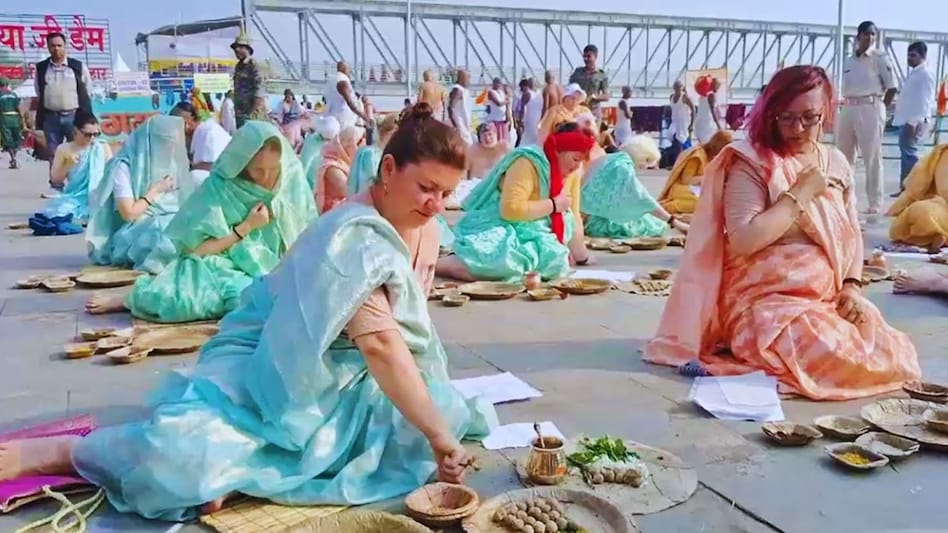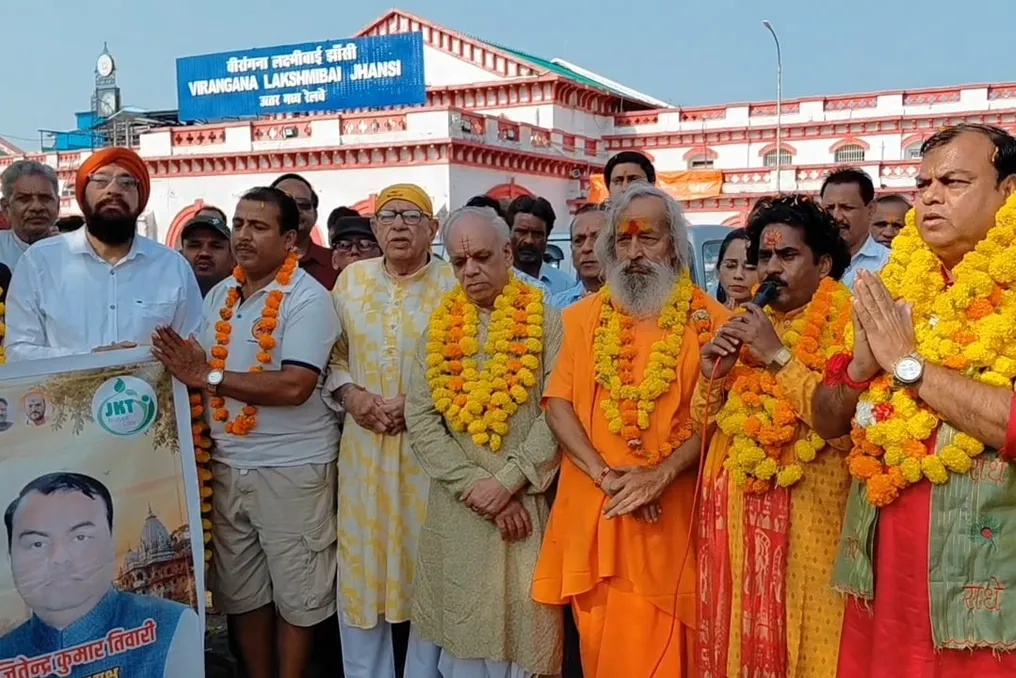
During Pitr Paksha in the holy city of Kashi, not only residents of the country but also pilgrims from various parts of the world join to pray for the souls of their ancestors and wish them liberation. This time, followers of Hinduism residing in countries such as Mauritius, Italy, England, France, South Africa, and Thailand were able to perform Tarpan and Pindadan for their ancestors by connecting to the ceremony from Kashi via Zoom video conference.
During this event, ministers from Mauritius and ambassadors from France and Switzerland conducted their Tarpan and Sharad rituals online.
The ritual was conducted by a spiritual leader
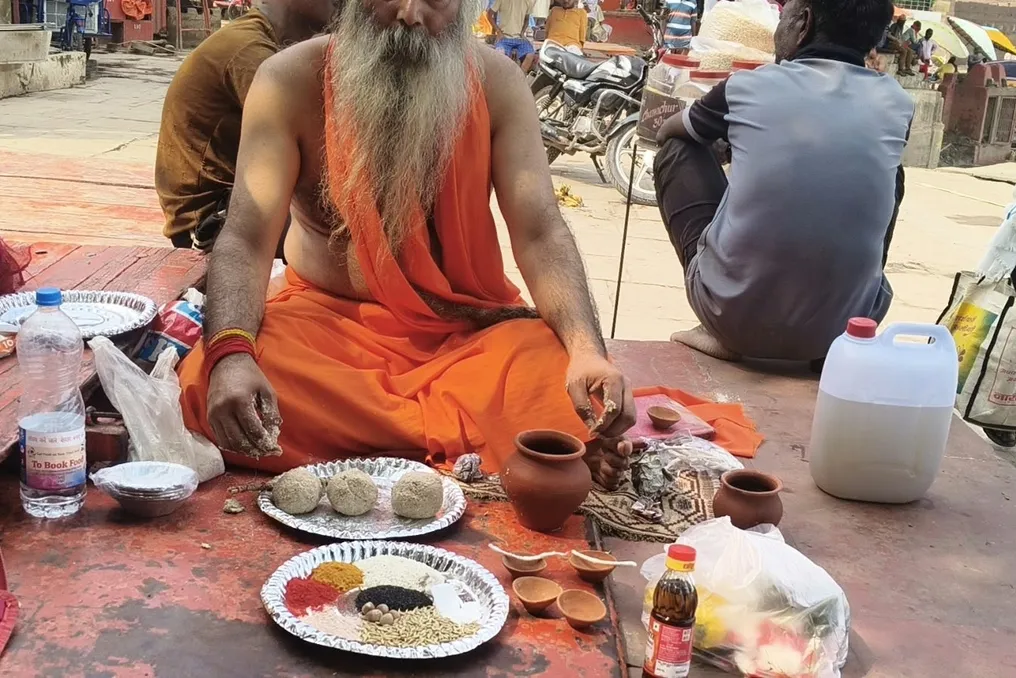
Arunandana Giri, International President of the All India Council of Hindu Saints, member of Niranjani Akhara Mauritius and Mahamandaleshwara of Maa Kamakhyas Temple, conducted the Sharad and Tarpan rituals according to tradition on the banks of Kashi. He stated that most residents from UP, Bihar, and South India reside in Mauritius. He himself visited this country to grow sugarcane and settled there.
Pilgrims abroad received clarification regarding classical traditions and the meaning of Pitr Karma. The process of unification began six months ago, and online Sharad rituals are currently being held. Swami Arunandana specified that approximately 250 people from Mauritius, about 50 from Milan (Italy), and around 20 from England participated in the Tripindi Sharad, totaling over 850 participants, including online attendees.
Oath taken via Zoom, Pindadan performed in Kashi
During the online rituals, pilgrims connected to the meeting via Zoom from their respective locations. When the oath-taking procedure began in Kashi, participants recalled their names, gotras, and the names of their ancestors. Afterward, representatives present in Kashi completed the Pindadan and Tarpan process according to classical methods.
According to Swami Arunandana Giri, it is impossible for the priest to remember the names of all ancestors of a large number of pilgrims. Therefore, the pilgrims themselves take the oath by naming their ancestors. Then, Pindadan is performed according to established rules, followed by Tarpan in the waters of Goddess Ganga.
Significance of Haridwar, Prayagraj, Kashi, and Gaya
Swami Arunandana Giri noted that many residents abroad lack complete information about the classical traditions of Pitr Karma. They are explained that major holy places like Haridwar, Prayagraj, Kashi, and Gaya hold special significance in Pitr Karma. According to this tradition, Tarpan and Pindadan are performed in these places on behalf of the pilgrims.
Tradition of facing south during Tarpan
Sacred scriptures describe specific methods for Pitr-Tarpan. According to belief, Sharad and Tarpan are performed on the same date as the relative's death. If the date of death is unknown, there is a tradition of performing Sharad and Tarpan on Sarvapitri Amavasya. For Tarpan after bathing, clean clothes are worn and one faces south. Water is taken in a copper or brass vessel, mixed with Ganga water, raw milk, black cumin, akshata, barley, and white flowers. After donning sacred robes, water from the ancestor's holy place is poured out. At this moment, the tradition of offering sacrificial water while remembering the gotra and ancestors is observed.
The fact that pilgrims from foreign countries connect to the ceremony from Kashi during Pitr Paksha demonstrates the preservation of ties with Vedic traditions despite geographical distance. Pilgrims from Mauritius, Italy, England, France, South Africa, and Thailand took the oath at their respective locations and performed Tarpan and Pindadan for their ancestors in Kashi.
After Pindadan and Tarpan, Swami Arunandana Giri addressed the pilgrims, informing them that the Pindadan and Tarpan for their ancestors were complete. He also added that the Tarpan ritual would be conducted in Gaya the next day.