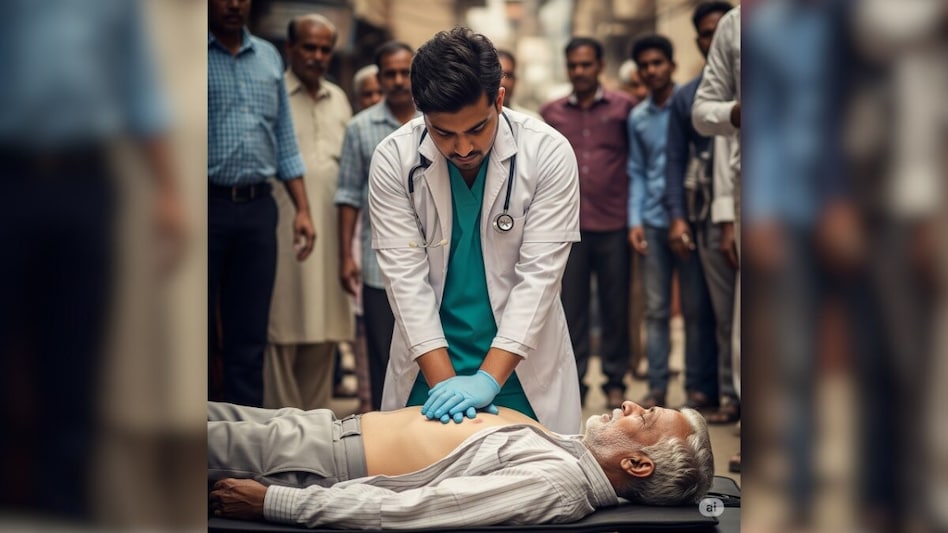
Cardiogenic arrest is an emergency medical condition where the heart suddenly stops pumping blood throughout the body. If timely assistance is not provided, damage to the brain and other vital organs can begin within minutes. This is why it is crucial to perform cardiopulmonary resuscitation (CPR) before reaching the hospital during cardiogenic arrest. A doctor from AIIMS Delhi emphasized the need to raise public awareness about cardiogenic arrest and improve methods to combat it, while also noting the significant role that artificial intelligence can play.
During cardiogenic arrest, the heart suddenly stops beating, leading to a cessation of blood flow throughout the body, and the patient usually loses consciousness. They may stop breathing normally or begin only shallow, intermittent breathing. In such circumstances, emergency help should be called immediately, and if normal breathing is absent, CPR should commence.
Cardiopulmonary Resuscitation as a Vital Emergency Procedure
Dr. Rakesh Garg, Director of the Indian Resuscitation Council (IRCF) and Professor of Anesthesiology at AIIMS New Delhi, provided information on this topic. Dr. Rakesh considers CPR one of the most critical procedures requiring further refinement. As new technologies emerge, the focus must now be on how AI can be utilized to save a patient's life through CPR.
CPR involves continuous pressure on the center of the patient's chest. This maintains a certain level of blood flow in the body, ensuring oxygen reaches vital organs such as the brain, which allows for saving a person's life. CPR helps maintain circulation until medical personnel can provide further assistance. If necessary, the medical team may attempt to correct a dangerous electrical rhythm of the heart using a defibrillator (AED).
Why Are The First Minutes So Important?
According to Dr. Rakesh, every minute after cardiogenic arrest is critical. The faster cardiogenic arrest is recognized and the sooner CPR begins, the higher the chances of patient survival. CPR must be started within two to three minutes of the onset of cardiogenic arrest; any delay can have dangerous and fatal consequences. Therefore, it is extremely important for ordinary people to undergo basic CPR training so they can save the life of someone experiencing cardiogenic arrest nearby.
What is the Role of AI?
Dr. Rakesh noted that AI-based technologies can provide multifaceted support to medical professionals, such as assisting in identifying cardiogenic arrest, monitoring the quality of chest compressions, and analyzing patient data. It is now necessary to raise public awareness about CPR and integrate AI assistance, as this can simplify the process.