Although Transylvania is known for its vampire legends, Romania's best tourist stories lie outside the castle associated with Dracula. In a period exceeding 72 hours, you can discover fortified Saxon villages, hilly terrain, the Carpathian Mountains, rescued bears, and rich regional cuisine.
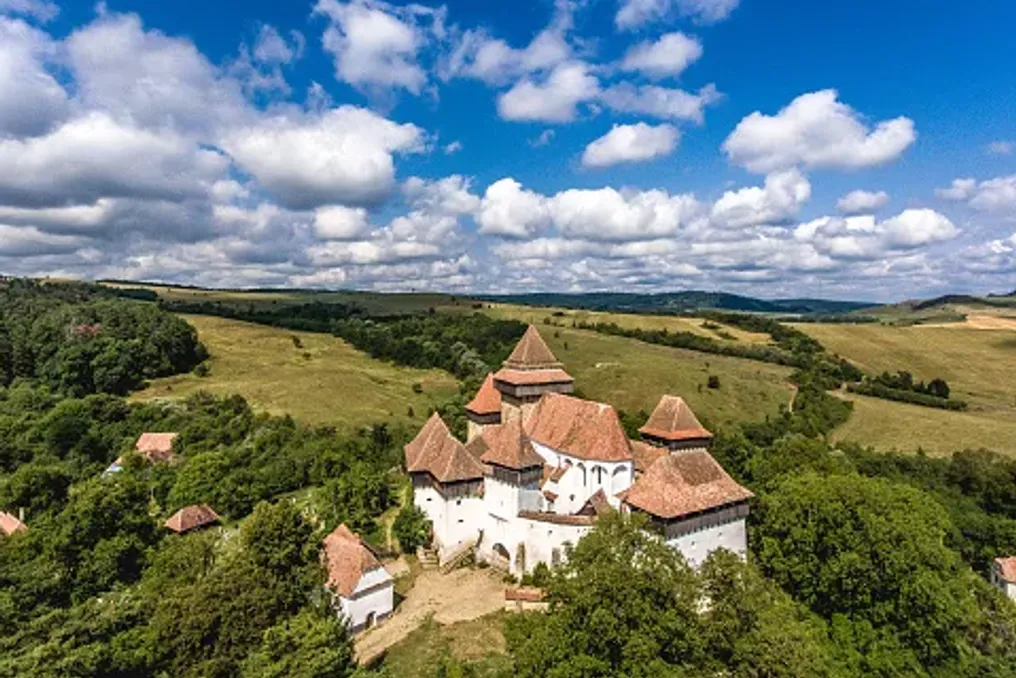
The journey can begin in Viscri, a small village surrounded by the hilly countryside of Transylvania. Its quiet streets, traditional houses, and fortified church offer a glimpse into a completely different side of the region.
Viscri is one of seven villages included in the UNESCO World Heritage site 'Villages with Fortified Churches in Transylvania.' These settlements were founded by Transylvanian Saxons, and their fortified churches reflect the communities and agricultural landscapes that developed here from the late Middle Ages.
The fortified church is situated above the village and features defensive walls and towers that once protected the community. Instead of rushing, it is worth taking time to stroll through the village streets to admire the traditional houses, gardens, and surrounding pastures. The church is open to visitors, although opening conditions may change, so it is recommended to check the schedule in advance.
From Viscri, one can travel through the countryside to Biertan, another fortified village in Transylvania listed by UNESCO. This village centers around its impressive fortified church, which stands on a hill overlooking the settlement. For centuries, Biertan was an important religious center for the Transylvanian Saxons, and its church is surrounded by numerous defensive walls, towers, and gates.
The broader UNESCO landscape is significant because it preserves not only individual churches but also the historical connection between villages, farms, and the surrounding agricultural land. After a day exploring Biertan, one can stop at a village guesthouse or head overnight to Sibiu.
If time permits, it is worth stopping in Sibiu in the evening. Its historic center is also a UNESCO World Heritage site and represents one of the best-preserved examples of a small fortified medieval town founded by Transylvanian Saxons. Walking through the old streets after the daytime tourists leave allows one to notice the colorful houses, defensive towers, and steep alleys leading through the historic center. Although Sibiu is sometimes included in Dracula-related routes due to its connection with Vlad the Impaler, there is much more to the city than just this link; its true appeal lies in its architecture, history, and preserved medieval character.