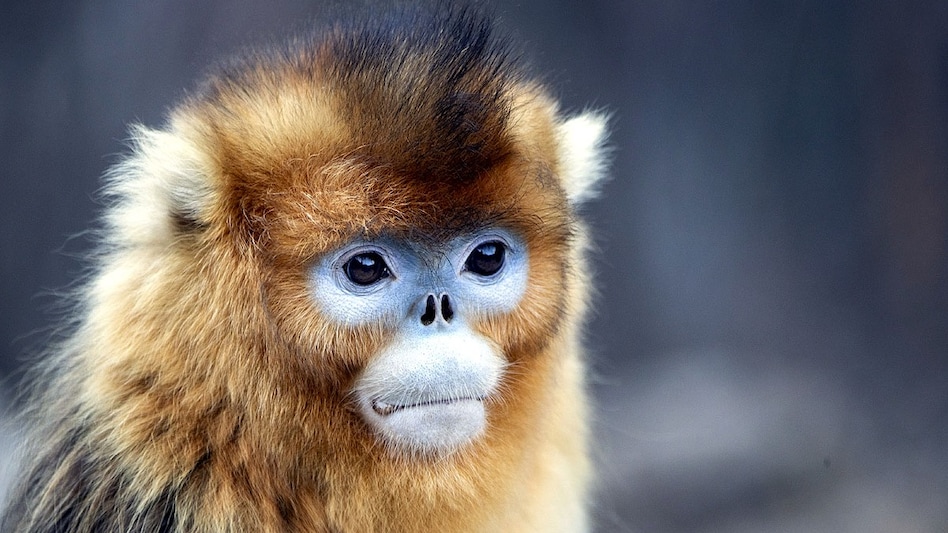
Rain is usually a common occurrence for most animals, but one extremely rare species of monkey from Myanmar experiences difficulties during precipitation. This monkey is known as the Myanmar Snub-nosed Monkey, and its scientific name is Rhinopithecus strykeri. Its nostrils are directed upwards. Local residents claim that when it rains, water gets into its nose, causing it to sneeze.
This species inhabits the mountain forests of the northern Kachin region in Myanmar and is also found in Yunnan province, China. Scientists first identified this species in 2010, and scientific information about it was published in 2011. Today, it is among the rarest monkeys in the world and is listed on the IUCN Red List as critically endangered.
The most distinctive feature of this monkey is its nose: its openings are located on top. The animal's main body color is predominantly black, with white hair around its ears and on its chin. It also has a rather long tail. Scientists learned about the monkey sneezing in the rain from local hunters who reported that raindrops enter its nose, triggering a sneeze.
It was also reported that the animal hides its face between its knees during the rain, but prolonged observation by scientists in the forest did not allow for definitive confirmation of this behavior. Therefore, the information regarding sneezing and hiding its face during the rain is considered anecdotal evidence gathered from local inhabitants.
The Myanmar Snub-nosed Monkey lives in cold and humid mountain forests. According to IUCN data, it is found at altitudes ranging from 1720 to 3190 meters. This species is distributed in both Myanmar and Yunnan province, China, with some groups discovered near the border of the two countries. Scientists have conducted research on these populations.
When this species was first identified, its population was estimated to be around 260–330 individuals. Later, additional groups were discovered in China. According to IUCN estimates, there are currently approximately 350–400 adult individuals remaining. The main causes of population decline are deforestation and poaching. The growth of road and other construction activities in the forests increases human access, which raises the risk of hunting these monkeys.
The Myanmar Snub-nosed Monkey is classified as critically endangered on the IUCN Red List, meaning the species is under very high threat of extinction. According to Fauna and Flora, camera traps are being set up in the forests to save these monkeys, and joint work is being carried out with local communities regarding species conservation. The establishment of Mount Imabum National Park in 2020 also contributed to the protection of the forests where they live. Although this monkey is distinguished by its habit of sneezing in the rain, the biggest threat to it is not precipitation, but the reduction of forest areas and hunting. Conserving their forests is the most important way to save this rare monkey.