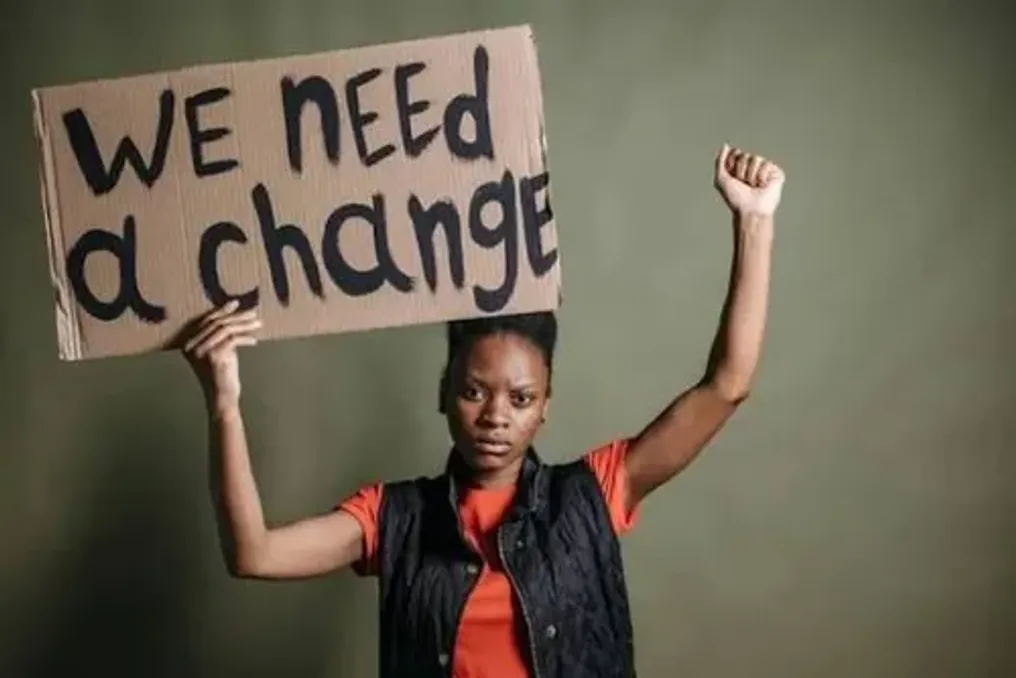
The Interrelation of Gender Inequality and Corruption in South Africa
Read more
IOL
iol.co.za

The Interrelation of Gender Inequality and Corruption in South Africa

Women and girls in South Africa face a dual threat: gender inequality and widespread corruption. Analysis shows how these issues intersect, undermine legal protection, and what innovative reforms are needed to ensure genuine protection and empowerment.

Despite having an extensive legislative and policy framework to protect women in the country, results remain unsatisfactory due to insufficient implementation, compliance, and institutional accountability. This is where the intersection of gender inequality and corruption occurs, preventing them from being treated as separate policy issues.

Corruption is often viewed solely as a problem of criminal justice, but its impact is far broader. It subtly undermines almost all societal development goals, weakens governance, diverts scarce resources, degrades service delivery, reduces investment attractiveness, and erodes trust in democratic institutions. Ultimately, those least able to protect themselves pay the highest price.

Thus, corruption is not just the theft of public funds; it is the theft of opportunity. Any procurement breach, captured institution, or failure in the accountability system can lead to reduced opportunities, weakened protection, and diminished justice for women and girls. Funds lost to corruption cannot be directed towards financing shelters, healthcare, policing, social support, or programs promoting women's economic participation.

The consequences extend beyond resource reallocation. When corruption infiltrates the police, victims of gender-based violence lose confidence in reporting abuse; when judicial institutions are compromised, criminals enjoy impunity; and when authority is abused, corruption becomes not merely a financial offense, but a tool of exploitation and coercion.

Gender inequality and corruption are not parallel problems; they mutually reinforce each other. This relationship is insufficiently studied in both research and policy development. Government departments and agencies are typically structured to address corruption, gender inequality, and gender-based violence through separate mandates and programs, but the lived experience of vulnerable people does not align with these administrative boundaries.

A woman seeking protection from an abusive partner does not perceive the police, healthcare, social services, and justice system as disconnected sectors of policy. She experiences them as parts of a single institutional system. If any part of this system is corrupt, inefficient, or unaccountable, the legal protection guaranteed can become meaningless in practice.

Therefore, governance reform and gender equality must be implemented as a single, integrated agenda. They will develop together because a strong society requires strong institutions. Trust cannot flourish where institutions fail; development cannot exist sustainably where governance is weak; and democracy cannot thrive when citizens lose faith in the honest, transparent, and publicly beneficial work of government bodies.

This understanding has prompted the Institute for Inclusive Society to view governance reform and anti-corruption efforts as integral components of sustainable development. Among the measures proposed within its work is the creation of a permanent and independent Anti-Corruption Council capable of coordinating efforts between government, oversight bodies, civil society, and the private sector.

Corruption cannot be defeated through fragmented interventions. South Africa needs a holistic national system covering prevention, detection, enforcement, and public accountability. It is crucial that this system incorporates gender-sensitive governance rather than treating gender as a secondary issue.

The story of Babita Deokaran illustrates why this work cannot be limited to policy documents and institutional diagrams: she paid with her life for honesty. Her murder serves as a reminder that corruption is never an abstract governance problem. It has human consequences. It also reminds us that whistleblowers should never be alone. A society that relies on individuals to expose corruption must have a corresponding duty to protect them. Honesty must never become a death sentence.

Consequently, whistleblower protection must move from intention to practical implementation. Legislative reform is necessary, but one law is not enough. It must be accompanied by practical measures of physical protection, financial support, and legal aid. People cannot reasonably expect risk to their well-being and lives while the institutions that benefit from their disclosures offer little more than post-facto expressions of admiration.

South Africa must also begin to view integrity as a design principle, not just an enforcement issue. Before major legislation, significant procurement programs, or institutional reforms are adopted, they must undergo Integrity Impact Assessments. Environmental Impact Assessments are already an accepted part of major development decisions, and social consequences are increasingly considered. It is equally prudent to ask whether proposed policies or programs create new opportunities for corruption, weaken accountability, or disproportionately harm the rights of women and vulnerable communities.

Preventing corruption begins long before the first tender is issued. Such assessments can identify vulnerabilities at the design stage, clarify lines of accountability, and ensure adequate safeguards are built into public programs from the outset. They can also compel decision-makers to consider whether women and other vulnerable groups will have real access to complaint mechanisms, institutional protection, and remedies in case of system failures.

South Africa would also benefit from establishing a Public Integrity Observatory: a permanent collaboration involving universities, civil society, the private sector, and oversight bodies. Its mandate must go beyond measuring incidents or perceptions of corruption. It should assess institutional resilience, implementation effectiveness, and levels of public trust.

What is measured is more likely to be managed, and what is published can become a powerful driver of accountability. Reliable and publicly available evidence will allow society to identify institutional weaknesses before they escalate into full-blown crises and determine whether declared reforms are leading to measurable results.

These efforts could lead to a National Integrity Pact. Government departments, municipalities, universities, businesses, and civil organizations could voluntarily commit to measurable standards of transparency, ethical leadership, gender responsiveness, and institutional accountability. Participants would then publicly and regularly report on their progress.

Such a pact would not replace legislation or law enforcement. It should not become another ceremonial declaration either. Its value lies in establishing measurable commitments and encouraging continuous institutional improvement across various sectors.

The ultimate goal is to move beyond repeatedly affirming our opposition to corruption and inequality. South Africa already knows how to make declarations of principles. What it needs is the institutional capacity, political will, and collective discipline to translate principles into practice.

Accountable institutions protect human rights; transparent institutions reduce opportunities for abuse; and ethical leadership strengthens service delivery and makes government bodies more responsive to those who need them most.

Corruption and gender inequality are complex and deeply rooted problems, but they are not insurmountable, and solving them will require courage, honesty, and cooperation between government, academia, civil society, and the private sector. Most importantly, it requires understanding that corruption does not just steal money. It steals protection, opportunities, dignity, and justice. And until we confront this reality, the women and girls our laws promise to protect will continue to pay the highest price.
Similar stories

Financial and Emotional Costs Associated with Women's Safety Measures in South Africa
Read more
iol.co.za

Financial and Emotional Costs Associated with Women's Safety Measures in South Africa

Women from South Africa are forced to bear significant financial and emotional costs to protect themselves from gender-based violence. These expenses include the use of panic buttons, attending self-defense courses, and using safer modes of transport.

For millions of women in South Africa, ensuring personal safety goes beyond simply locking the front door or parking the car in a well-lit area. Necessary safety measures include panic buttons, personal safety apps, pepper spray, self-defense classes, stun guns, as well as extra funds spent on safer transportation and security services. Even if each expense item seems manageable individually, collectively they paint a serious picture of what it can cost a woman just to have a chance of getting home safely.

Specific examples of costs include: emergency assistance subscription—49 rand per month; panic tracker—R2,499 upfront plus R99 monthly; self-defense class—R600; pepper spray—about R160; and stun gun—about R380. Calculating a conservative illustrative basket, including one panic tracker, an annual safety subscription fee, one monthly self-defense class, pepper spray, and a stun gun, a woman could spend thousands of rand in the first year of self-defense attempts. This amount does not account for costs related to safer transport, private security, insurance, home safety measures, or changing travel routes and times.

This is an invisible bill attached to the life of a woman in a country where the fear of violence can accompany her on the streets, in public transport, at work, and even in her own neighborhood.

Daily Safety Expenses

Women are often advised to avoid walking alone, running, or using isolated routes. They are recommended to share their location, carry protective items, remain vigilant, and have emergency service numbers handy. However, each such measure requires a certain price—whether financial, emotional, or both.

While some women try to figure out if they can afford another level of protection, families mourn other women whose lives have already been cut short. Recent cases of women's deaths in eKhuruleni have drawn intense attention to this fear: according to the government's Interdepartmental Committee on Gender-Based Violence and Femicide, nine female bodies were found in different areas between July and September.

These deaths have once again raised questions about women's safety, the responsibilities of the state and society, and whether women should spend their lives waiting for violence before they can move freely in their communities.

When Disappearance Becomes a Lifelong Trauma for the Family

For Ian Cameron, a DA MP and Chairman of the Parliamentary Portfolio Committee on Police, the human cost of violence is familiar. He recalled the case of Clio Diko, a mother of three, who went missing in October 2022. 'I still think about Clio Diko,' he recalls. For three months, her family did not know her whereabouts.

In January 2023, Diko's decomposing body was found hidden under a bed in Mandalay, Cape Town. Cameron reported that there was a rope around her neck, and the body was covered in cement and tiles. She was eventually identified through DNA testing. Cameron noted that his team from Action Society supported Diko's family throughout the entire legal process, observing multiple postponements while the mother dealt with the trauma after finding her daughter's remains. In March 2024, Sandile Jegwa pleaded guilty and was sentenced to 20 years in prison for Clio's murder.

Although the conviction brought justice, Cameron emphasized that it could not erase what the family had gone through up to that point. He stated that 'justice prevailed,' but the period between Diko's disappearance and the verdict was a time of uncertainty and grief that her family had to endure. Diko's story showed that the impact of violence does not end with the discovery of the body or the appearance of the accused in court. It is the 'human cost' of the word 'postponement.'

The case also highlighted another issue in the gender-based violence crisis: what happens to families after a woman disappears or is murdered. For families awaiting answers, any delay means another period of uncertainty, and every postponement prolongs the grief.

A Woman's Dignity Does Not End With Her Death

The Soul City Institute warns that women should not be held responsible for preventing violence committed against them. The organization notes: 'It is deeply disturbing that women are repeatedly found abandoned, injured, partially clothed, and displayed in public places.' Soul City asserts that a woman's dignity does not disappear after her death. 'A woman's body does not lose its dignity because she died. She is not a statistical victim of a crime. She is not a warning. She is not a headline.' She was someone's daughter, mother, sister, partner, friend, and community member. 'She is a person whose dignity must be protected in life and after death.'

Soul City also questioned the approach to giving safety advice to women during police investigations. Police urged women in the Kempston Park area not to walk or run alone, especially in isolated areas, and to travel or exercise in groups. While such precautions may be necessary during an investigation, Soul City believes that women cannot be required to reorganize their lives around the threat of violence. The institute insists: 'The responsibility for violence committed against women cannot be placed on the women themselves.' They argue that safety advice should not turn into another form of victim-blaming, questioning why women should risk being killed just for walking, running, working, or traveling home. 'Women should not have to restructure their entire lives because men decide to commit violence.'

A Crisis Requiring More Than Police

Soul City stated that this crisis cannot be solved by law enforcement alone. The organization called for an urgent coordinated response involving SAPS, municipalities, prosecutors, communities, transport authorities, civil society, and other relevant institutions. Its recommendations include thorough investigation of every death, holding perpetrators accountable, creating safer public spaces, improving lighting and transport safety, as well as adequate oversight and prompt local police patrolling, alongside continuous work with men and boys on issues of power, rights, consent, and healthy masculinity.

Furthermore, the institute called for a survivor and family-centered response that protects privacy, dignity, and emotional well-being, as well as responsible media and social media coverage that does not sensationalize female bodies or disseminate graphic images. Soul City stressed that South Africa must move towards prevention instead of waiting for another woman to die before systems start acting.

The Bill Women Should Never Have Had to Pay

However, for women, the cost of living under the shadow of gender-based violence is already being paid. It is paid through panic buttons and safety subscriptions, self-defense classes, and the use of safer transport. It is paid through the fear that turns a simple walk home into a risk calculation. And for families like Diko's, this bill is paid in years of uncertainty, grief, and the wait for justice. South Africa cannot continue to treat every death as an isolated tragedy while women are forced to bear the financial and emotional burden of self-protection. As Soul City said: 'We must stop normalizing the abnormal.'

Call to stop blaming women for male-perpetrated violence and focus on prevention
Read more
iol.co.za

Call to stop blaming women for male-perpetrated violence and focus on prevention

Women in South Africa, despite all the diversity, are tired of living in constant fear. They no longer want their names to become a topic of discussion after they have been raped, beaten, or murdered. They are tired of brief bursts of public outrage, vigils, candle lighting, marches against Gender-Based Violence Against Women and Girls (GBVF), wearing black on Fridays, holding symbolic funerals, temporary cessation of economic activity, and creating purple profiles on social media.

Furthermore, women are extremely irritated by promises that are invariably followed by predictable silence and inaction until another name, another face, or another hashtag appears. These people are not just statistics; they were women such as Elizabeth 'Thunto' Moselakgomo (2026), Delana Kader (2023), Tshegofatso Pule (2020), Uiyene Mrvetyana (2019), Zolile Humalo (2018), Karabo Mokoena (2017), Susan Road (2016), Jade Panayotou (2015), Riva Stingkamp (2013), and Anene Buysen (2013).

These examples represent only a small fraction of women who have experienced GBVF; they are the faces of those whose stories remain untold, whose bodies are unrecognized, and whose tragic fates do not make headlines in social or mainstream media. Meanwhile, the latest SAPS crime statistics (April–June 2026) indicate that 569 women were killed, corresponding to an average of more than six victims daily, and that 1052 women reported attempted murder during the same period.

Every quarter, the Minister of Police publishes reports that highlight the cruelty women face in a country that seems to be at war with them. Recently, the first National Study on Gender-Based Violence in South Africa (GBV) was published, providing baseline national estimates of Violence Against Women (VAW) alongside domestic violence perpetrated by men. The findings of this study were intended to serve as a call to action and an opportunity to adjust and accelerate the response to GBVF.

South Africa has some of the world's leading researchers in all forms of violence and femicide. Nevertheless, despite all this evidence, VAW remains the most pressing social problem facing South Africa in the post-apartheid era. Researchers have studied the factors contributing to GBV for decades, identifying gender inequality, harmful gender norms, masculinity constructs, early exposure to violence in childhood, alcohol use, economic stress, relationship dynamics, as well as the social and institutional environment that facilitates and may impede violence.

This work has allowed the focus of prevention to shift from simply engaging men and boys and raising awareness to changing gender relations, social norms, and, importantly, the systems that support inequality and violence, as well as what can prevent violence. The evidence base should indicate where and how to intervene to stop violence perpetrated by men. This evidence base must also translate into actionable interventions whose effectiveness can be measured by a reduction in the number of men committing violence and women experiencing violence in South Africa.

Our National Strategic Plan on Gender-Based Violence and Femicide recognizes this. Among its six pillars is the prevention and restoration of social cohesion, with an emphasis on evidence-based prevention, changing behavior and social norms, and shifting toxic masculinity. Although documented effective methods for preventing VAW exist, they remain small in scale and localized to specific population groups.

To date, not all implemented 'interventions' targeting men are evidence-based. Most are assessed merely by the number of men present, dialogues conducted, or promises signed, and so on. However, the number of participants only indicates whether we reached them. The number of dialogues held shows that an event took place. Neither, on its own, says whether men's behavior has changed.

As we fight the latest wave of femicides and tend to continue doing what we always have done, we must be careful not to confuse activity with real impact. Despite all the investment and allocation of funds for GBVF since the launch of the GBVF NSP, we must ask difficult but important questions. Failure to do so will lead to our own failure.

A quick review of current national work with men and boys often points to achieved figures or trained individuals, men's marches against GBV, signed pledges, dialogues held, Men's and Boys' Parliaments convened, positive masculinity and behavior change workshops, school programs, marches, and awareness campaigns, as well as the recent use of drama and poetry as educational tools to address GBVF issues. Some of these efforts are important for creating critically necessary initial spaces for conversations that many men and boys have never had, and can be gateways to challenging unquestioned gender and masculine norms. However, they cannot stop GBVF and reduce violence if implemented outside a well-funded, sustainable, scientifically sound, and effective prevention agenda.

If we are serious about making our response to GBVF evidence-based, we must ask about outcomes. Has the registered number of VAW cases decreased? Has the level of knowledge increased, and has this led to measurable changes in behavior? Have attitudes and gender norms changed? Have these changes been sustained? Has the amount of destructive behavior decreased? Have reports of physical and/or sexual violence decreased? Are men committing less violence?

Five years into the implementation of the GBVF NSP, its review points to the same problems: significant preventive activity, but a lack of implementation of a Comprehensive National Prevention Strategy and too many efforts remaining short-term. It is important to note that this is not a story of nothing happening. The review notes progress in broader national response and calls for the next five years to include the evaluation of key prevention programs and interventions aimed, among others, at men and boys.

However, there is no doubt about whose behavior we have modified and controlled for decades. We have turned GBVF prevention into a women's issue. Women already participate in informal behavior change programs every day. It is intensive. It starts with us girls. It happens everywhere. And it never truly ends. Women are advised: 'Don't sit like that, sit like a girl. Don't walk alone. Don't wear mini-skirts. Don't run too early. Don't run too late. Check the trunk and back seat before getting in. Share your location. Sit in the front of the Uber. Watch your drink. Don't wear headphones. Make your Strava private. Text me when you get home. Don't walk alone. Don't be out after dark.' And these are just the obvious things.

Underneath all this lies a hypervigilance that many women internalize from childhood. The threat of violence shapes women's lifestyles even on days when nothing is happening. There is love in these warnings, but there is also something deeply wrong with how necessary they have become.

Of course, practical safety tips have their place. We can personally attest to their value. Give us all the tools that can help us get home safely. But we must clearly understand what these tools do. They help us manage the risk of someone else's violence. This can save lives, but managing the risk of violence is not the same as preventing and stopping its commission.

And too often, when all our careful calculations fail, attention turns back to women. After decades of asking women to anticipate violence, avoid violence, cope with violence, and protect themselves from it, it is time to focus our national efforts on preventing and stopping male violence. Why are we normalizing freedom for everyone except women? When will we confront the real problem? Why are we making the environment comfortable for offenders while restricting the freedom of women and young girls? Stop telling women to go into 'lockdown' while offenders should be isolated. Stop asking women to prevent men's violence!

Popular