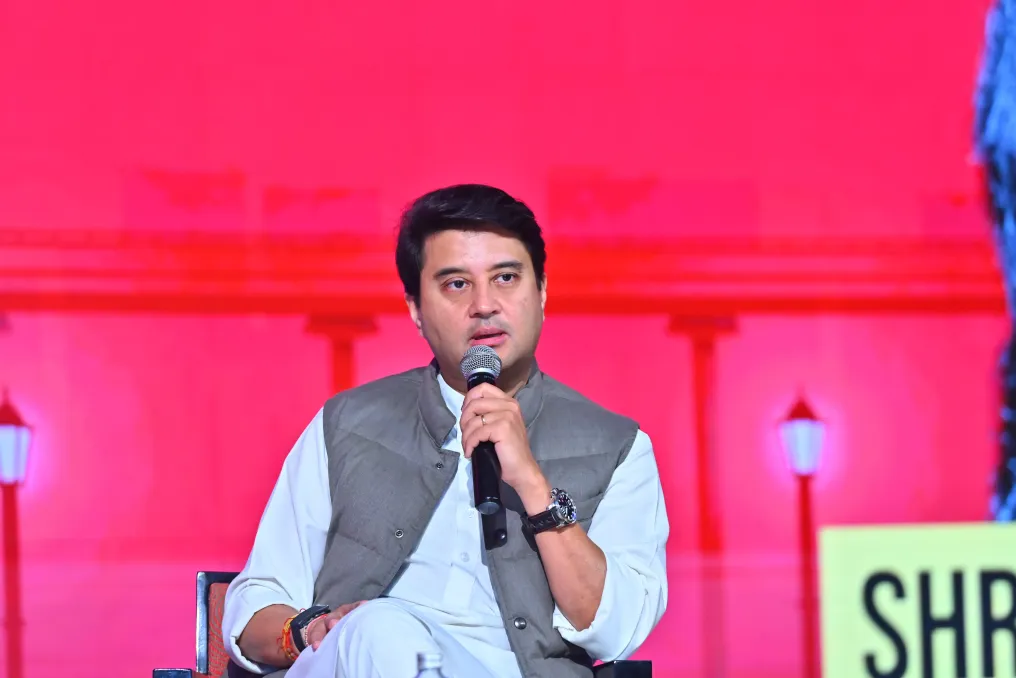
India's Minister of Communications, Jyotiraditya Scindia, stated that India intends to double its 5G user base, increasing it from the current 550 million to one billion by 2030. He also emphasized the country's determination to lead the global 6G industry, despite previously lagging behind world leaders in 4G technology.
Speaking at the opening of the tenth edition of the Indian Mobile Congress (IMC) in 2026, Scindia noted that 5G in India has become the fastest-adopted technology globally. He clarified that while the current number of users is 550 million, the goal for 2030 is to reach a billion customers.
Regarding 6G, Scindia mentioned that the Bharat 6G Alliance, involving 90 institutions, has already patented 7,700 patents, 4,400 of which are international. The minister stated that although India lagged in 4G, it successfully navigated the 5G phase and is now aiming to become a global leader in 6G.
Furthermore, it was announced that the ITU Council accepted India's proposal to host the World Conference in 2030. Scindia also pointed out that the ITU Telecommunication Standardization Assembly (WTSA) was held in India for the first time in 2024, becoming the largest WTSA held outside Geneva in ITU history.
Describing the development of India's telecommunications sector since the first IMC in September 2017, Scindia reported that the number of broadband subscribers has grown from 60 million to over 1.1 billion, and the total number of mobile subscribers has reached 1.35 billion. The cost of a gigabyte of data has dropped from 268 rupees in 2014 to 8 rupees, which he called the lowest in the world.
In terms of digital infrastructure, he highlighted the significance of UPI, which facilitates 84% of all digital transactions in India and 49% of global digital operations. UPI processes 260 billion transactions annually worth $3.4 trillion, and this technology has been adopted in 11 other countries.
The minister also introduced the BharatNet program, funded by the government with $15 billion, which will connect middle-tier Gram Panchayats to nearly 2.6 lakh villages. This program will also provide on-demand internet access to the remaining 3.8 lakh villages, guaranteeing a 100 Mbps connection to every household.
Concerning manufacturing, Scindia noted that the mobile phone industry, valued at about $2-3 billion in 2014, is now an industry worth $63 billion. India ranks second globally in mobile phone manufacturing, and exports approach $29 billion.