Vastu Tips: 5 Inauspicious Items to Remove from Home Before Navratri
Read more
Aaj Tak
www.aajtak.in

Vastu Tips: 5 Inauspicious Items to Remove from Home Before Navratri

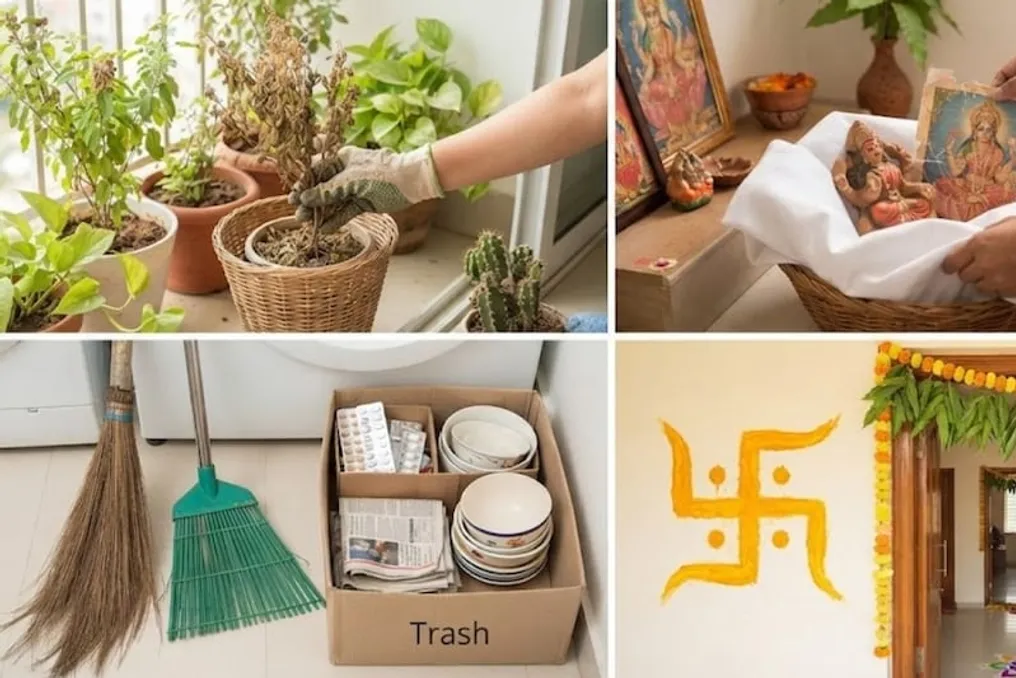
The sacred festival of Navratri is approaching, and many people are starting to clean their homes. However, according to the principles of Vastu Shastra, simply dusting the house is not enough. Some broken and useless items left in the home contribute to an increase in negative energy, which can cause displeasure from Mother Durga and Goddess Lakshmi. To ensure well-being and success during Navratri, it is recommended to immediately discard the five listed items.

Items that should be immediately removed from the home:

  • Dried Tulsi leaves and thorny plants: Tulsi is considered a very sacred plant. If the plant dries up, it must be removed immediately, as a dry bush brings poverty and gloom into the home. Thorny plants, such as cacti, should also not be kept in the house. It is recommended to either bury the dry bush in the ground or release it into a river, replacing it with a new, green Tulsi or Monstera plant.
  • Broken statues and photographs: Damaged statues or torn images of deities should never be left in the home shrine, as this creates a Vastu defect in the house. If the statue is made of clay, it should be washed away in water; if it is made of another metal, it should be placed under a peepal tree.
  • Broken or old brooms: The broom is associated with Goddess Lakshmi. Having a broken or very old broom can lead to financial difficulties. The old broom must be thrown away before Navratri begins, and a new one should be purchased.
  • Expired medicines and broken dishes: It is strictly forbidden to keep expired medications, old papers, cracked dishes, or broken glass in the house. These items promote the growth of illnesses and mental tension in the home. All such useless and damaged things should be discarded immediately.
  • Stopped clocks and faulty equipment: Clocks that are stopped signal that your good time has stopped, leading to laziness among family members. Furthermore, malfunctioning electronic equipment also hinders progress in the home. Either the stopped clock must be repaired, or the batteries replaced, and all clutter and non-working electronic equipment must be removed.

What must be done on the first day of Navratri:

On the first day of the festival, the main entrance of the house should be thoroughly cleaned. It is also necessary to draw a swastika sign using turmeric and water at the main entrance. To welcome the Mother, a garland of Amu or Ashoka leaves should be hung on the main door, which promotes peace and tranquility in the home.

Similar stories

Recipe for Pure and Crispy Sabudana Papads for Fasting During Sharadiya Navratri 2026
Read more
www.aajtak.in

Recipe for Pure and Crispy Sabudana Papads for Fasting During Sharadiya Navratri 2026

With the approaching sacred festival of Sharadiya Navratri, which lasts for nine days, many desire something light, crispy, and tasty for evening tea. However, chips and papads available for sale often contain regular salt, unhealthy oils, and preservatives, which are undesirable during a fast.

Instead of store-bought snacks containing impurities, it is suggested to prepare 100% pure, vegetarian, and crispy sabudana papads at home using just one cup of sabudana. The preparation process is so simple that even beginners can achieve perfectly white, transparent, and crispy papads.

You will need: 1 cup of fine or medium sabudana, 4 cups of water (for boiling), 1 teaspoon of rock salt (fasting salt), 1/2 teaspoon of roasted or whole cumin, 1/2 teaspoon of ground black pepper or finely chopped green pepper, 1 tablespoon of finely chopped cilantro (optional).

First, wash the sabudana twice with clean water. Then, add half a cup of water to it and leave it covered for 3-4 hours so that the sabudana swells well and becomes soft.

In a large, thick-bottomed pot, bring 4 cups of water to a boil, adding 1 teaspoon of rock salt. When the water boils, pour in the soaked sabudana and cook over low or medium heat, stirring constantly, for 10-12 minutes. Gradually, the sabudana grains will become completely transparent, and the mixture will thicken and take on a glossy appearance. As soon as the mixture starts sticking to the spoon, remove the pot from the heat.

Next, stir in the cumin, ground black pepper, and chopped cilantro. Let the mixture cool slightly (do not cool it too much, otherwise, it may solidify).

On a clean plastic sheet spread out in the sun or under a fan, lightly brush with oil or ghee. Using a spoon, place a small amount of the mixture onto the plastic and carefully spread it into a round shape. It is important not to make the papads too thin, otherwise, they may break after drying.

Dry the papads in the sun for 1-2 days. After they are completely dry, they will become very hard and transparent. Then, heat oil or ghee in a pan and fry the papads. Upon contact with hot oil, the papads will double in size and become very crispy. They should be served hot with tea.

Completely dried papads can be stored in an airtight container and will maintain their appearance for a whole year.

Popular