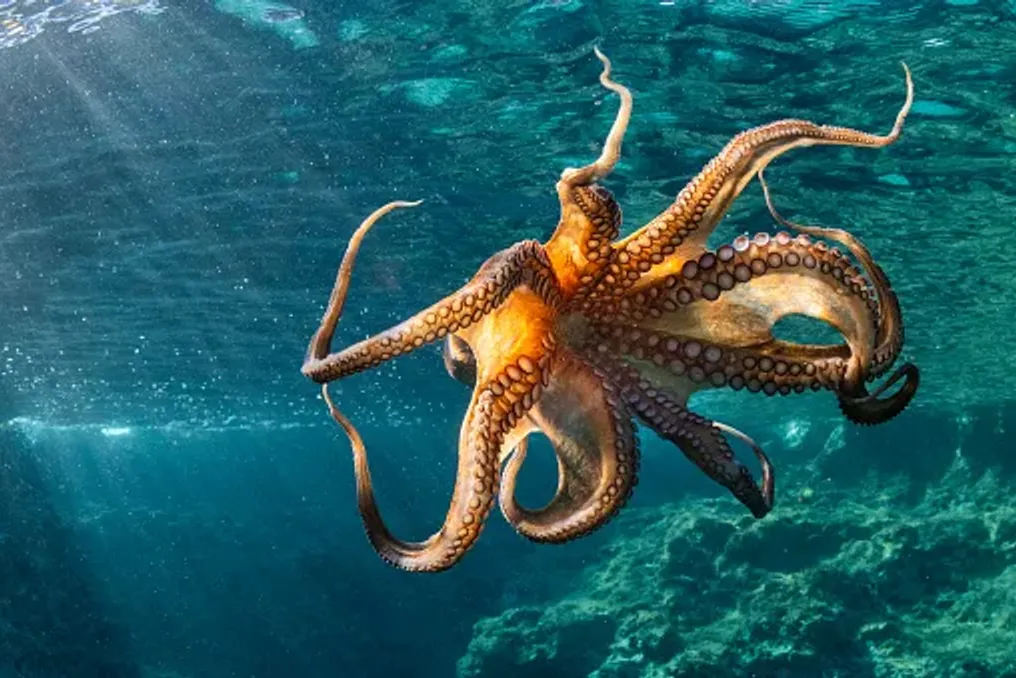
Octopus Day: Eight Interesting Facts About One of the Ocean's Most Unusual Inhabitants
Read more
Getaway
getaway.co.za

Octopus Day: Eight Interesting Facts About One of the Ocean's Most Unusual Inhabitants

The octopus is considered one of the most amazing inhabitants of the ocean due to its three hearts, outstanding camouflage abilities, and unique ability to squeeze into tiny spaces.

Octopus Day is celebrated annually on October 8th, serving as an occasion to study these intelligent and peculiar marine animals, as well as the problems they face in the wild.

Octopuses can be found in all the world's oceans, from shallow waters to the deep sea. Despite their alien appearance, their intelligence, complex behavior, and ability to interact with their environment have made them some of the most intriguing creatures in the marine world.

Key Features of Octopuses

An octopus has three hearts: two pump blood through the gills, and the third circulates blood to the rest of the body. Interestingly, the main heart stops beating during swimming, which explains these animals' preference for crawling along the ocean floor rather than long-distance swimming.

Octopuses possess a central brain, as well as nerve networks in each of their eight limbs. These networks allow each arm to process information independently, including data about touch, taste, and smell. This unusual nervous system contributes to the octopus's exceptional ability to explore and interact with its surroundings.

These animals demonstrate an incredible regenerative ability: if an octopus loses an arm, it can gradually regrow it, including the nerves and other structures necessary for function. Some species can continue to use their remaining limbs while a new one develops.

Camouflage is one of the octopus's most impressive survival skills. By changing the color and appearance of its skin, some species can blend in with rocks, sand, corals, and other environmental elements. This helps them avoid predators and approach prey unnoticed.

Some species can even change the texture of their skin, making their camouflage more convincing. The octopus lacks an internal skeleton or protective shell, which gives it exceptional flexibility. If its beak can pass through a hole, the rest of its body can often follow. This feature allows octopuses to disappear into cracks, crevices, and other places that seem too small for them, explaining their reputation as underwater acrobats.

Problems and Threats

Despite their intelligence and complex behavior, many octopus species have a relatively short lifespan. World Animal Protection reports that octopuses generally live for about one to two years, although there are exceptions; for example, one mother octopus in the deep sea was observed caring for eggs for an astonishing 53 months.

Currently, octopuses are not considered endangered as a group, but they are subject to various dangers. Changes in ocean temperature and water quality deterioration can negatively affect them, and marine pollution creates additional risks. It has also been found that octopuses ingest plastic waste, which harms their health.

Another problem is overfishing. People catch octopuses for food and for aquarium trade, and some fishing operations use irrational or illegal methods. Growing interest in octopus farming raises questions about animal welfare and the environmental impact of keeping these highly intelligent creatures in captivity.

In July 2026, plans to establish the world's first commercial octopus farm in the Canary Islands of Spain were canceled after years of objections from animal protection groups, scientists, and the public. World Animal Protection opposed this project, citing concerns about octopus welfare under intensive farming conditions. The organization also highlighted the ecological footprint of octopus farming, including the use of wild-caught fish as feed.

Octopus Day is not just an excuse to post photos of these unusual creatures. It is also an opportunity to appreciate the complexity of marine life and to consider what can be done to protect the oceans that call them home.

For travelers, one simple way to mark this day is by studying marine life along the coast and visiting reputable aquariums, marine centers, or conservation organizations that educate visitors about marine ecosystems. Next time you see an octopus in a rock pool, during a dive, or snorkeling, remember that you are looking at an animal with three hearts, an extraordinary nervous system, and some of the ocean's most impressive survival skills.
Similar stories

Six Marine Animals Surviving in Earth's Harshest Conditions
Read more
getaway.co.za

Six Marine Animals Surviving in Earth's Harshest Conditions

There are places in the ocean where a human could only survive for moments: icy water, immense pressure, almost no oxygen, and hydrothermal vents spewing superheated water from the seabed. Nevertheless, life exists there. These marine animals have managed to adapt to seemingly impossible conditions, each finding its unique way to make an extreme environment its home.

In Antarctic waters, temperatures can drop below the freezing point of fresh water, yet ice fish have found a way to live in such conditions. Their blood contains antifreeze proteins that bind with tiny ice crystals, preventing their growth. Some species are capable of having ice crystals in their bodies without suffering fatal damage.

Furthermore, they lack hemoglobin—the protein that transports oxygen and gives the blood of most vertebrates its red color. Instead, they rely on the oxygen-rich Antarctic water and a series of adaptations that allow them to function in the cold. For the ice fish, freezing water is not an obstacle but a native habitat.

At depths exceeding 8000 meters beneath the surface, the problem shifts from cold to pressure. In 2023, scientists recorded the presence of a sea slug at a depth of 8336 meters in the Izu-Ogasawara Trench, which was the deepest confirmed finding of a living fish.

Its soft, flexible body and specialized physiology allow it to withstand the crushing conditions of the abyssal zone. However, even sea slugs have limits. Scientists suggest that fish cannot survive deeper than approximately 8400 meters; below this mark, the deep ocean is mostly the realm of invertebrates.

The vampire squid inhabits one of the ocean's most challenging zones—the oxygen minimum zone. Despite its dramatic name, it is not a ferocious predator. The species Vampyroteuthis infernalis possesses an exceptionally low metabolism and highly efficient blood that helps it extract oxygen from water deficient in this element. It feeds on marine snow, collecting fragments of dead organisms and organic matter sinking from above. When food and oxygen become scarce, the vampire squid has learned to conserve and utilize every bit.

Hydrothermal vents release mineral-rich fluids heated by volcanic activity, creating some of the most extreme environments in the ocean.

Pompeii Worm

It lives in tubes attached to these underwater smokestacks. Initially, it was thought to be able to withstand temperatures above 80°C, but subsequent research has refuted these claims. Studies have shown that prolonged exposure to temperatures between 50 and 55°C is fatal.

Its real secret lies in greater precision: the worm lives along the boundary between the hot fluids of the vent and the cooler seawater, where the temperature can change abruptly over a very short distance. It survives by knowing this edge.

The giant tube worm Riftia pachyptila has no mouth or digestive tract. Instead, its body contains a specialized organ filled with bacteria. These bacteria use chemicals from the hydrothermal vents to produce energy through chemosynthesis, providing the worm with nutrients. The result is one of nature's strangest symbioses: an animal that effectively grows its own food source inside its body. Under suitable conditions, giant tube worms can grow nearly a meter in less than a year, and this does not require sunlight.

Some sea cucumbers live where the ocean is almost completely dark, icy, and under immense pressure. Species such as Enypniastes eximia have soft, flexible bodies without gas bladders, which helps them cope with the colossal pressure of the deep ocean. Instead of merely enduring these conditions, they have adapted to life on the seafloor, feeding on organic material in the bottom sediments. Some deep-sea sea cucumbers can also swim above the seabed in search of food before returning to the bottom. In areas where sunlight does not penetrate and food is scarce, they have found a surprisingly simple way to survive.

No armor. No teeth. No dramatic defense mechanisms. Just a soft body adapted to a world that would crush most of us.

From Antarctic ice to the deepest trenches, marine animals have found ways to survive where nothing seemed to exist. Some contain antifreeze in their blood. Others withstand immense pressure, subsisting on debris drifting in dark water, or depend on bacteria for nutrition. Some simply know how close they can get to an environment that would otherwise kill them. The harshest places in the ocean are not lifeless; they prove that given enough time, life can find a niche and establish itself there.

Popular