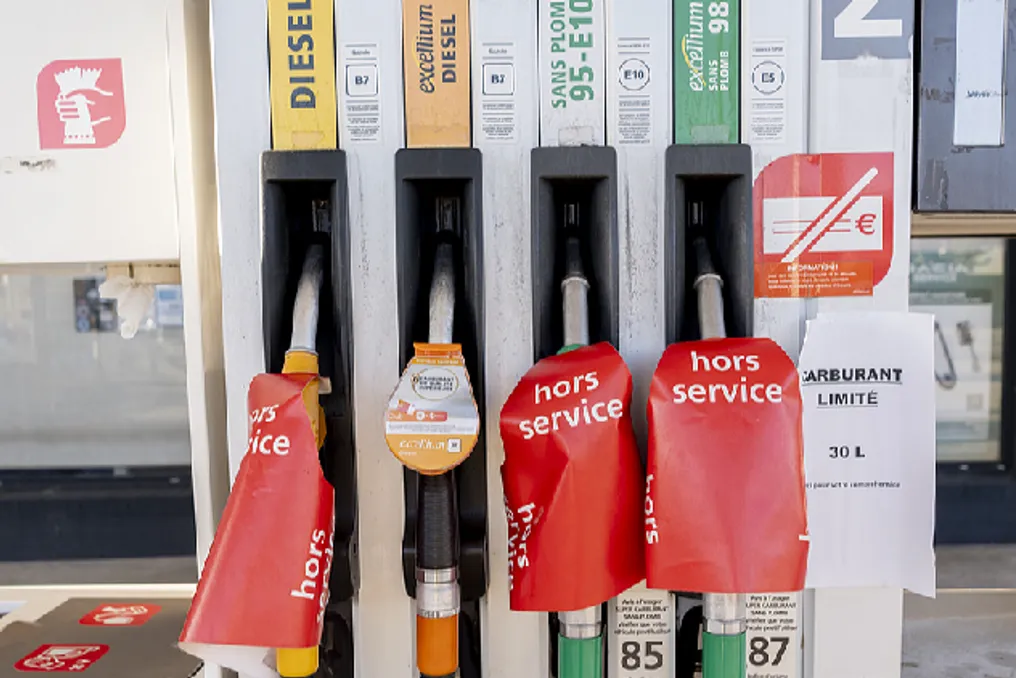
High energy costs are putting increasing pressure on European businesses and residents, prompting the European Union to intensify efforts to stabilize supplies, curb prices, and reduce dependence on imported fossil fuels.
European Commission President Ursula von der Leyen stated on Tuesday that gas prices in Europe have risen by 140% since late February, and the cost of diesel fuel has doubled. She noted that the higher price of imported fossil fuels has added about 100 billion euros (approximately 112 billion dollars) to Europe's energy bill without increasing the available energy volume.
Von der Leyen warned that the approaching winter could increase pressure on households and businesses.
How the transport sector is feeling the effects
The energy shock has been exacerbated by disruptions in energy transport through the Strait of Hormuz following the US-Israel military campaign against Iran. This disruption caused turmoil in global oil and fuel markets and limited the supply of petroleum products to Europe.
Earlier this month, the European Commission stated that diesel fuel supplies to the EU remain stable, but prices remain high amid global market tensions.
European transport companies are already feeling the impact, especially those heavily reliant on diesel fuel. Balázs Veres, managing director of Hungarian Supernova Intertrans, reported that fuel shortages and sharp increases in diesel prices have created numerous problems for the company, which operates around 200 trucks and is Hungary's third-largest international freight carrier.
Veres stated that they are constantly recalculating their costs and looking for ways to cope with this serious fuel crisis, adding that small companies are particularly vulnerable due to less working capital to cover sudden increases in expenses.
Citing industry data, he noted that approximately 2,300 Hungarian transport companies have gone bankrupt or withdrawn their transport licenses over the past five years, effectively leaving the domestic and international freight market. Veres described freight transport as a barometer of economic activity, emphasizing that this sector often feels changes in the broader economy first. He added: 'Our industry is the first to feel where the European economy is heading—when it is growing and when it is shrinking.' 'Freight transport has picked up slightly since early September, but we see that the fuel crisis and the crisis caused by the prolonged war are having a significant impact on the European economy.'
The EU aims to reduce costs and diversify supplies
To combat rising energy costs, Von der Leyen outlined measures from both the supply and demand sides. On the supply side, the EU is initiating a strategic dialogue with European refineries to help reduce costs and strengthen energy security, including ensuring supplies for the defense sector.
On the demand side, the bloc will establish a new dedicated group to consolidate the needs of member states and further expand joint purchasing mechanisms. The Commission will also extend the temporary state aid system for industries most affected by high energy costs.
Regarding households, Von der Leyen believes that support should be directed towards the most needy groups, specifically low-income families, rather than taking the form of widespread subsidies.
However, the EU's task goes beyond the immediate price shock. Von der Leyen stressed that Europe must address structural risks arising from dependence on global fossil fuel markets. In the medium and long term, the bloc needs to increase its domestic clean energy and accelerate electrification to reduce reliance on energy imports.