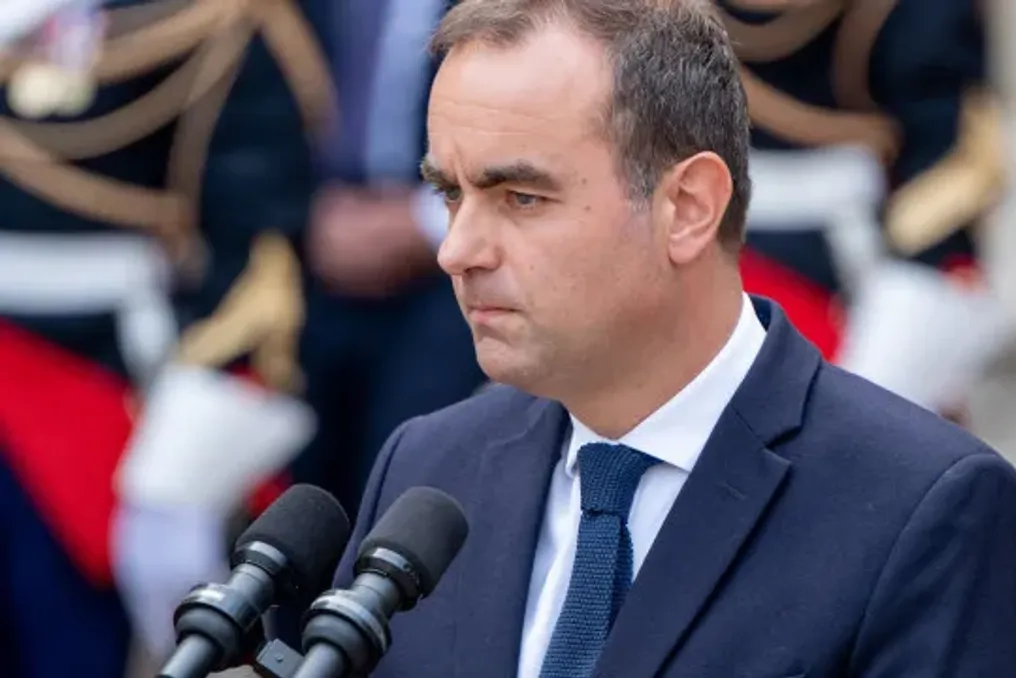
Sebastien Lecornu, the Prime Minister of France, made a statement from the Government headquarters, emphasizing the need for a French budget before the presidential elections scheduled for next spring.
Lecornu stressed that the responsibility for providing the budget to the country lies with Parliament, thereby appealing to parties to reach the necessary agreement to advance public finances.
He stated that adopting the budget after the presidential elections would prolong uncertainty until next autumn, block investments, and significantly weaken the country.
The initial goal of the Government was to reduce the deficit to 4.8% of GDP by 2027; however, this target has been adjusted to 5% to account for additional defense spending needs, the Prime Minister explained.
Lecornu highlighted the necessity of reducing the deficit, insisting that France must convince both its partners and the investors financing its debt to meet budgetary obligations.
According to forecasts, France's public deficit will reach 5.4% this year.
Lecornu justified the budgetary efforts with an adjustment of €54 billion as a way to prevent more 'harsh' problems in the future, assuring that the Government has chosen a course of maintaining fiscal stability.
The Prime Minister also announced measures aimed at mitigating the impact of energy prices on households and businesses. France will provide distributors with 10 million barrels of diesel fuel from its strategic reserves over three months.
The government is preparing a decree to activate this operation, which was reported to the International Energy Agency, and it is estimated to potentially lower the price of diesel fuel at gas stations by 12–18 euro cents per liter.
The executive branch also aims to avoid electricity price increases this winter, so it has asked the energy company EDF to maximize its production capacity within safety requirements. Furthermore, the payment of energy vouchers for low-income families will be postponed to January instead of the usual spring schedule.
The Prime Minister also dedicated part of his speech to the situation in the agricultural sector, which has suffered from the effects of heatwaves and crop losses, leading to financial difficulties for thousands of farms, livestock feeding problems, and reduced production.
Therefore, the Government has launched an emergency response plan and is preparing new measures for this sector, as well as a recovery plan to be presented to Parliament, since, according to him, farmers cannot wait for support until the presidential elections.