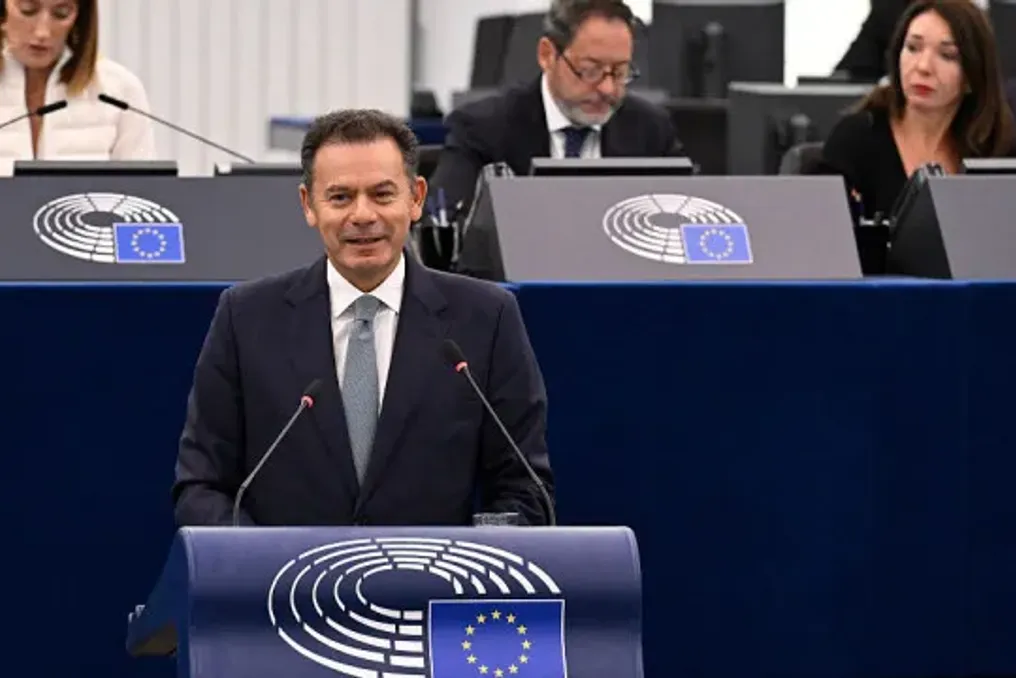
During a press conference held at the end of the MED leaders' summit, which marked the transition of the group's presidency from Croatia to Portugal, Montenegro was questioned about how it plans to manage the various views regarding migration among member countries, noting a discrepancy on this matter, referencing the conflict between Italy and Spain. The Montenegrin representative responded that free movement in the Schengen area is an achievement that needs to be preserved and safeguarded.
This discussion arises after the migratory crisis that occurred at the end of July in Ceuta, when more than 70,000 individuals entered irregularly into this Spanish enclave located in North Africa. In response, the radical right Italian government, led by Giorgia Meloni, decided on August 1st to suspend the Schengen Agreement on free movement of people with Spain, reintroducing controls at airports and ports for passengers from that country. Madrid reacted with a similar measure.
Initially, it was expected that Meloni and the Spanish Prime Minister, Pedro Sánchez, would have the opportunity to debate this issue on the sidelines of the Split summit; however, the Spanish head of government canceled his attendance at the MED9 meeting this week due to the calling of early general elections.
Montenegro began its speech by pointing out that there is a pact on migration and asylum that serves as a central pillar of European policy and mutual commitment. He stated that although the migratory phenomenon presents distinct manifestations in each nation, the fundamental document and basic structure of the collective response is the EU Pact on Migration and Asylum, which must be implemented and executed.
The Portuguese Prime Minister emphasized that countries located in Southern Europe have external borders of the European Union, implying that their decisions and policies affect the entire EU space. Therefore, it is the duty of everyone to 'care for and maintain what is the achievement of free movement of people and goods.' Additionally, he mentioned that the first perspective will be addressed in this sense, while the second involves the need for a 360-degree view in the EU, requiring 'collaboration and strengthening relations with southern neighbors, intervening with the greatest possible capacity in the socioeconomic development of these countries, these partners.'
Luís Montenegro expressed the desire for migratory flows to materialize in a spirit that Portugal defends: regulated and humanitarian. The head of government advocated for the implementation of policies to welcome those who arrive in the country 'properly': those who come to work, to contribute their labor to make economies more dynamic, or who seek to realize their dreams and reunite their families, who should be well received and integrated, respecting the identity, culture, and way of organization of the country. Thus, he argued, it would not be advantageous to have illegal immigration in Europe.
He concluded that this reflection involves establishing political and economic partnerships with the countries of origin of migrants seeking Europe, while remaining inflexible in complying with the rules. Citing the Pact on Migration and Asylum, he reinforced that 'those who do not comply with the rules must return to their countries of origin,' because only by encouraging respect for the rules through the consequences of non-compliance can efficiency be achieved.
In the joint declaration adopted at the end of the Split summit, the MED9 countries stressed that 'the effective protection of the EU's external borders is simultaneously a shared and essential responsibility to maintain a credible and sustainable migration and asylum policy.' The events that occurred in Ceuta in the summer highlighted the need for a united and solidary European response to a sudden and large-scale pressure on any external border of the Union. It was recalled that the defense of the Union's external borders is a shared European responsibility, and European solidarity must be applied uniformly across all stretches of these borders.
The leaders welcomed the entry into force of the Pact on Migration and Asylum and underlined the importance of its full application, including efficient border procedures, solidarity, and sharing of responsibilities, as well as faster and more effective return processes. They announced that they will consider new ways to prevent and combat irregular migration.
They also stated that 'a sustainable approach also requires stronger strategic and comprehensive partnerships with countries of origin and transit, in order to combat irregular migration throughout the entire journey through prevention, readmission, and sustainable reintegration, as well as measures aimed at addressing the underlying factors of irregular migration, namely through training, education, and employment opportunities for young people, and safe and legal pathways for professional and skills mobility.'
The MED9 alliance, created in 2013, brings together nine nations—Portugal, Croatia, Cyprus, France, Greece, Malta, Italy, Slovenia, and Spain—that are part of the Mediterranean basin, the Euro, and the Schengen area (with the exception of Cyprus). Portugal is designated to preside over this group in 2027 and organize the next leaders' summit.