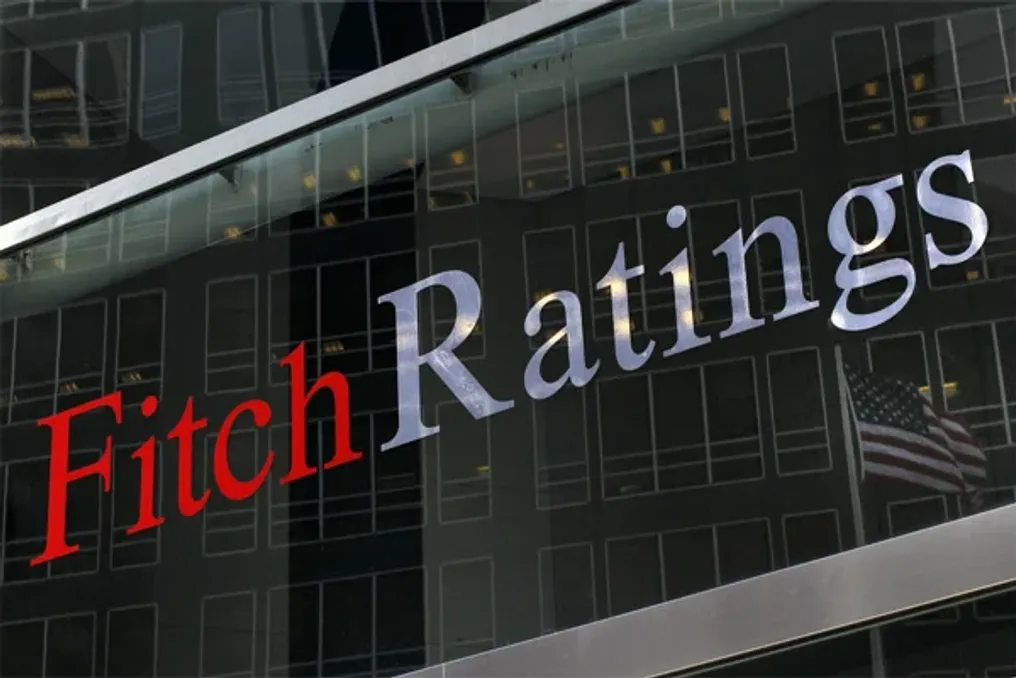
Fitch confirms Orient Finans Bank rating at B+ with stable outlook
Read more
UzDaily
uzdaily.uz

Fitch confirms Orient Finans Bank rating at B+ with stable outlook

Fitch Ratings has confirmed the long-term ratings of Uzbekistan's Orient Finans Bank (OFB) in both foreign and local currencies at B+, while assigning a Stable outlook. Additionally, the bank's viability rating was confirmed at b+, whereas the state support rating remains at 'No Support' (ns).

OFB's ratings are based on its individual credit profile. Fitch highlighted the bank's strong profitability and capital adequacy, which offset limited market positions, rapid lending growth in previous years, the quality of the credit portfolio that has not yet been fully tested by time, as well as high concentration of assets and liabilities.

The agency adjusted its assessment of the operating environment for Uzbek banks, upgrading it from b/Positive to b+/Stable. This change was driven by progress in banking sector reforms over the past two years, including strengthened banking regulation and reduced accumulated risks.

By the end of the first half of 2026, OFB accounted for approximately 2% of the total assets, loans, and deposits in the Uzbek banking sector. The share of corporate loans in the portfolio decreased to 59% by the end of 2025 from 65% the previous year, due to the expansion of small and medium-sized business lending and the retail segment.

Nevertheless, the bank's credit portfolio maintains a high degree of concentration. By the end of the first half of 2026, the top 25 borrower groups accounted for 40% of the gross loan portfolio, equivalent to 1.1 times the bank's capital.

The decline in dollar dependence of loans continued: the share of foreign currency loans fell to 26% by the end of the first half of 2026 from 50% at the end of 2024. Fitch attributes this decrease to increased retail lending and the repayment of a large foreign currency loan.

The agency also noted an increase in non-performing loans. The share of Stage Three loans rose to 1.2% of the portfolio by the end of 2025 compared to 0.2% the previous year, and the share of Stage Two loans increased to 19.2% from 2.6%. Fitch expects a further rise in the proportion of non-performing loans in 2026–2027, but forecasts that it will remain below 5%.

OFB's profitability remains high: the return on risk-weighted assets stood at 7.6% in 2025 compared to 7.7% in 2024. Net interest income reached 11.3% in 2025, and the cost-to-income ratio was 26%.

Fitch forecasts some decline in profitability in 2026–2027 due to higher risk costs, but believes it will remain strong. The bank's Fitch Core Capital (FCC) ratio increased to 23.5% by the end of 2025 from 20% the previous year. The regulatory Tier 1 capital adequacy ratio was 21.4% by the end of the first half of 2026, exceeding the statutory minimum of 8.5%.

Fitch predicts that the FCC ratio could rise to approximately 26% by the end of 2026, thanks to strong profitability and slowing loan growth. OFB's rating could be downgraded if asset quality deteriorates significantly, leading to a sustained weakening of financial performance and reduced capitalization. Specifically, negative rating actions may follow if the FCC falls below 12%.

A rating upgrade would require further improvement in Uzbekistan's operating environment, strengthening the bank's risk profile, and maintaining stable asset quality, strong profitability, and capitalization.
Similar stories

Fitch confirms Universal Bank's rating at B- and VR at b-
Read more
uzdaily.uz

Fitch confirms Universal Bank's rating at B- and VR at b-

The international rating agency Fitch Ratings has confirmed the long-term issuer ratings (IDRs) of Universal Bank JSC in both foreign and local currencies at B-, with the outlook remaining stable. The agency also confirmed the bank's viability rating (VR) at b-.

According to the agency's assessment, this rating reflects the bank's independent creditworthiness. However, the assessment is limited by several factors: limited market positions, a small share in Uzbekistan's banking sector, rapid lending growth, and high concentration of the loan portfolio.

Among the positive aspects noted by Fitch are a low proportion of non-performing loans, high profitability, as well as sufficient capital and liquidity buffers.

Fitch adjusted its assessment of the operating environment for banks in Uzbekistan, raising it from b with a positive outlook to b+ with a stable outlook. The agency attributes this to progress in banking reforms, including strengthened regulation and the elimination of accumulated risks.

The combination of an improved operating environment and stable business conditions should support the sustainability of the banks' credit profiles. Furthermore, Fitch noted Uzbekistan's economic growth at 8.5% year-on-year in the first half of 2026.

Universal Bank remains a small player in the Uzbek banking market. As of the end of the first half of 2026, its assets accounted for less than 1% of the total banking sector assets. The bank primarily operates in the Fergana region, focusing on financing small and medium-sized enterprises, unsecured retail lending, and payment and transaction services.

The majority of lending consists of short-term loans for working capital financing. The share of foreign currency loans increased to 31% by the end of the first half of 2026, up from 23% at the end of 2025. Fitch pointed out that some foreign currency loans were issued to borrowers focused on the domestic market who do not have foreign currency earnings.

Risks associated with related-party lending remain volatile. By the end of 2025, they constituted 2.5% of the loan portfolio, down from 10% the previous year.

According to Fitch, the proportion of non-performing loans at Universal Bank classified as Stage 3 under IFRS was 1% of the gross loan portfolio at the end of 2025. This amount was fully covered by provisions for possible loan losses. Stage 2 loans amounted to 2%. Fitch forecasts that the proportion of non-performing loans will remain generally stable in 2026, as improvements in part of the portfolio will be offset by the emergence of new problematic loans.

Fee income plays a significant role in the bank's revenue. In the first half of 2026, it accounted for 51% of operating income. The return on risk-weighted assets (RWA) increased to 6.7% in 2025 from 5.1% in 2024. Fitch expects this ratio to remain around 6% during the 2026–2027 period.

Universal Bank's basic capital ratio increased to 18% by the end of 2025 compared to 16.8% the previous year. The growth was supported by high profitability and moderate dividend payments. As of the end of the first half of 2026, the Tier 1 capital adequacy ratio and the overall capital adequacy ratio of the bank were 14% and 17.1%, respectively. These indicators provided a buffer above regulatory minimums of 10% and 12%.

Fitch believes that internal capital formation will continue to support the bank's capitalization, given the growth in risk-weighted assets and moderate dividend payments.

Popular