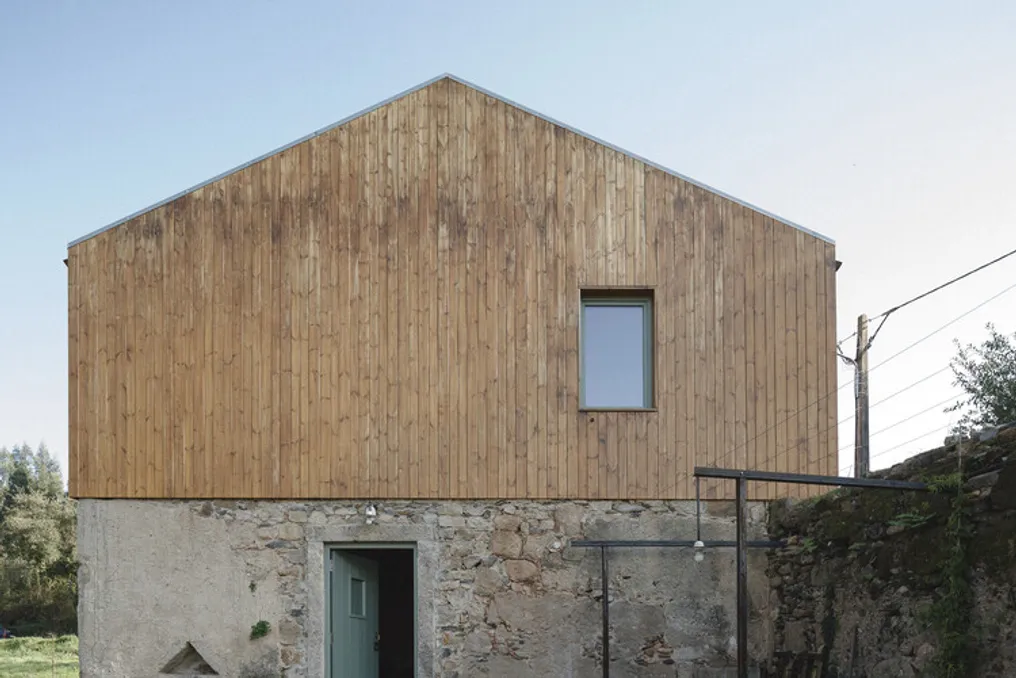
Located in the Santa Eufémia area, near the Espinhal village, and surrounded by nature, the Cereal Interpretive Center (CIC) was conceived to value the region's rich historical and cultural heritage, known for the antiquity of its landmarks, such as water mills.
The restoration of this heritage has the potential to boost the economy and local development, especially in social and environmental aspects. With the construction of the CIC, the project seeks to disseminate and share traditional techniques of milling and bread and flatbread making, as well as raise awareness about sustainable practices.
The primary objective of the intervention is to ensure the conservation and enhancement of the existing heritage, covering the mill, the adjacent building, and the external patio. The entire proposal is based on the principles of maintaining and improving architectural elements of great value.
The complex is divided into three main functions: displaying museum pieces related to milling activities and local products; renovating the mill for grain and bread production; and creating a community space for sharing.
The water system works by diverting water from the river, channeling it through the buildings until it provides the necessary energy to the mill, causing the large stones that process the cereal to turn, before returning to its natural course.
Inside the mill, a central piece stands out that summarizes the project's philosophy: a large table made of rough stone. Originally part of the veranda of the old residence, this table was adapted to serve as a meeting and common use point.
This surface rests on legs constructed from solid exotic wood, which was recovered from the original beams of the building that had been destroyed. Thus, the table symbolizes renewal and permanence, integrating materials with history into a new collective purpose. The intervention was guided by a respectful reading of what already existed, ensuring that every construction and material choice sought a balance with the authenticity of the place.