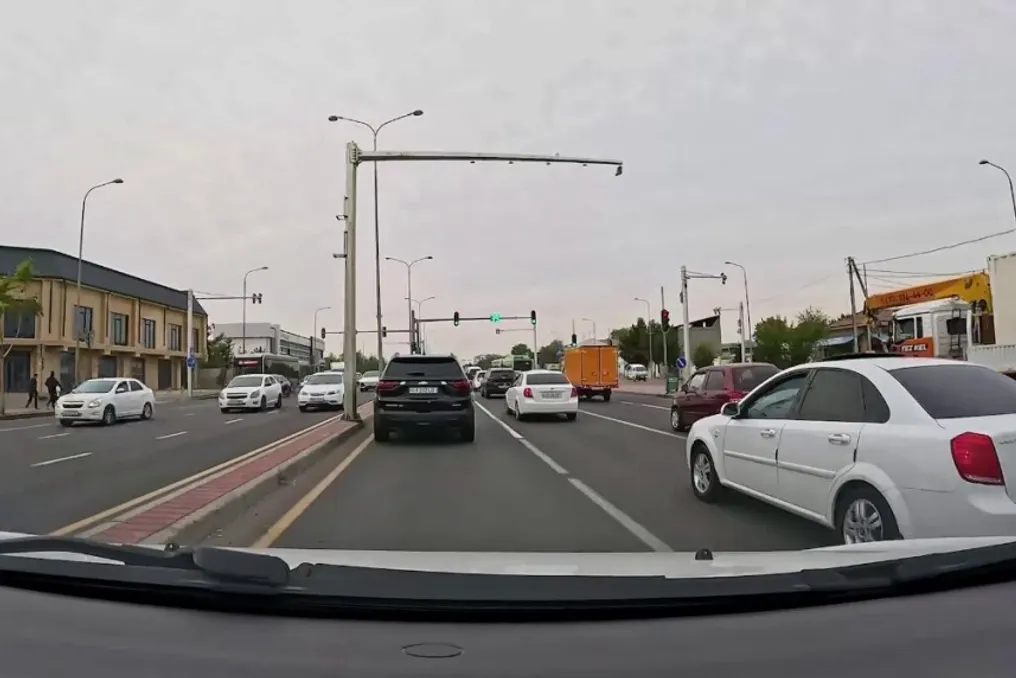
An additional section of the 'Green Wave' system has been launched on the Fergana Highway in the city of Tashkent. Employees of the Center for Road Traffic Organization synchronized the operation of thirteen traffic light objects over six kilometers of this main artery. The section covers the area from the 'Kuylyk-ota' mausoleum beyond the Kuylyk Bridge to the UzBUM facility.
This new mode operates continuously, around the clock. According to measurements conducted, travel time along this segment has been reduced by approximately a quarter during off-peak hours. Previously, traversing this distance required 12–13 minutes, whereas now drivers need an average of nine minutes.
Thanks to the synchronization of traffic lights, drivers traveling at the established speed can pass the maximum number of intersections without needing to stop. This contributes to leveling the traffic flow and reducing the overall load on the highway. The Fergana Highway is one of the most important access arteries to the capital, receiving a significant volume of transport from the Tashkent region, which is then directed into the city center.
Specialists conduct constant round-the-clock monitoring of the road situation on this section to promptly make changes to the traffic light phases when necessary.
Previously, the Center for Road Traffic Organization (TSODD) was optimizing the traffic scheme on Abdulla Kadiri Street in Tashkent. These changes concerned the area where drivers arriving from EcoPark and intending to turn onto Movaraunnahr or Mahatma Gandhi streets had to make a long detour.