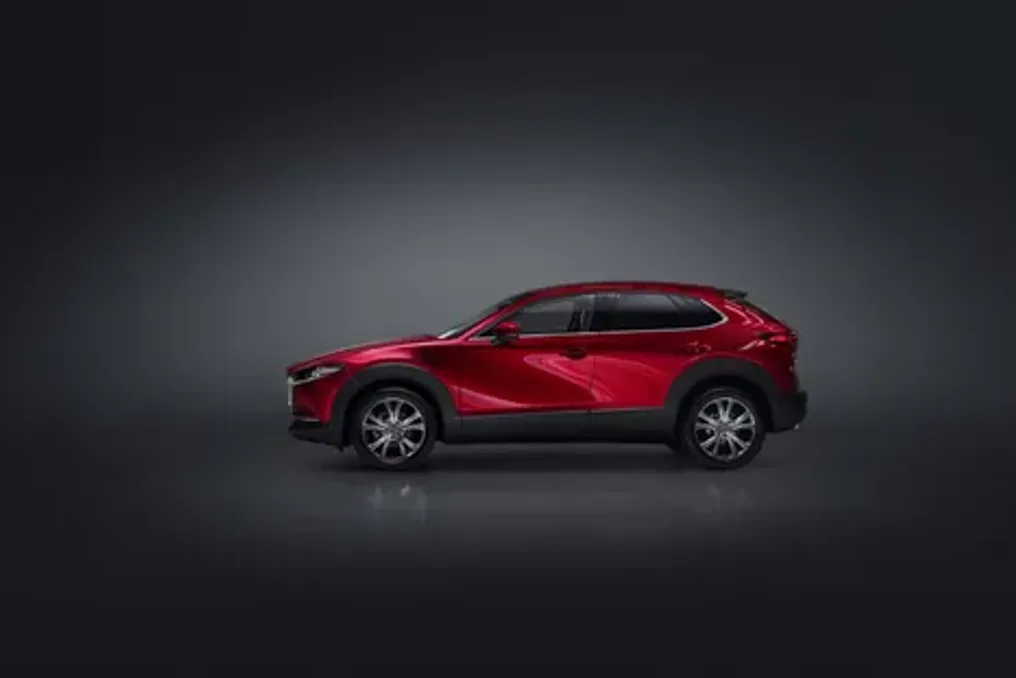
Mazda CX-30 Review: Latest Moments of the Naturally Aspirated Engine
Read more
IOL
iol.co.za

Mazda CX-30 Review: Latest Moments of the Naturally Aspirated Engine

The Mazda CX-30 is a driver-oriented vehicle. Currently, most cars are equipped with turbocharging, and the author has often criticized the lack of a turbocharger in Mazda models. However, in the latest version of the CX-30, Mazda has managed to make naturally aspirated engines appealing, something only highly specialized manufacturers have achieved in recent years.

The CX-30 occupies an interesting niche; essentially, it is a crossover hatchback, a high hatchback. Although the author previously considered it such, Mazda has made improvements: tuning the gear ratios, strengthening the suspension, and reprogramming the engine. Now the CX-30 looks attractive from all sides.

Despite the 2.0-liter engine still producing 121 kW and 210 Nm of torque through a six-speed automatic torque converter, it feels livelier. The presence of mode selectors on the steering column allows drivers to maximize the engine's potential with the possibility of free revving. Compared to other models in its class, it undoubtedly provides more driving pleasure.

Mazda seems to focus less on power figures and more on the power-to-weight ratio. This explains why the MX-5 is a bestseller among all time roadsters, and this philosophy is reflected in the CX-30.

The author acknowledges the car's shortcomings, such as the small trunk and cramped rear seats, but notes that the cockpit is driver-focused: the steering wheel controls the touchscreen, and the drive mode selector is easily reachable without taking a hand off the armrest, and there is also a physical volume button. Considering all the drawbacks, the author stated that he would buy it if it had a six-speed manual transmission. The Mazda CX-30 proves that a car can be more than the sum of its parts because it emphasizes driving dynamics above all else, and it is very appealing.

Although there are many turbocharged cars on the market, the remaining naturally aspirated models are large V8s. Hidden among them is a freely rotating, energetic, 2000cc engine with mode selectors, available in the price range of R539k to R652k and equipped with a 12-speaker BOSE sound system.
Similar stories

New BMW 3 Series retains gasoline engine but receives electric car design and interior
Read more
autopapo.com.br

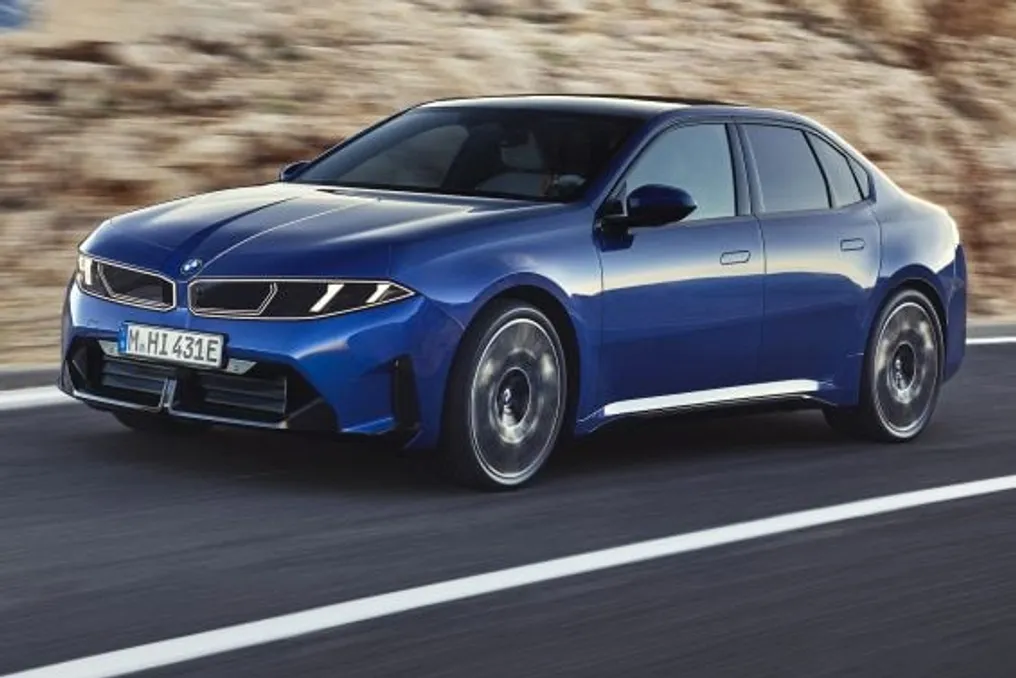
New BMW 3 Series retains gasoline engine but receives electric car design and interior

BMW has introduced the new generation of the 3 Series model, which is equipped with internal combustion engines, but it borrows the appearance and technologies from the Neue Klasse family, previously presented in the electric i3 version. According to the manufacturer, the differences between gasoline and electric versions are only in details related to the type of powertrain.

The technological separation occurs under the hood: the i3 model uses the new electric architecture, while the gasoline 3 Series continues the evolution of the CLAR platform.

In the United States, where sales will begin in the first quarter of 2027, the lineup will be offered in three variants. The 330 model starts at $51,250 USD (equivalent to approximately 263 thousand Brazilian reais) including delivery tax; the 330 xDrive version costs $2,000 more. The top-spec M350 xDrive is available for $67,250 USD (approximately 345 thousand Brazilian reais). Prices for Brazil have not yet been announced.

The sedan's equipment includes a front end that combines the double spiral grille with headlights in a single element, integrated door handles, and horizontal taillights. The vehicle dimensions are 4.75 m long, 1.85 m wide, 1.46 m high, and 2.86 m between the wheel axles. Wheels are available in sizes from 18 to 20 inches.

The interior is designed in the style of the i3 and features the Panoramic iDrive system, which includes the Panoramic Vision projection strip on the lower part of the windshield and a 17.9-inch driver-oriented central display. An optional 3D head-up display is also offered.

The X operating system, based on Android, integrates Amazon's Alexa+ voice assistant, as well as wireless Apple CarPlay and Android Auto connectivity. It also features Symbiotic Drive, which makes second-level driver assistance less intrusive. The driving assistance system stops interfering if it recognizes an intentional maneuver that poses no collision risk.

The 330 model is equipped with a 2.0-liter four-cylinder turbocharged engine that produces 259 horsepower and 40.8 kgm of torque. The car has an eight-speed automatic transmission and can use rear or all-wheel drive xDrive. The system is complemented by a 48-volt mild hybrid setup with a belt-driven generator. The acceleration time from 0 to 100 km/h is about 6 seconds.

The M350 xDrive, which replaces the M340i, uses a 3.0-liter inline six-cylinder turbocharged engine producing 443 horsepower and 59.1 kgm of torque. In this version, the 48-volt generator is located in the transmission housing and increases power by 17 horsepower. With all-wheel drive, the series accelerates from 0 to 100 km/h in 4.1 seconds and has a maximum speed limit of 250 km/h. It is also equipped with M adaptive suspension, M Sport rear differential, and reinforced brakes.

A special feature is Drift Moment, activated via the central screen, which disables front-wheel drive and stability control, directing all power to the rear wheels. This feature will only become available in 2027 through a software update, including vehicles already delivered to customers.

Internal combustion engine vehicles will be manufactured in Dingolfing, Germany. Next year, a plug-in hybrid option will be added to the lineup. Regarding Brazil, where the current generation is assembled in Aracuary (SC), BMW has not yet announced when the new model will arrive.

Popular