Extremely Rare Two-Headed Turtle Hatchling Found in Cape Cod
Read more
Aaj Tak
www.aajtak.in

Extremely Rare Two-Headed Turtle Hatchling Found in Cape Cod

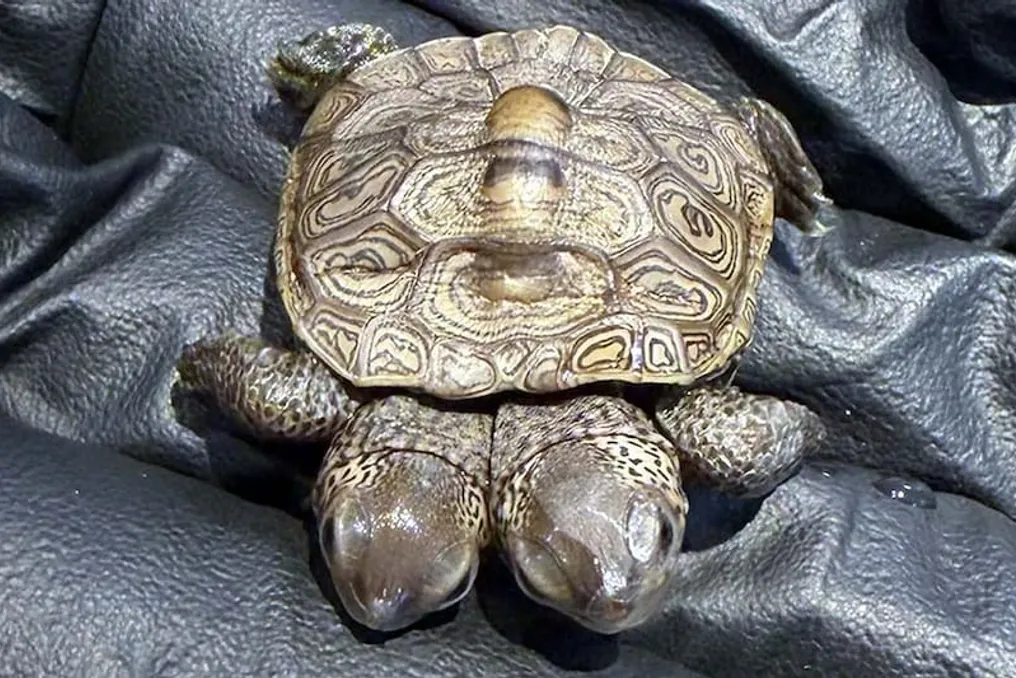
An extremely rare two-headed turtle hatchling has been discovered in the Cape Cod area of Massachusetts, United States. It belongs to the Diamondback Terrapin species and was found at a nesting site in the Wellfleet area. This small turtle possesses two distinct heads on its body, a condition known as bisiphaly.

The weight of this turtle was recorded as approximately 5.1 grams, and it has now been placed under observation at the Cape Wildlife Center. Experts are investigating whether it is feeding properly and how the two heads are coordinating with the body. Notably, this is the third terrapin of this kind found in Cape Cod in the last five years.

Bisiphaly is a very rare condition that occurs during the development of the turtle inside the egg. In the early stages when the body is forming, the two parts of the body fail to fully separate, resulting in two heads on a single body. In such creatures, both heads can function independently while the body remains singular; additionally, some internal organs of the body may be shared, depending on the manner of the hatchling's development.

Due to having two heads, the turtle may face difficulties in walking and eating, as both heads must coordinate with the same body. If essential body organs are also shared, this can negatively affect its health. However, there is currently no definitive information regarding the longevity of this turtle, and experts are continuously monitoring it, which includes observing its diet, movement, and behavior.

The Diamondback Terrapin is a turtle found in the coastal regions of North America. It inhabits brackish marsh areas and other locations near the sea. Its shell has diamond-like structures, which gives it the name Diamondback Terrapin. This species is considered threatened in Massachusetts. Factors endangering its existence include habitat loss, collisions with vehicles on roads, pollution, and fishing nets.

Temperature plays a crucial role in the development of Diamondback Terrapin hatchlings. The temperature inside the egg helps determine whether the hatchling will be male or female. Lower temperatures increase the likelihood of being male, while higher temperatures tend to increase the tendency to be female.

Currently, this rare two-headed turtle is under close observation by experts. Scientists consider such cases special because they help them understand the physical development of the turtle hatchling and sometimes the causes of such abnormal conditions.
Similar stories

Rare two-headed snake with two brains discovered in Gujarat
Read more
www.aajtak.in

Rare two-headed snake with two brains discovered in Gujarat

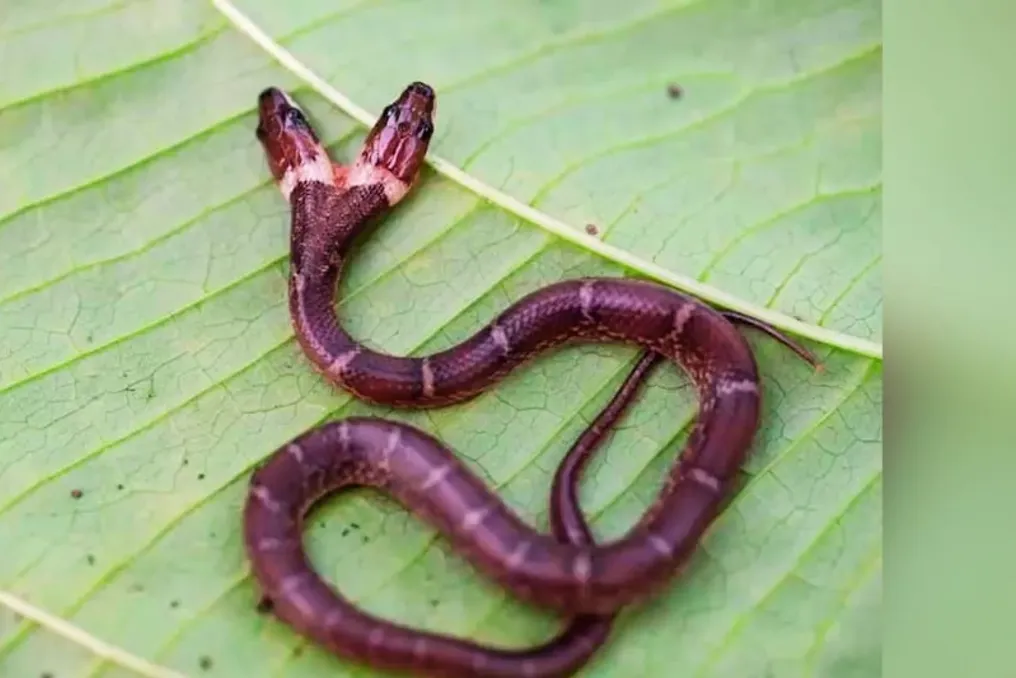
The discovery of a two-headed snake in Gujarat has become a subject of discussion as it is considered the first such case in the state. This rare find is an organism with one body but two independent heads and nervous systems, meaning it has two separate brains controlling one body.

At first glance, it is hard to believe what one sees in a two-headed snake. However, this is not fiction, but an extremely rare natural phenomenon. Although similar anomalies have been observed in India in two cobras and two wolf snakes, this case in Gujarat is reported as the first.

The scientific explanation for the appearance of two heads is a genetic mutation known as bicefaly. During the embryonic development of the snake, abnormal changes occur in the formation of the head part of the body, leading to the development of two heads on one body.

A more complex aspect is that these two heads function independently; each has its own brain and nervous system. A serious problem arises in body control: if one head wants to turn in one direction and the other in another, the body must decide what to do.

Furthermore, competition for food can arise between the two heads, and they may react to the environment differently. This could contribute to a shorter lifespan for such creatures in the wild, where threats are numerous.

This snake, found in Dahod, is a wolf snake that poses no danger to humans. It usually feeds on small animals and lizards living near residential areas. Thus, this snake plays an important role in the local ecosystem by helping to control small animal populations.

Local residents and nature enthusiasts in Dahod show great interest in this rare snake. This specimen raises profound questions: how did two heads form, and whose decision will dominate the control of one body when both heads possess their own mind?

Scientists discover two new species of sea spiders in the Pacific Ocean
Read more
super.abril.com.br

Scientists discover two new species of sea spiders in the Pacific Ocean

Researchers have discovered two new species of sea spiders that may cause concern due to their unusual appearance. These creatures belong to the family of sea spiders and were found in the shallow waters of Selish Bay, located between Washington State in the USA and the province of British Columbia in Canada.

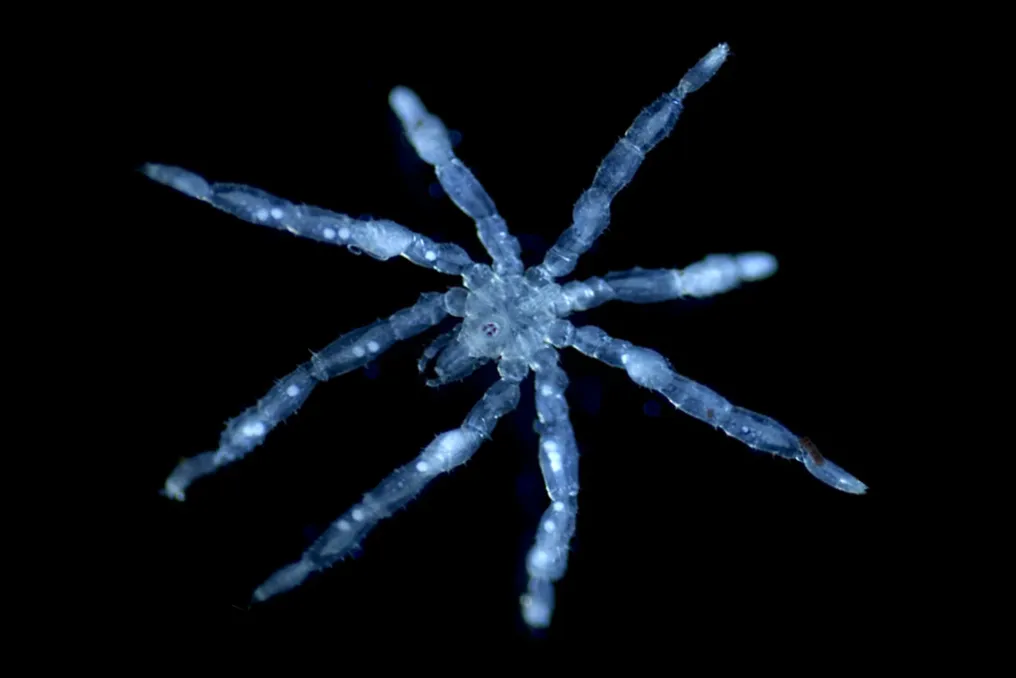
One of the discovered species, named Callipallene pilosuspedes, attracts attention with its peculiar appearance: its limbs are covered in long spines, its eyes are red, and its mouth is triangular with three lips. This species also possesses appendages used for hygienically cleaning its own legs.

The second species, named Tanystylum kiixin, resembles a swamp monster. Unlike its 'relative,' it has shorter legs and significantly smaller appendages, which apparently limits its ability to self-clean. This is confirmed by the fact that 82 specimens found during the study were covered in dirt, detritus, and parasites.

However, researchers emphasize that these creatures pose no threat: the red-eyed species is only about 8 millimeters in size, and the second species is even smaller. Furthermore, there is no evidence that they inhabit outside of Selish Bay. According to scientists, this is the first time a sea spider has been described in this region in almost a century.

To identify the new species, researchers collected over 150 samples of sea spiders at depths of up to 18 meters in Selish Bay. After studying the animals' physical characteristics and analyzing their DNA, it was determined that these creatures correspond to five shallow-water sea spider species—two of which had not been previously described.

The lead author of the study, Cormac Toller-Scott, stated in his announcement: 'To understand how marine invertebrates suffer from factors such as climate change, and how we can better protect these vital ecosystem elements, we must be able to identify them.'

Sea spiders belong to an ancient lineage that appeared about 500 million years ago. They are relatives of spiders, scorpions, and clawed crabs, but unlike these examples, they are fully aquatic. To date, science has documented only about 1400 species of sea spiders.

Interestingly, even by the standards of arthropods, their appearance is often quite bizarre. Some species can have up to 12 legs, and their size varies greatly: from less than one centimeter to more than 70 centimeters. Due to their small size and similarity, the new sea spiders may be difficult to recognize.

Moreover, many of them, including the newly discovered ones, are transparent and take on the color of what they eat. For example, Tanystylum kiixin feeds on parasites, which partially explains its unique appearance. Another characteristic is that they do not spin webs or prey on their food like terrestrial spiders. In the case of the discovered specimens, they were attached to a hydrozoan—a marine animal resembling a plant.

Additional dives are planned, during which researchers hope to discover more sea spider species in the future. The full description of the new species was published in the journal Organisms Diversity & Evolution.

Popular