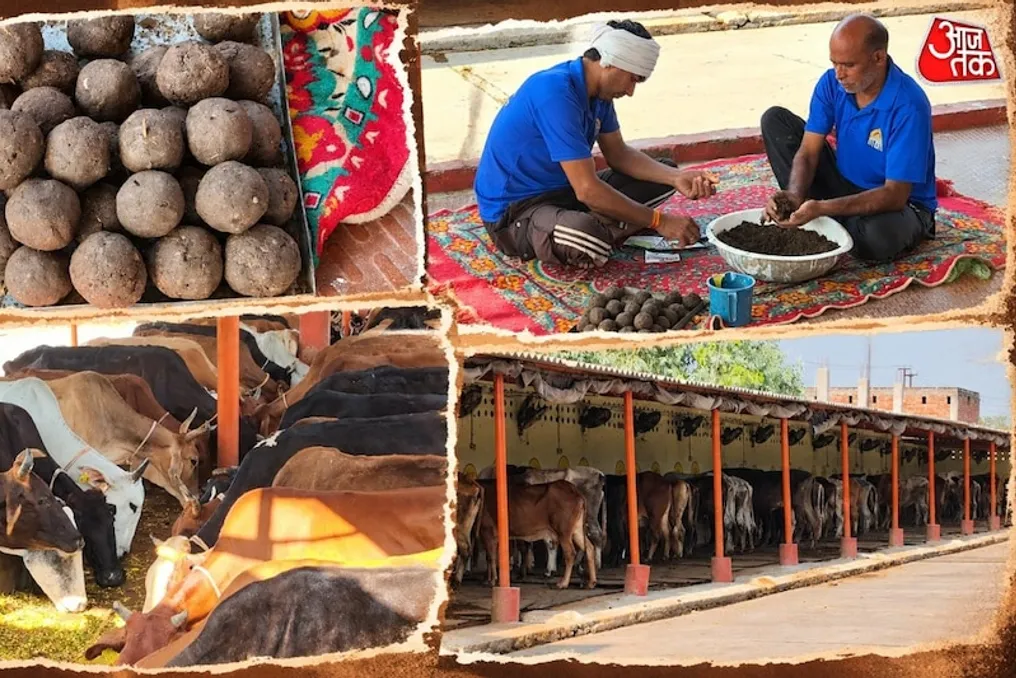
At the Kanha Upvan shelter in Saharanpur, a new product made from cow dung is being created, offering people an innovative method to increase greenery. Seed balls (seed balls) containing flower and vegetable seeds are manufactured here. These balls can be placed on empty patches of land or in areas with potential for plant growth.
This shelter, managed by the municipality in the village of Savalpur Nawada, provides protection for about 550 stray animals. To achieve self-sufficiency, the shelter produces various products from cow dung and urine. The production of seed balls has begun as part of this initiative.
According to the shelter keeper, Shravan Kumar, seeds of various flowers, including marigolds, are added to the seed balls. Seeds of vegetables such as cardamom, cloves, green pepper, zucchini, pumpkin, okra, and eggplant are also used. These seeds are mixed with dung to create the seed balls. Residents are invited to take them and place them on free spaces where plants can grow. Under favorable conditions, the seeds inside the ball can germinate after being placed in the soil. However, plant growth depends on many factors, including soil quality, moisture, weather, and the quality of the seeds themselves.
The price of these seed balls is set at only 10 rupees. They are sold both offline and through the online platform Amazon. The shelter notes that people can purchase these balls and use them in open areas. Thus, a small seed ball unit allows one to attempt growing flowers and vegetables from dung. Furthermore, these dung balls enrich the soil with organic matter. This initiative allows the available dung at the shelter to be used to produce a useful product.
Shravan Kumar reported that about 100–150 seed balls are produced daily at the shelter. The demand for them is not limited to Saharanpur; they are sought after in other regions of Uttar Pradesh, as well as in other states. Seed balls are delivered to customers from states such as Haryana, Punjab, Himachal Pradesh, Uttarakhand, Delhi, Madhya Pradesh, and Bihar. Sales are conducted both online and offline. According to Shravan Kumar, demand comes not only from Saharanpur but also from other districts. He emphasized that people take them with them and place them in empty spots for plant cultivation.
The Kanha Upvan shelter protects about 550 animals that were previously roaming the streets. In addition to protecting these animals, the shelter strives to create various products from dung and urine. As part of efforts to ensure self-sufficiency, the shelter already produces many goods from dung and urine, and seed balls have become part of this program. Governor Yogi Adityanath also visited Kanha Upvan and highly praised the products produced there. Now, the shelter produces dung seed balls and distributes them among the population. This initiative combines the use of dung for product manufacturing with an attempt to increase greenery in vacant areas. For just 10 rupees, the seed balls give people the opportunity to grow flowers and vegetables.
Demand for seed balls comes not only from Saharanpur but also from other parts of Uttar Pradesh and neighboring states. They are delivered to Haryana, Punjab, Himachal Pradesh, Uttarakhand, Delhi, Madhya Pradesh, and Bihar. With the daily production of 100–150 seed balls and sales both online and offline, this product finds its market. The shelter's experiment combines efforts to utilize dung, achieve self-sufficiency, and increase greenery. According to Shravan Kumar, the seed balls provide people with a simple way to grow plants, allowing them to place them in open areas for further growth.