Death of Jeffrey Archer evokes nostalgia for 1980s India and simple pleasures
Read more
The times of India
timesofindia.indiatimes.com

Death of Jeffrey Archer evokes nostalgia for 1980s India and simple pleasures

Jeffrey Archer's passing is perceived by many as a personal loss, as he reminds them of the India of the 1980s—an era of simple joys. Archer's books helped Indians love reading, awakening a sense of simple pleasure and anticipation for the end of another chapter.

The 1980s are considered a good time for growing up in India. This period was close to gaining independence and was two decades before the 21st century. It was an India that gave children enough space for self-discovery before they encountered the harsh outside world. Mornings were intense, while afternoons were relaxed. Evenings were long, a time for socializing with neighbors from verandas and terraces. At that time, young people had the freedom to play outside, although strict rules were observed. When night fell, it promised the opportunity to immerse oneself in favorite books, among which Jeffrey Archer was invariably found.

Even in families where both parents worked, the atmosphere did not differ significantly. Grandparents played a big role. The 1980s were not yet the era of the nuclear family; many homes had mini-libraries containing two or three shelves of books. These libraries featured works of various genres—mainly fiction—in the native language and in English.

The attraction of the brilliant and dramatic world described on the pages covered themes of money, power, revenge, love, recognition, and new chances in life. The books told stories of families, rivalry, fortunes, secrets, political ambitions, and people who seemed to possess everything until fate changed their situation. The actions unfolded in worlds far removed from the India most people knew, but the emotions were universal: ambition remained ambition, envy remained envy, and family feud remained family feud. The character who lost everything and wished to start life anew was understandable to any reader.

In the book 'Kane and Abel', when Archer toured the Western world, a typical autograph session in New York or London could attract about 200–300 readers. However, upon stepping onto the soil of Delhi, Mumbai, or Bangalore, he met crowds of 2000–3000 enthusiastic fans, like a pop star. He was most touched by the younger generation among these readers. At a meeting in Bangalore in 2013, where 1000 fans gathered, eight out of ten were under 20 years old.

Borrowed and Worn-Out Books

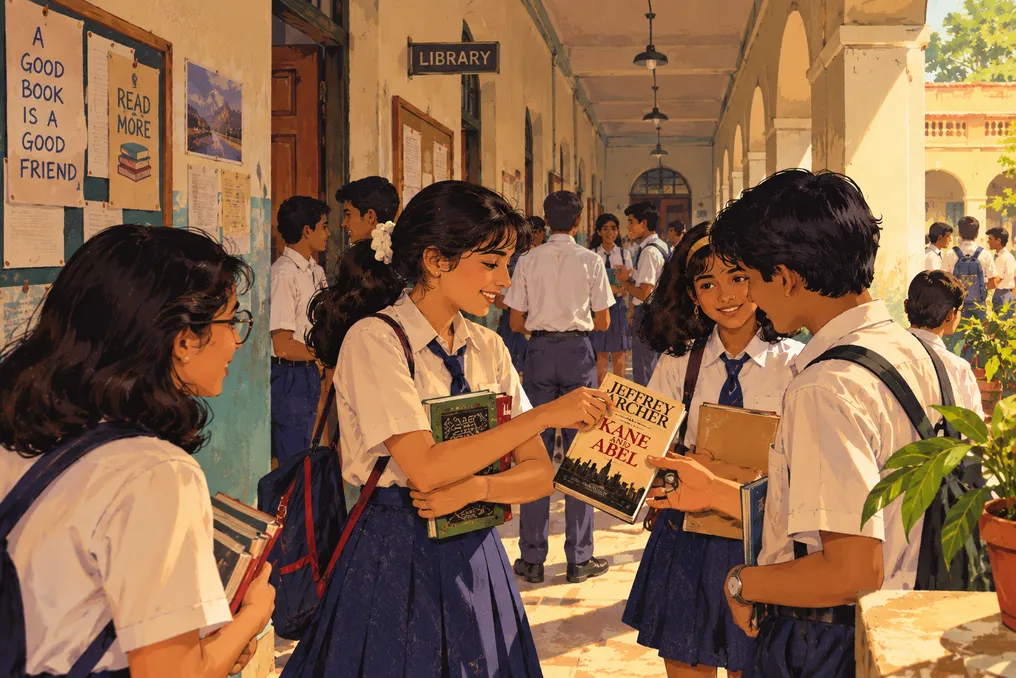
Many of us first encountered his work in school libraries or through friends, after which we began searching for his other books. Works such as 'Kane and Abel', 'A Twist in the Tale', 'Not a Penny More', and 'Not a Penny Less' generated constant interest. As soon as a reader finished one book, they realized others followed. This excitement is still palpable, and it was experienced by most of us upon hearing of the author's death.

'Kane and Abel' essentially tells the story of two men born on the same day but who ended up in completely different worlds, whose lives intertwine due to ambition and rivalry. William Lowell Kane is born into wealth in Boston, while Abel Rosnovsky grows up in poverty and endures incredible hardships before building his own empire. It is a grand story, but its emotional core is simple: two men strive for success in life, and neither is willing to yield.

Hollywood Dreams Mixed with Bollywood Masala

His stories also reflected an understanding that people are rarely absolutely good or absolutely evil; they are complicated by family ties, pride, love, money, and circumstances. This was familiar to the Indian experience. Indian storytelling has long been accustomed to characters who can be generous and selfish, noble and imperfect, loving and resentful at the same time. In this sense, Archer's worlds, however Western they seemed on the surface, did not feel alien.

The novel 'Shall We Tell the President?' immersed the reader in the world of American politics and a conspiracy against the president. 'A Quiver Full of Arrows' demonstrated how much drama could be contained in a short story, telling of deception, revenge, and unexpected twists. And 'The Prodigal Daughter', a sequel to 'Kane and Abel', moved the saga to the next generation, following Florentina Rosnovsky as she rises in American politics and strives to become the first female president of the United States.

The film 'Khudgarz', starring Jitendra and Shatrughan Sinha, drew inspiration largely from 'Kane and Abel'. This story spread through regional cinema, and years later, 'Not a Penny More, Not a Penny Less' served as the source for the clever plot of the film 'Ladies vs Ricky Bahl' by Yash Raj Films.

Archer was a good friend of the late Nawab Pataudi. Haimanti, although not pleased with every dog he meets (which surprises the dog owner and the dog itself), dreams of fantastic or classic books that can be read and reread. Perhaps this is the essence of everything, apart from the aroma of biryani, which beckons, or the idea lodged in the mind that refuses to leave until it is written down.
Similar stories

Son's Cricket Memories: From Apartheid Barriers to Farewell
Read more
iol.co.za

Son's Cricket Memories: From Apartheid Barriers to Farewell

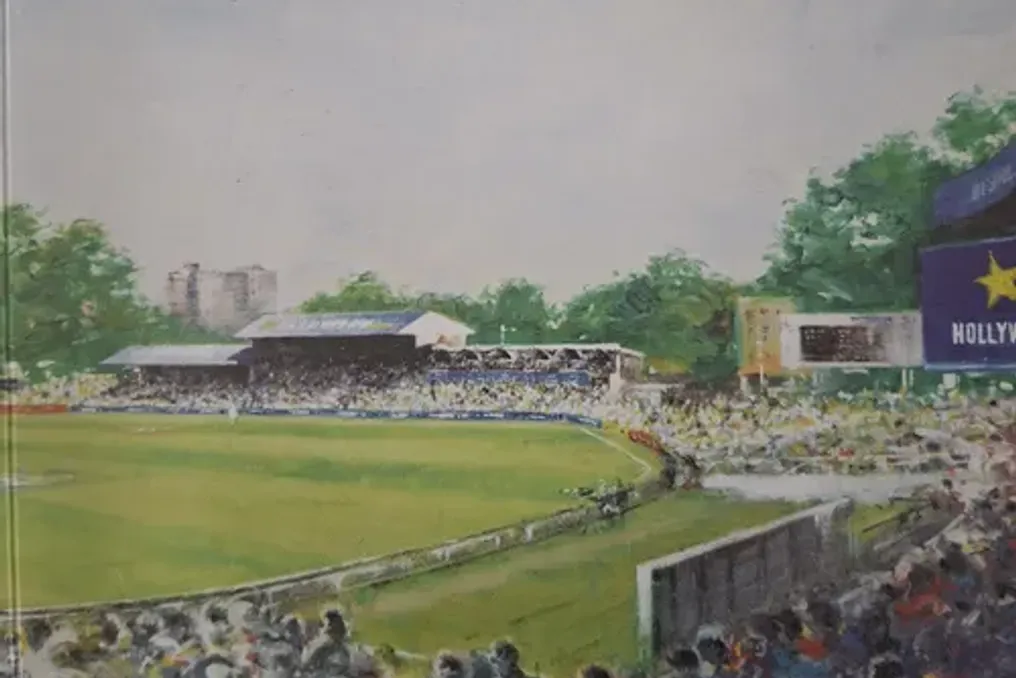
The author shares cricket memories that began back in 1970 when an Australian team visited the local stadium. His mother prepared sandwiches with cheese and tomatoes. At that time, Black people were only allowed a narrow strip of grass to watch the match, limited by hours.

Being the youngest, the author watched the game leaning against the green fence separating the white zone from their spot. He ate the first two sandwiches, carefully packing the rest during the lunch break.

Opinion

In 1992, during a parade through Durban, the author recalls Barry Richards stepping onto the field and taking a stance. The author had already seen Richards play for Natal, noting his ability to pierce the dense field coverage with accuracy comparable to a slipper thrown by the neighbor Auntie Saras. Mike Procter explained that Richards honed his reflexes at school by throwing a ball against the wall and then batting it.

Test cricket was considered a rather formal pursuit, but when Barry Richards was eighty years old, a buzz arose around him. It was interesting whether he would score a century before lunch, as the last such player had been in 1930. Captain Bill Lowry slowed the game while tying his shoelaces, and Ali Baher played the final over before lunch, swinging desperately, and was dismissed.

Richards finished lunch with 94 runs. This impressive innings was overshadowed by Graham Pollock's innings of 274 runs, which surpassed Jackie McGlew's record of 225 not out. Nevertheless, in the author's eleven-year-old mind, Richards' innings, featuring twenty-four fours and one six, was the greatest during the apartheid era at Kingsmead.

The author describes watching a boundary shot and how the players danced along the path toward the so-called mysterious spinner Johnny Giles, who was like a pirouette on a pin. In the humid atmosphere of Durban, all Black people gathered in their zone between the hips and elbows. When Richards batted, Graham Pollock, with an open stance, displayed strength similar to his colleague the artist Jackson, who was said to 'throw pigment onto the canvas like pies.'

While Barry was having lunch, the author searched for his sandwich, discovering ants the size of broad beans had settled under the covers. The tea room for Black people was closed. He wandered around as if hit by Mike Procter's bouncer. A large cricket enthusiast from the other side of the racial divide leaned over and gave him a fatty sausage with sticky sauce, which the author later learned was boerewors.

After lunch, Richards began to dominate. He scored 140 runs off 164 balls, averaging a rate of over 85. Before the author could lick his fingers, he left the field. His father accompanied him on the third or fourth day, and the author desperately wanted Barry Richards' autograph. However, his father placed a hand on his shoulder and forbade him from taking a pen and paper.

The author wonders how his father could explain to his son, who taught him the subtleties of gentlemanly play, that there were boundaries in cricket inaccessible to both of them. He remembers Richards, whose late delivery was simultaneously a stiletto and a chisel, 'that fragile moment,' as Barthes might say, 'when the world freezes, touching both silence and applause.'

It was Richards' last match at Kingsmead. It was also his personal moment, as the boycott of 'apartheid cricket' was gaining momentum. Father and son left for Springfield on Saturday and Sunday. The atmosphere and setting at Springfield Stadium were vastly different from Kingsmead. They spread a mat on the field. The holes were huge, and attempting to run quickly often resulted in getting stuck, so they had to run along the field, moving towards the cover, and then returning to the pitch.

They played cricket, but ran like baseball players. It was impossible to play ground shots because the grass was covered in holes and mounds, and a square drive could bounce back to the wicketkeeper or simply fail to travel two meters. To score runs, the ball had to be lofted high. This created its own problems: when a strong batsman was on the field, the fielders in the adjacent field had to look backward.

Since the fields were situated one above the other without screens, you could sometimes see two bowlers approaching you at sunset. The culmination was lunch with a portion of biryani. His father took a portion, ensuring the author had a potato serving. Like the wicket in Springfield, this piece of starch dissolved at the slightest touch.

When India came to visit, his father and author visited Old Kingsmead. His father behaved like a child, absorbing everything around them while sitting high on the Umgeni side. After a 22-year absence, their first embrace was hesitant, but soon they stood together, as if returning after a long lunch break.

The game ended. His father noticed other men in the stands with whom he had competed in the 1960s and 1970s. They hugged, stared at the empty field for a long time, and then bid farewell. Men who played this game with such dignity under conditions that mocked them. When he took my hand, we did not know that he would never see Kingsmead again, as Parkinson enveloped his body and eventually took his life.

Cricket. Regardless of how well you see the ball or how well you play, your innings will end due to the lack of a reliable partner on the other side. In life, we think a partner can be a friend or even a lover. But what if it is our own father or parent? The person we find already on the field with a respectable fifty runs when we, trembling, take a stance? Someone who calms our nerves with encouragement, whispering advice on how the field plays. Cricket tells stories of wonderful father-son pairs. Stories of feats on the field, honor beyond the boundaries that made generations sigh and cheer. Stories that have also given rise to controversy and debate. Bitterness and regret. For all of us, these stories cannot be forgotten, or we will condemn ourselves to loneliness without history, without home, without playing partners.

Patient with liver cancer in the USA appeals to authorities for medical evacuation to India
Read more
www.aajtak.in

Patient with liver cancer in the USA appeals to authorities for medical evacuation to India

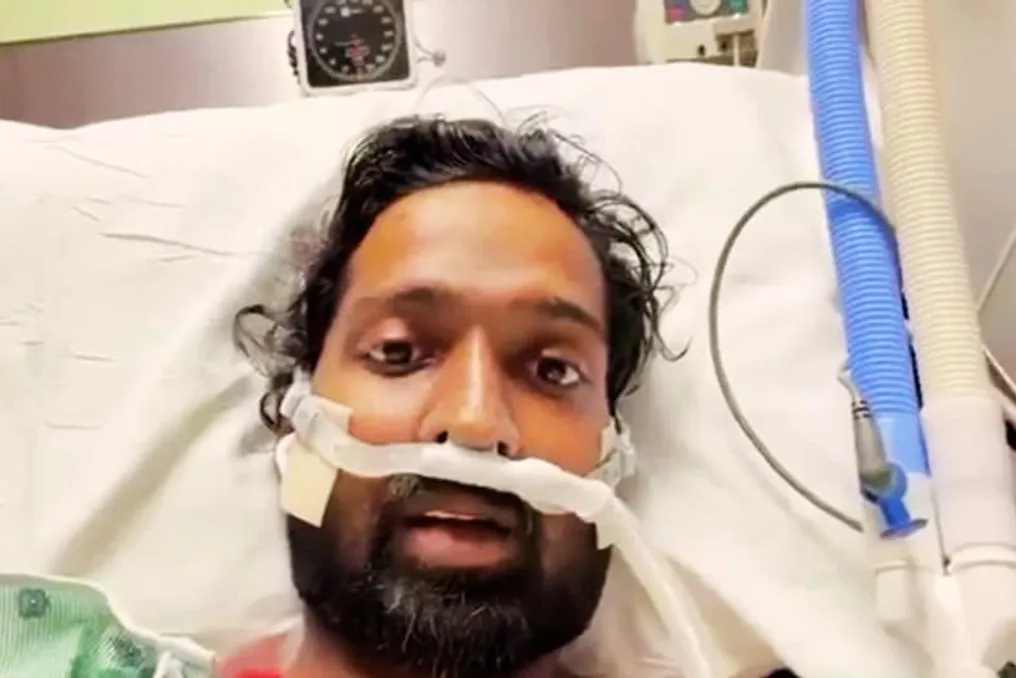
A citizen from Andhra Pradesh, currently in the USA and battling cancer, has appealed to the governments for assistance in returning home. This individual, named Bharat, directed an emotional appeal through social media to the government of Andhra Pradesh and the central government.

He stated that he suffers from hepatocellular carcinoma (HCC), which is a common type of liver cancer. Bharat has been undergoing treatment for this disease for about four years. Doctors in the USA have recognized his condition as critical during his treatment.

Bharat's wish is to spend his remaining time with his family and loved ones. However, there is a serious problem: he cannot travel from America to India on a regular commercial flight due to his health condition.

His medical condition does not allow him to undertake long-haul flights like regular passengers. Therefore, he requires medical air transport or an air ambulance. Although his home is thousands of kilometers away, the journey there also presents difficulties.

Bharat expressed a desire to return specifically to Andhra Pradesh. For him, this is not just a trip, but a final attempt to reach his family. He appealed for help from the Chief Minister of Andhra Pradesh, N. Chandrababu Naidu, Deputy Chief Minister Pawan Kalyan, and state officials, and also requested the central government to organize his return from the USA to India.

In a video message, Bharat emphasized that his main dream is to reunite with his family and spend his remaining time with them. He also called on people to spread his appeal so that it reaches the relevant officials and help is provided in a timely manner. Bharat hopes that by arranging an air ambulance or other medical transport, he will be able to return home despite his severe illness.

Popular