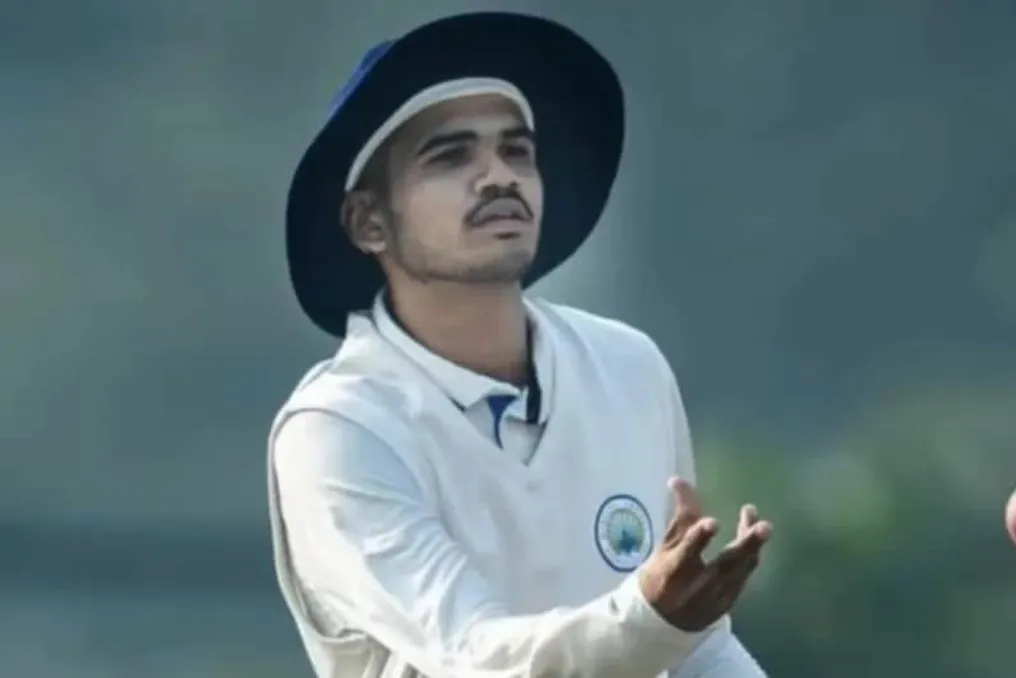
Young player takes 14 wickets, helping India secure a clean victory over Australia in U19 series
Read more
Aaj Tak
www.aajtak.in

Young player takes 14 wickets, helping India secure a clean victory over Australia in U19 series

The Indian U19 team has strengthened its dominance over Australia in the youth Test series. In the second unofficial match, held at the Narendra Modi Stadium in Ahmedabad, India defeated Australia U19 by 10 wickets, taking the series 2-0.

The main hero of this victory was young spinner Tanmay Baloda, who single-handedly dismantled the Australian batsmen's attack by taking 14 wickets in the match.

India, having won the toss, chose to bat first. The Australian team conceded only 174 runs. Tanmay Baloda delivered an outstanding performance, claiming 6 wickets while conceding just 32 runs in 25 overs. The Australian batsmen faced serious difficulties trying to score against his bowling.

In response to 174 runs, the Indian batsmen pushed their total past 300. India scored 315 runs in the first innings, gaining a lead of 141 runs. Captain Yashvardhan Chauhan scored 52 runs, and Abhipray Biswas played brilliantly with 73 runs. Tanmay Baloda also contributed to the team's strength by adding 28 runs.

Facing a deficit of 141 runs, the Australian team needed a big partnership in the second innings, but Tanmay Baloda denied them this hope. The Australian team was bowled out for only 151 runs in the second innings.

Tanmay bowled 19.5 overs, conceding 41 runs and taking 8 wickets. Thus, in total, he took 14 wickets in the match: 6 in the first innings and 8 in the second. After Australia was dismissed for 151 runs, India needed only 11 runs to win. The Indian batsmen achieved this goal in just a few balls without losing any wicket, securing a 10-wicket victory.

Earlier, in the first Test match, India had also beaten Australia in Rajkot by an innings and 48 runs. The performance of the Indian U19 team in this tour was exceptionally impressive. Previously, the Indian team had beaten Australia 3-0 in a three-match ODI series. Now they have completed a clean sweep in the youth Test series with a score of 2-0.

Tanmay Baloda's story makes this result even more significant. He was included in the Indian U19 multi-day squad as a substitute. BCCI announced in September that he would replace Rohit Yadav. Given the chance, Tanmay delivered such a performance that he is now being talked about everywhere. By taking 14 wickets in one Test match against Australia, he showed magnificent bowling skill.

Tanmay Baloda, aged 18, hails from Rohtak in Haryana state. He was not given a chance in the first Test game. However, in the second match, he made a sensation with his performance, attracting widespread attention. This year, he debuted in classical cricket for Haryana in January. In his first match, he took 5 wickets against Assam, and in the second match—5 wickets against Bengal.

Similar stories

Kamran Akmal criticized Sam Ayub's celebration after the 2026 Asian Games match
Read more
www.aajtak.in

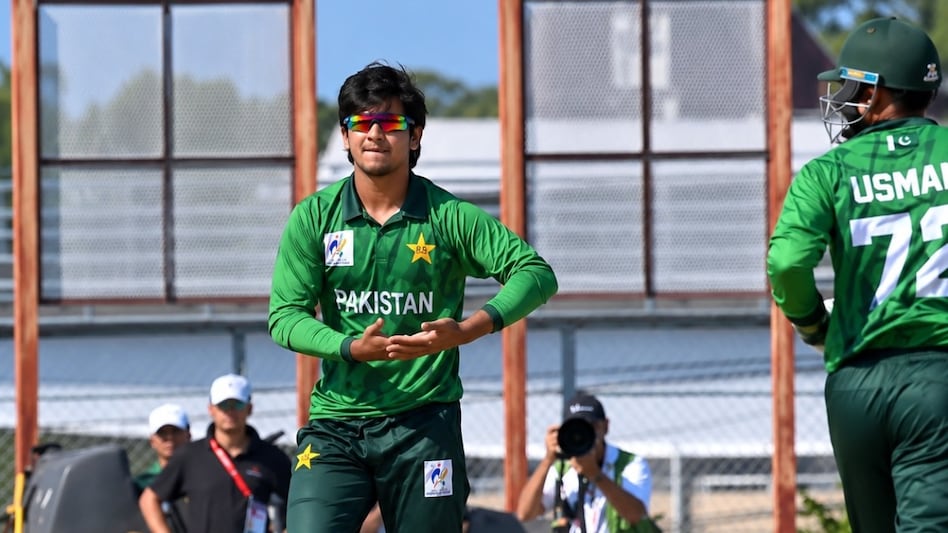
Kamran Akmal criticized Sam Ayub's celebration after the 2026 Asian Games match

An incident that continues to be discussed occurred during the gold medal match of men's cricket at the 2026 Asian Games between India and Pakistan. Pakistani all-rounder Sam Ayub staged a controversial celebration after dismissing young Indian batsman Vaibha Suryawanshi.

Ayub imitated cradling a baby (celebration in cradle), which drew criticism from former Pakistani cricketer Kamran Akmal. Akmal voiced his opinion on this situation on the show 'Game Plan'. The program host also questioned such behavior in international cricket.

In response, Akmal stated that players should focus on their game rather than actions for social media. He emphasized that such things have been happening for a long time, and despite the team's poor results, players engage in attention-grabbing activities on social media. Akmal urged the management to consider this, noting that it concerns international cricket, and the player's age is irrelevant since he plays internationally. He added that Sam Ayub is not a child and should focus on his performance.

In this match, India defeated Pakistan by 19 runs, defending the championship title. At the beginning of the Indian innings, Vaibha Suryawanshi tried to put pressure on the Pakistani bowlers. He showed his intent by scoring two boundaries in Sad Masood's over. However, he was dismissed while attempting a reverse sweep against Sam Ayub in the third over. Vaibha scored 15 runs off 9 balls.

In the match, India batted first and scored 211/6 in 20 overs. Abhishek Sharma played aggressively, scoring 61 runs off 28 balls. Tilak Verma quietly scored 51 runs without getting out, and Shivam Dube contributed 27 runs. After Vaibha Suryawanshi's early dismissal, Sanju Samson came in at number three.

Pakistan's start while chasing was not the most successful, but Hasan Nawaz tried to change the game's momentum, showing explosive play with 96 runs off 51 balls and putting pressure on the Indian bowlers. Jasprit Bumrah and Shivam Dube performed excellently under pressure, restricting Pakistan to 192/6.

After losing the ODI in Mullumpur, captain Shubman Gill expressed dissatisfaction with the team's play and warned the players
Read more
www.aajtak.in

After losing the ODI in Mullumpur, captain Shubman Gill expressed dissatisfaction with the team's play and warned the players

In the final match of the three-match ODI series between India and West Indies, held at the Maharaja Yadvindra Singh International Cricket Stadium in Mullumpur on Saturday (October 3rd), the West Indies team won by five wickets.

Captain Shai Hope scored an unbeaten 162 runs, despite a hamstring injury, which helped the West Indies achieve an impressive total of 352 runs in just 10 overs after the game concluded.

After the match, Indian captain Shubman Gill commented on the reasons for the defeat, expressing serious concern about the quality of fielding and how the team handles the over-finish. Gill admitted that the Indian team's fielding did not meet expectations ahead of the World Cup.

During the game, the Indian squad dropped around six to seven catches. According to the captain, losing such opportunities is worrying for any team. He noted: 'There were many good moments, but there is definitely room for improvement in certain areas. Our fielding could have been better. We dropped about 6-7 catches. This is not a good sign before the World Cup.'

The main problem, in the opinion of the Indian captain, was the performance during the final overs. He stated that the team lacks clarity on when to attack and when to employ defensive tactics in the field. Shubman added: 'We need to work on our end-of-match play. When we bowl in the last overs, we are unclear whether we are attacking or defending.'

The Indian captain also mentioned that even if five or six opposing players are out, the team struggles to determine field placements and bowling strategies. Sometimes the strategy for the end of the match begins too early, when it might have required mid-game play.

The biggest contributor to India's loss was West Indies captain Shai Hope. He scored his 21st century in ODIs and secured a memorable victory for the team. This was the largest successful run chase for the West Indies in ODIs. It was Hope's second consecutive stoic innings; previously, he had also scored a century in a match in Guwahati, and in the third match, he surpassed it, dashing India's hopes.

After the game, Shai Hope shared an interesting secret about his brilliant innings. He revealed that a conversation with former Indian captain Mahendra Singh Dhoni helped him improve his approach to the game. Hope said: 'I had a good talk with the great player MS Dhoni. He told me that you always have more time than you think. So I don't focus too much on the result.'

Hope reported that he now tries to focus on the process rather than the final outcome of the match. His attention is focused on understanding the circumstances, breaking down his innings into small parts, and finding suitable moments to score boundaries at the end of the match.

Popular