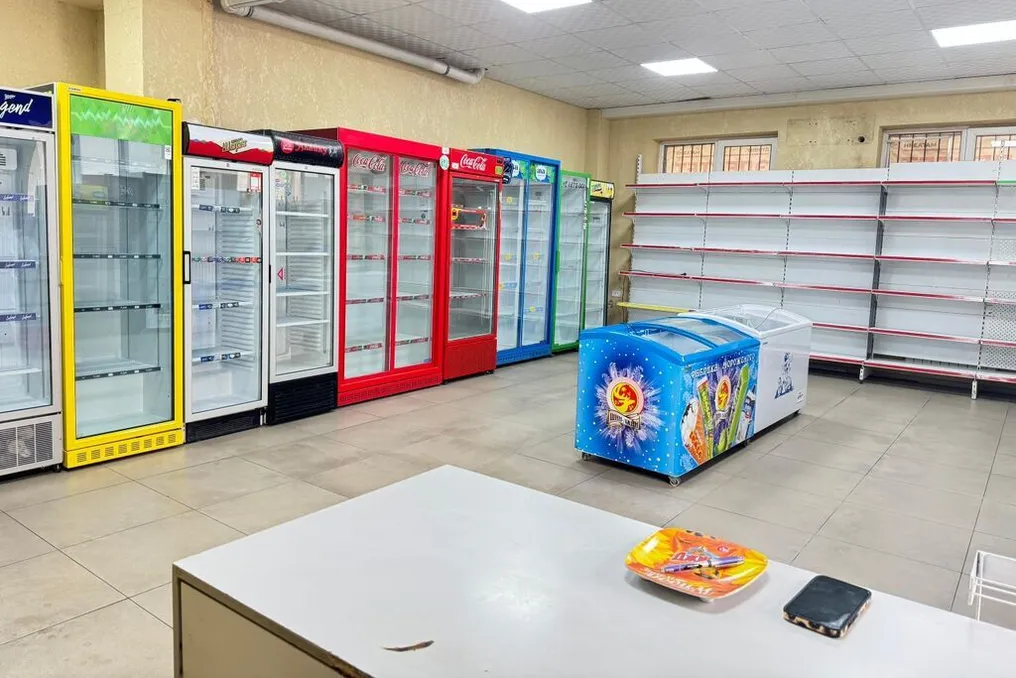
The Ministry of Economy and Finance of Uzbekistan has developed a draft proposal allowing the premises and equipment of Mahalla Centers and household service centers to be leased to private entrepreneurs. The funds generated from this rental will be directed to local budgets, Mahalla funds, and the State Assets Management Agency.
This project has been submitted to the public discussion portal for regulatory legal acts. It concerns Mahalla Centers, which were established as part of the 'Sustainable Development of Rural Territories' project with support from the Islamic Development Bank and the OPEC Fund for International Development. Currently, the project covers 170 Mahallas across 20 districts in Karakalpakstan, as well as in Bukhara, Navoi, and Khorezm regions, including 40 central and 130 adjacent centers.
Forty fully equipped Mahalla Centers have been commissioned. The proposed leasing procedure will also apply to centers that will be built later using funding from international financial institutions.
Mechanism for Leasing Premises
According to the draft, non-administrative center premises will be leased through the E-auksion platform on a competitive basis. The announcement of the auction must be published at least thirty working days in advance. Lease agreements will be concluded by district hokimiyats, as they are the owners of the buildings.
It is anticipated that various household service enterprises can operate in these centers, such as hairdressers, beauty salons, dry cleaners, equipment repair workshops, sewing workshops, and fitness halls. Additionally, the premises can be used for consultations for young entrepreneurs, training and career guidance, as well as for trade and production purposes.
Specifically, food stores and confectionery workshops are permitted in the buildings, and basements provide facilities for storage, processing, and packaging of fruits and vegetables. Center premises will be classified into administrative, social, commercial, and common use areas; however, administrative spaces will not be leased.
Rent Calculation and Financial Terms
The annual rental cost per square meter will be determined based on several factors: minimum rate, location zone, building type, use of adjacent territory, and the overall commercial attractiveness of the object. A coefficient of 2.0 has been set for Bukhara region, and 2.0 for the first three floors and 1.2 for basements in Navoi region. A coefficient of 1.5 is provided for Khorezm region, and 1.8 for Karakalpakstan.
In addition to rent, tenants are obliged to cover utility costs, their share of common area maintenance expenses, and contribute 5% of the rent for current repairs. The contract may be terminated, for example, in case of payment delay exceeding two consecutive months.
Receipts from rent and equipment must be distributed within five working days. It is planned that 40% of the funds will go to the local budget, another 40% to the Mahalla fund for maintenance, repair, and equipment renewal, and the remaining 20% to the State Assets Management Agency. Furthermore, the Mahalla fund's share must not be lower than the amount necessary to ensure the stable operation of the center, although the proportions can be changed by a separate decree of the Cabinet of Ministers.
Control and Supervision System
A three-level system will be introduced to monitor the use of buildings and equipment. The Mahalla citizens' assembly is obliged to submit a monthly report to the hokimiyat, and the district hokimiyat must report on the income received to the district Kengash of people's deputies quarterly. An annual budget of revenues and expenditures will be formed, the approval of which is within the competence of the Kengash. Control will also be exercised by the district branch of the Mahalla Association together with the Mahalla Support Council and the territorial unit of the State Assets Management Agency. Discussion of this project is scheduled until October 18.