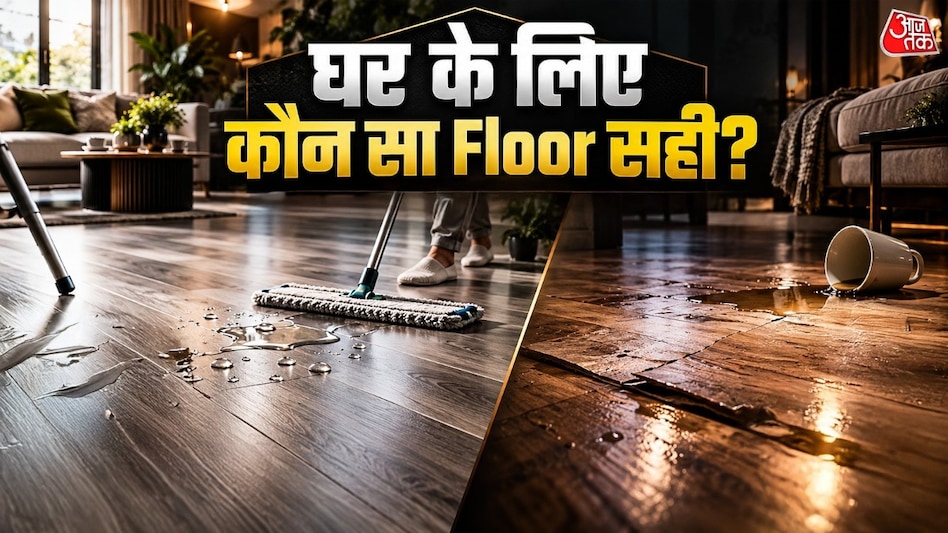
When building or renovating a home, the choice of flooring is a very important decision. The flooring must look aesthetically pleasing, be easy to clean, and be resistant to daily use. This is why many people are increasingly preferring vinyl flooring over traditional laminate.
Laminate has long been popular in homes because it mimics the appearance of wood and usually has an acceptable cost. However, its significant drawback is its sensitivity to water and humidity. For this reason, in rooms where there is a high probability of water ingress, people consider vinyl flooring as a more suitable alternative.
Although both types of flooring can externally resemble wood or stone, the materials used in their composition differ. Laminate consists of boards containing wood fibers. If water penetrates through the edges or joints, the wooden component can absorb moisture, leading to board swelling, edge lifting, or floor warping.
In contrast, vinyl flooring is made primarily from synthetic materials such as PVC and does not contain wood fibers, so it is not susceptible to swelling from water exposure.
Laminate is formed from several layers, and its top surface is designed to look like wood, stone, or other designs. It looks quite attractive and is generally cheaper than natural hardwood flooring. Maintenance is also simple, but water and humidity can cause problems. If water penetrates inside through the joints, the inner layer can swell, leading to floor damage. Therefore, it is best used in areas with minimal contact with water.
Vinyl flooring is made from synthetic materials and offers many designs imitating wood, marble, or stone. Its main advantage is that it demonstrates better resistance to water and humidity compared to laminate. It is also easy to clean and is considered a convenient choice for everyday use. Nevertheless, not all vinyl flooring is completely waterproof, so when purchasing, it is necessary to carefully study the quality and manufacturer's recommendations.
Vinyl can be very useful in kitchens, hallways, or other parts of the house where there is a chance of wet shoes or water. If water gets into a laminate joint, its wood component can be damaged, whereas this problem is less common with vinyl. This is why people prefer vinyl in high-humidity conditions. Furthermore, vinyl flooring is easy to maintain: a broom or vacuum cleaner is enough to remove daily dust. It can also be cleaned with a light damp cloth and a neutral detergent. High-quality vinyl can feel slightly softer underfoot and reduce noise levels when walking. It was once easy to understand that vinyl was not real wood, but modern designs have changed so much that options imitating wood, marble, or slate are now available on the market, allowing selection according to interior design.
One cannot rely solely on vinyl flooring lasting long based only on its choice. Its strength heavily depends on the quality, thickness, and protective top layer. In bedrooms, the load on the floor is small, but in hallways or home offices, constant movement and chair wheels can create significant pressure on the covering. Therefore, before purchasing, it is important to assess how durable the flooring is for the specific area of use.
Before installing vinyl flooring, the base surface must be thoroughly checked. The floor base must be level and solid. If the underlying surface is initially damaged or uneven, problems may arise even after laying new flooring. It is also necessary to ensure there are no leaks of moisture or water from concrete or wood. Additionally, it is important to consider the height of the new floor relative to doors, trim, and floors of other rooms.
Both laminate and vinyl have their advantages. If there are many issues with water and humidity in the house, vinyl may be a more convenient option. At the same time, in low-humidity rooms, quality laminate can also be a good choice. Therefore, instead of choosing a floor based solely on price or appearance, it is better to make a decision by considering the room's needs, the probability of water contact, traffic intensity, and overall quality of the covering. The growing popularity of vinyl flooring is due not only to its appearance.