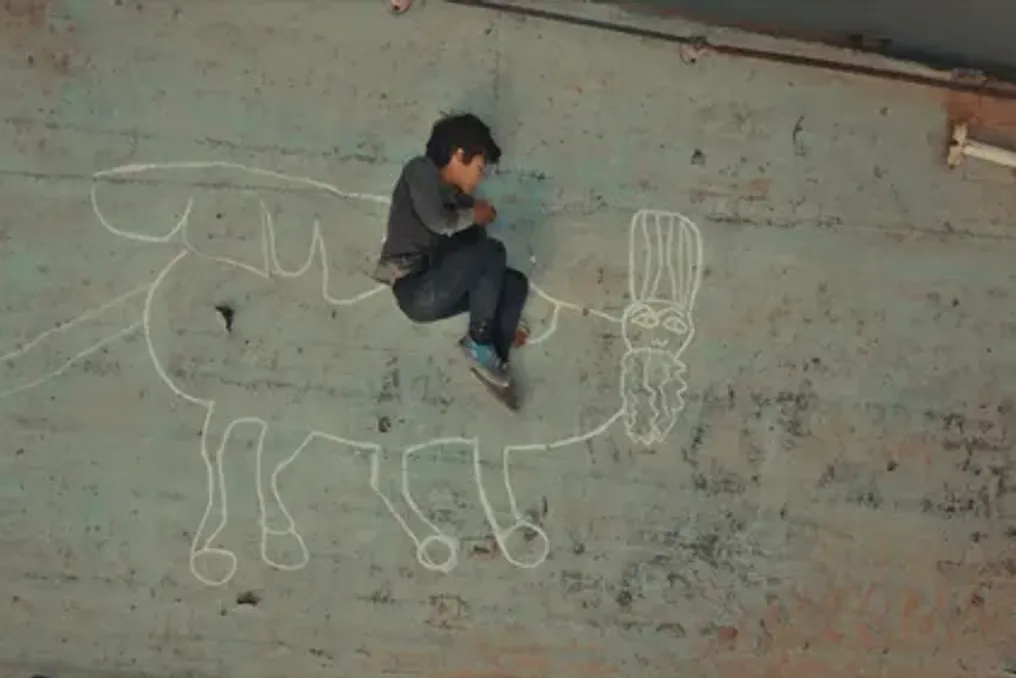
The film 'Irkalla: The Dream of Gilgamesh,' directed by Iraqi director Mohammed Jabarah Al-Daradji, will be the opening project of the Hollywood African Cinema Connection (HACC) 2026 film festival. The premiere will take place in Cape Town on October 30th.
In the initial scene of the film, nine-year-old Chum-Chum is shown underwater in the Tigris River. He believes the river is a path to his deceased parents. Chum-Chum is also an orphan and suffers from diabetes.
HACC Creative Director, William Williams, noted that the film allows viewers to see children whom they usually only encounter in conflict reports. She emphasized: 'We often see them just as statistics in the news.'
The film shows that Chum-Chum and his older friend Modi possess 'goals, ambitions, and dreams.' The film takes these aspirations seriously, even when the boys are unable to realize them.
For Al-Daradji, the concept of home goes beyond mere shelter; it serves as the foundation of identity and gives people a sense of belonging. He stated in an interview with IOL: 'We need something to belong to. We need our home. We need land.' In his opinion, without this connection, people lose part of their identity, asserting: 'Without land or home, you have no identity.'
Chum-Chum lives near a river that carries the weight of his past, holding the remains of his parents. In his imagination, beyond the river lies Irkalla—a mythical underworld connected to Gilgamesh. He looks at the Tigris River, perceiving it as a path to Irkalla, his parents, and the world outside the streets of Baghdad.
The director uses water to connect themes of memory, death, and hope. Furthermore, Al-Daradji places Chum-Chum in spaces that do not bring the child comfort. The boy moves between the riverbank, Maria's bus, crowded streets, and tall buildings.
Al-Daradji told IOL that he shot Chum-Chum 'almost exclusively with an 85mm lens,' which gave the boy a 'sensitive, intimate presence.'
In 'Irkalla: The Dream of Gilgamesh,' Maria plays the role of a nurse and caregiver managing an old double-decker bus converted into a mobile school for street children. Samar Kazem Javad, who played this role, previously had no acting experience, so the director organized driving lessons for her so she could operate the bus during filming.
The bus carries a history as heavy as the city itself. Al-Daradji found it at a double-decker bus graveyard outside Baghdad. ISIS had previously used it to transport people who were then thrown into the river before the Iraqi army captured it. The director aimed to change the history of this vehicle, describing the transformation as a transition 'from people who were about to be killed to people who are about to be taught.'
The bus becomes a mobile classroom and a temporary refuge. It carries the memory of violence in Baghdad while providing children with a place to learn, gather, and dream of a different future.
Between Baghdad and Cape Town
This aspect allows the film to speak to the South African audience without pretending that Baghdad and Cape Town share the same history. Al-Daradji also intentionally considered children outside of Iraq when creating the film. He noted: 'These are not just Iraqi children.' He spoke of children in South Africa who lack a voice or reliable rights.
The film demonstrates the needs of children for food, medicine, friendship, education, and safety. This is why it is suitable for a festival dedicated to heritage and land. Although Iraq in Al-Daradji's version is shaped by invasion, dictatorship, ISIS, and protests, his film refuses to present children as the final testimony of what happened.
HACC rightly starts with 'Irkalla: The Dream of Gilgamesh,' as it puts children at the center of any serious conversation about heritage. The film asks what our children will inherit from us, and what we are willing to do so that they inherit more than our violence.
The screening will take place at Ster-Kinekor, V&A Waterfront in Cape Town on October 30, 2026, at 20:00. Tickets can be purchased through Quicket.