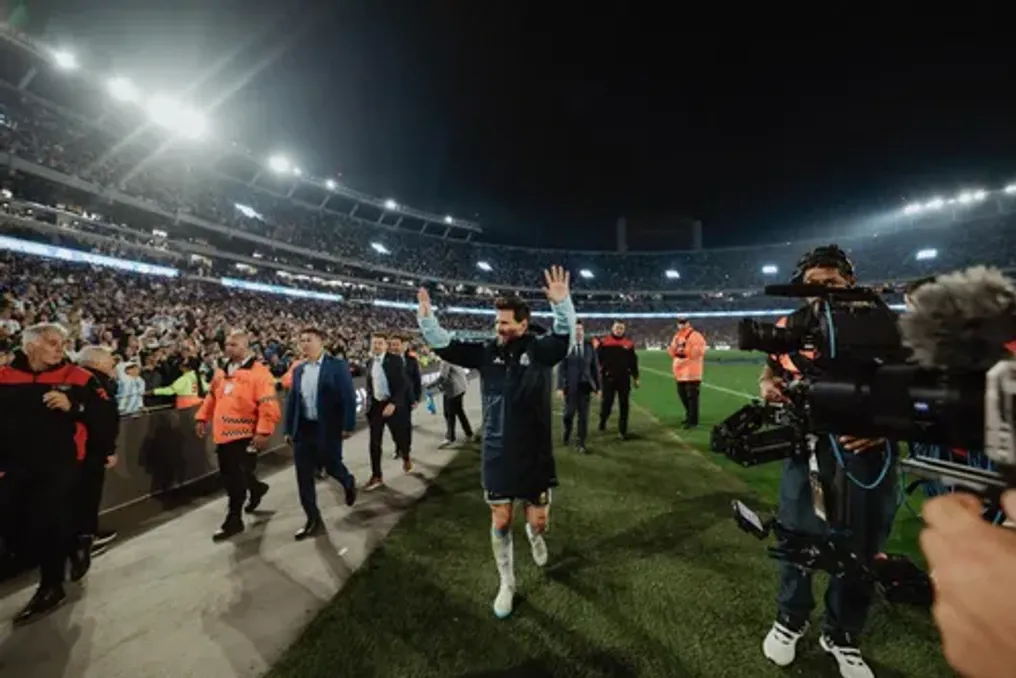
Lionel Messi's career on the international stage is drawing to a close, but his influence on football extends far beyond the trophies, records, and individual awards he has won over more than two decades.
Following the announcement of his international retirement several weeks ago, Messi is preparing for an official farewell match, where members of the Argentine team that won the 2022 World Cup have been invited to celebrate his outstanding career.
By examining five key moments that helped change the sport, one can trace the evolution of his influence.
In March 2007, when Messi was only a 19-year-old player, he scored his first hat-trick for Barcelona against Real in a tense El Clásico match at Camp Nou. This match convinced many of the exceptional quality of the Barcelona squad. Even then, his ability to accelerate, control the ball, and dribble past defenders was evident, but his composure under pressure stood out particularly. He ceased to be just a promising young talent and made his mark on the biggest football stage.
Lionel Messi and Pep Guardiola previously had successful working relationships, together winning two Champions League trophies and three La Liga titles.
Pep Guardiola's decision to move Messi to the central position of a false nine in May 2009 became one of the defining tactical moments of modern football. Instead of staying high between the opponent's central defenders, Messi dropped deeper, forcing defenders into impossible decisions. If they followed him, space opened up behind them; if they left him, he could receive the ball between the lines and attack the defense.
The 6-2 thrashing of Real by Barcelona at the Santiago Bernabéu was the most vivid example of the destructive power of this system. Messi's role influenced coaches and teams around the world, as the false nine turned into one of the most discussed tactical concepts in football.
The 2012 season remains one of the most outstanding individual years in football history. For Barcelona and Argentina, Messi scored 91 goals in 69 matches, breaking Gerd Müller's long-standing record for goals in a calendar year. However, it wasn't just about the numbers. Messi simultaneously acted as a goalscorer, creator, dribbler, and playmaker. He could dictate the flow of matches from the wing, operate in the center, or drop into midfield to suddenly appear in the penalty area.
These statistics were phenomenal due to the variety of ways he achieved them.
Throughout many years, Messi's international career was accompanied by the inevitable question: would he win the World Cup? He was close to success in 2014 when Argentina lost the final in Germany, but Qatar provided the answer. Messi scored twice against France in one of the greatest World Cup finals before Argentina won on penalties. The trophy completed his international collection and removed the only major achievement missing from his career. It also changed the discussion about his international legacy. Messi stopped being just the greatest player of his generation trying to emulate past Argentine legends; he created his own World Cup story.
Perhaps Messi's most significant contribution to football lies in his ability to evolve. The explosive winger who destroyed defenders with his speed and dribbling gradually transformed into a deeper playmaker and creator. With age, Messi relied less on constantly beating opponents over long distances and more on understanding space, passing range, and the ability to control the tempo of the game.
This transformation was particularly noticeable with the Argentine national team. He became the creative center of the team, allowing younger players around him to provide energy and running. The player changed, but the influence remained. Perhaps this is Messi's greatest legacy. He didn't just dominate one era of football; he adapted as the game changed around him and continued to find new ways to influence it. From a teenage phenomenon at Barcelona to a captain who won the World Cup with Argentina, Messi's career has repeatedly challenged our understanding of what one footballer can achieve. And as he prepares to finally say goodbye to international football, debates about his place in football history will continue long after he strikes his last ball.