Lionel Messi ends his career with the Argentina national team amid emotional farewell
Read more
Khaleej Times
www.khaleejtimes.com

Lionel Messi ends his career with the Argentina national team amid emotional farewell

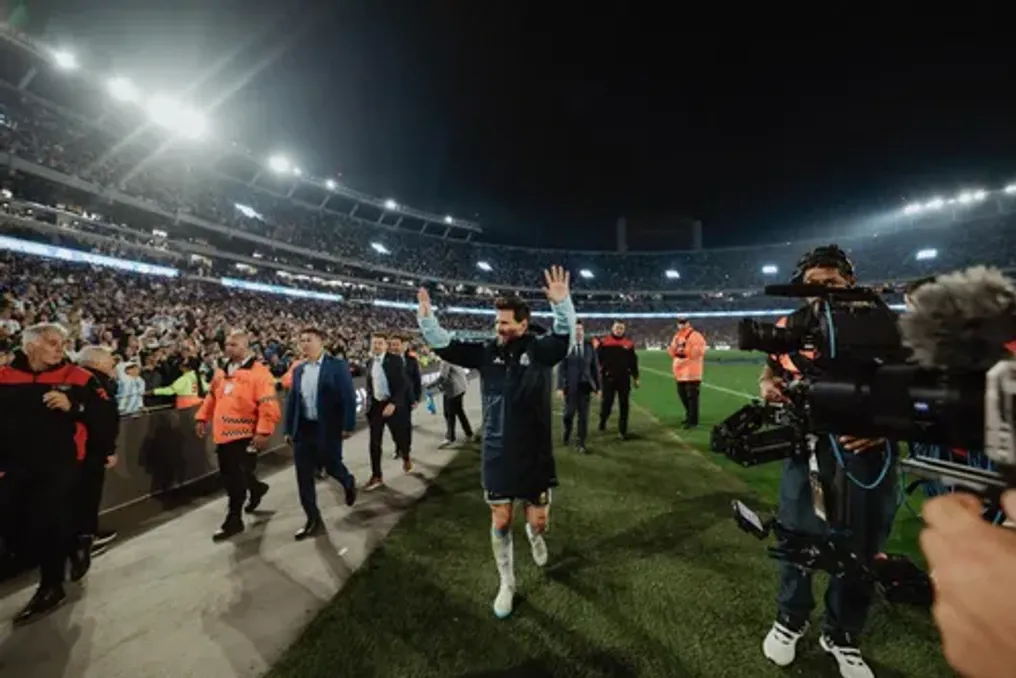
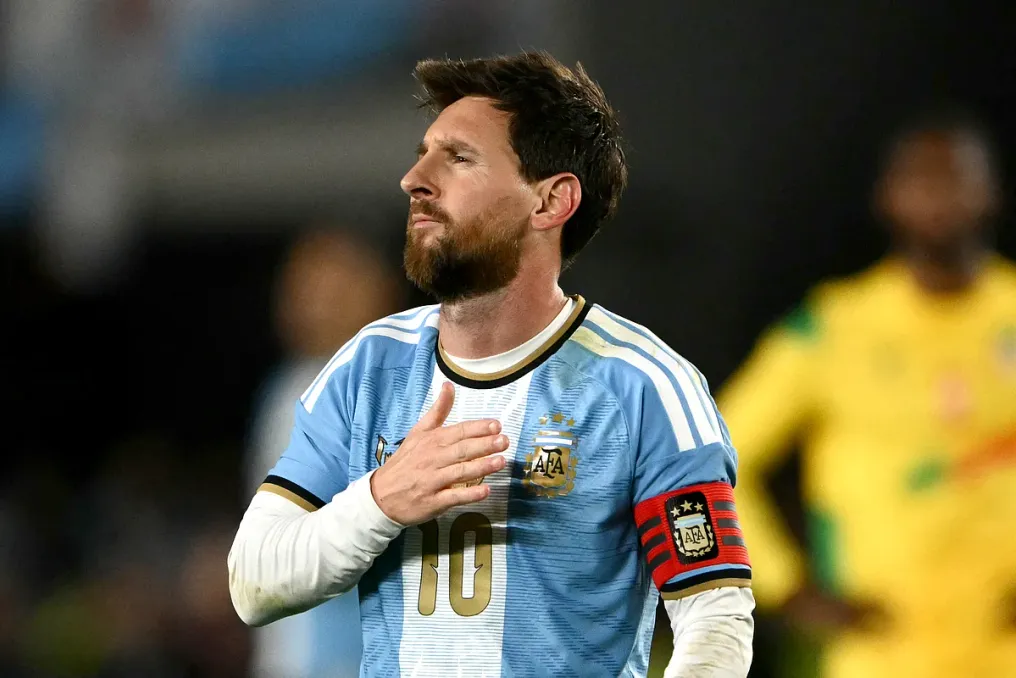
Lionel Messi concluded his 21-year international career on Tuesday, bidding farewell to devoted Argentine fans during a touching final match in Buenos Aires. As part of a perfectly planned finale, the 39-year-old footballer, considered by many to be the greatest player in history, scored his 126th international goal before an audience of 85,000 spectators while Argentina confidently defeated Benin 3-0.

In his 208th international match, Messi also provided an assist for the first goal scored by veteran Nicolás Otamendi, and he himself scored another goal for Nico Paz. However, the match was merely a backdrop for the main event—the last time Messi could enjoy the crowd's adoration at the Monumental Stadium as part of an event dubbed 'The Last Tango.'

After the game, Messi addressed the fans, stating: 'It has been a huge pride for me to wear this shirt for over 20 years.' He added: 'That I won't play anymore will be very painful. I swear, I would like to play my whole life because playing for the Argentina national team is the most beautiful thing that can happen to you.'

Nevertheless, Messi stated that he does not regret his decision to leave, citing Argentina's grueling World Cup campaign, which took place during his father's serious illness.

He shared his thoughts: 'Even if I want to be here my whole life, I feel that now is the right time. The last World Cup was too hard for me to go through.'

Before the match, Messi wiped away tears as the bus carrying him and his teammates from Argentina moved through crowds of eager fans towards the stadium. Messi took the field alongside his three children and received affectionate greetings from his wife Antonela Roccuzzo and mother Celia Cucitti, who watched from the VIP box.

Just before the start of the match, a giant Argentine jersey with the word 'Gracias' (Thank You) written above the number 10 of the football superstar was unfurled on the field, while the crowd cheered approvingly. Messi once again welled up with tears when Falklands veteran Fabio Santana played the national anthem next to a banner that read 'Malvinas son argentinas'—the same banner the players held after the World Cup semi-final against England with a score of 2-1.

The match was paused in the 10th minute—in honor of Messi's famous number—for a minute of applause for the former star of Barcelona and Paris Saint-Germain. He concluded this event with a penalty goal in the 71st minute.

After the final whistle, a drone show lit up the sky above the stadium, displaying an image of Messi and thanking the eight-time Ballon d'Or winner for his career.

Messi's farewell occurred two and a half months after Argentina's defeat to Spain in the World Cup final in New Jersey, where he left in tears after minimal participation in the 1-0 loss in the tense game.

At that time, Messi wrote: 'I gave everything; I have nothing more to give, and besides, wonderful young players are emerging who deserve their chance.'

Before the game, the University of Buenos Aires awarded Messi an honorary doctorate at a ceremony at the headquarters of the Argentine Football Association (AFA). Messi, who had previously spoken about regretting insufficient studies, expressed pride in this recognition, joking: 'To be able to say I am an honorary doctor!'

Outside the AFA headquarters, fans unfurled a huge Argentine flag featuring Messi and the inscription 'Joy of My Life.' Former Barcelona teammate Neymar paid tribute to the departing champion in X, writing: 'Thank you not only Argentina, but the whole world for everything you have done for football. Thank you for making me love football even more.'

Messi remains under contract with Inter Miami until 2028, but following the death of his father, Jorge, two months ago, he announced that he might retire earlier than expected.

Messi's departure comes four years after his greatest triumph in international football, when he led Argentina to victory in the 2022 World Cup, ending a 36-year wait for the country's third title and cementing his status as Diego Maradona's heir.

Cecilia Adriano, 52, quoted AFP, saying: 'I believe Messi gave everything, absolutely everything, so I am not worried at all about him leaving. He deserved it; let him enjoy it, let him rest.'

During his time playing for the Albiceleste, Argentina won one World Cup, were twice silver medalists (Brazil 2014 and North America 2026), and also won the Copa América title in 2021 and 2024.
Similar stories

Ox Nche notes cultural shift in Sharks squad ahead of derby with Stormers
Read more
iol.co.za

Ox Nche notes cultural shift in Sharks squad ahead of derby with Stormers

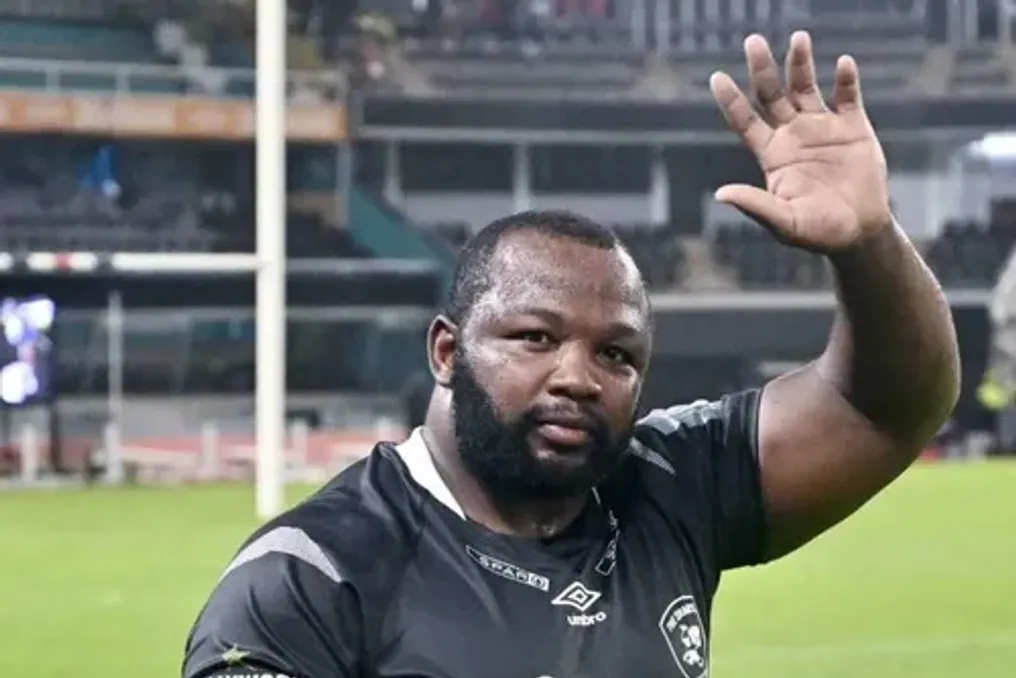
Springbok prop Ox Nche has observed an increased sense of unity and belief within the Sharks squad this season. He believes that a stronger feeling of connection and cohesion has contributed to a noticeably different atmosphere in the Sharks as the team prepares for the United Rugby Championship derby against Stormers on Saturday.

Although Nche joined the Sharks recently, missing pre-season training, he felt the changes after only two campaign matches compared to the squad he observed over the previous three seasons.

The Sharks confirmed their first victory over Ospreys with an impressive win against Leinster, gaining early momentum before traveling to Cape Town. However, for Nche, the most significant difference was not so much the results, but how the squad itself functions.

Ahead of the upcoming match at Cape Town Stadium, Nche stated: 'Undoubtedly, I think we are not just saying words. One thing I saw is that there are real actions, and we do what we say. Just more belief and connection among ourselves. We are all in the same mood. We are more cohesive, if I may say so. I am enjoying it. There was definitely a difference compared to the previous three seasons.'

This sense of cohesion was evident in the first two performances of the Sharks, where their physical approach and willingness to work for each other helped them overcome two tough opponents. Nevertheless, Nche believes that the team's task now is to ensure that this early progress becomes a sustainable part of the collective identity, rather than just a short-term boost after a good start.

URC Championship

Saturday's derby should serve as a useful indicator of this progress, as Stormers return home for the first time this season after securing one win and one loss in their first two encounters. Sharks also have additional motivation due to the trip to Cape Town after they secured a double victory over Stormers in the league last season, although Nche is focused solely on the present moment, not past achievements.

Since familiar Springbok players are likely to be on the opposite side of the field, the match will have much personal intrigue, but Nche views the contest through the prism of the collective. His message aligns with the cultural shift he has noticed since returning to the Sharks: individual battles are less important than the group moving in one direction. Given that the Sharks are already showing signs of a stronger collective identity, Saturday's derby will provide another opportunity to see if this belief can transform into consistent performances against one of South Africa's heavyweights.

Bubneshwar Kumar returns to Indian squad after four-year break thanks to ball spin mastery
Read more
www.aajtak.in

Bubneshwar Kumar returns to Indian squad after four-year break thanks to ball spin mastery

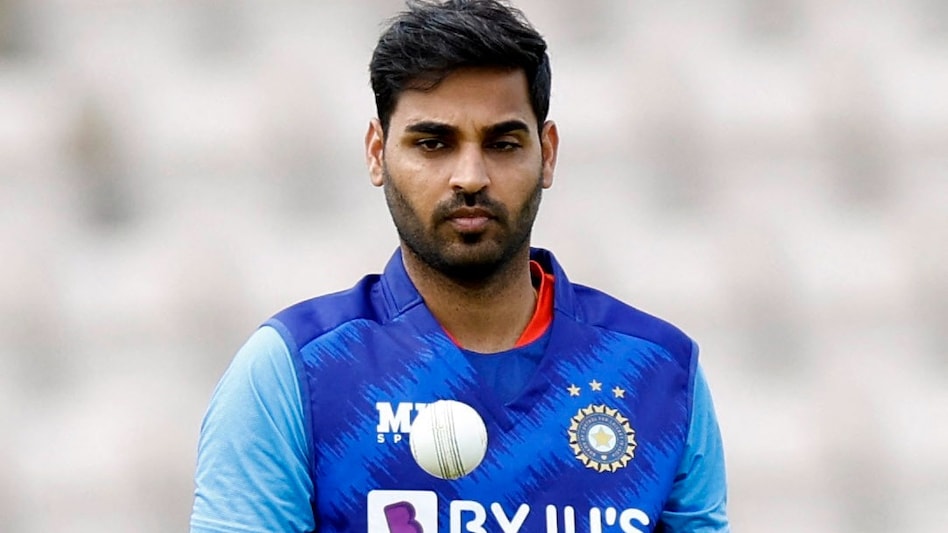
Bubneshwar Kumar's story has entered the ranks of examples of resurgence in Indian cricket, where the athlete demonstrated his response not with words, but with results. After being dropped from the Indian team in 2022, many believed his international career was coming to an end. However, after four years, he returned to the national team and refuted all prevailing opinions.

Interestingly, what was previously considered his weakness became the main factor in his return. At the age of 36, Bubneshwar Kumar still masterfully wields the art of making the ball spin in both directions. Although his speed has decreased, his ability to place the ball accurately and change direction at the last moment remains a serious challenge for batsmen.

Bubneshwar Kumar's main advantage is his outswing. He makes the ball move away from the batsman, searching for the outside edge of the bat at the last moment. Furthermore, a suddenly incoming ball can completely stun the player. Therefore, reducing Bubneshwar merely to a fast bowler would be an underestimation of his skills. Over the years of hard work, he developed the technique of moving the ball in the air while playing white balls, which cannot be learned quickly.

In the 2022 T20 World Cup against England, Bubneshwar Kumar did not show the expected level of play. In Adelaide, Alex Hales and Jos Buttler put pressure on the Indian bowling, and Bubneshwar lacked his former sharpness in pace and spin. Following this, questions arose about his form during the tour of New Zealand. Young and fast bowlers began to be preferred in the squad, and Bubneshwar gradually fell outside the selectors' plans. At that time, few could have predicted that at 36, he would wear the Indian jersey again.

The most significant reason for Bubneshwar Kumar's return was his performance in the IPL (Indian Premier League). For the seasons 2025 and 2026, he took 45 wickets for Royal Challengers Bengaluru (RCB). Although the team's attack attracted players like Virat Kohli, Rajat Patidar, and Krunal Pandya, Bubneshwar consistently performed his role in bowling. His ability to create spin on the new ball, maintain correct length, and use experience in tense situations made him indispensable for RCB. He demonstrated that a decrease in speed does not mean the disappearance of a bowler's influence.

Bubneshwar Kumar hails from Meerut, a city long known for its traditions of manufacturing cricket balls and spinning bowlers. Before him, Pravin Kumar also brought special status to the city in the world of cricket through his spin bowling. Pravin Kumar noted: 'Meerut has something special in the air.' Buvy fully justified this statement with his bowling. His swinging balls remained his distinguishing feature for a long time.

After Ajit Agarkar became the chief selector, decisions in the team started to be future-oriented. Many expected Bubneshwar Kumar to return to the squad due to his experience, but the selectors chose a different path then. Now, after Agarkar's departure, Buvy's fate has changed.

A distinctive feature of Bubneshwar Kumar's return was that he made no loud statements after being dropped from the team. Instead of criticizing the selectors or complaining about his situation, he continued to work on his game. He played baseball cricket for Uttar Pradesh and shared his experience with young bowlers. Then he showed consistently high results in the IPL.

Bubneshwar's return sparked an interesting debate in Indian cricket. A former Indian player and BCCI (Board of Control for Cricket in India) official jokingly told the news agency PTI: 'If Bubneshwar has come, then Mohammed Shammi cannot stay aside either?'

Bubneshwar Kumar's return is also important because it challenges the idea that success in T20 cricket is guaranteed only by youth and high speed. Having had his career questioned in 2022, he will reappear in the Indian jersey in 2026, using his oldest weapon—ball spin.

Five Moments That Defined Lionel Messi's Football Legacy
Read more
iol.co.za

Five Moments That Defined Lionel Messi's Football Legacy

Lionel Messi's career on the international stage is drawing to a close, but his influence on football extends far beyond the trophies, records, and individual awards he has won over more than two decades.

Following the announcement of his international retirement several weeks ago, Messi is preparing for an official farewell match, where members of the Argentine team that won the 2022 World Cup have been invited to celebrate his outstanding career.

By examining five key moments that helped change the sport, one can trace the evolution of his influence.

In March 2007, when Messi was only a 19-year-old player, he scored his first hat-trick for Barcelona against Real in a tense El Clásico match at Camp Nou. This match convinced many of the exceptional quality of the Barcelona squad. Even then, his ability to accelerate, control the ball, and dribble past defenders was evident, but his composure under pressure stood out particularly. He ceased to be just a promising young talent and made his mark on the biggest football stage.

Lionel Messi and Pep Guardiola previously had successful working relationships, together winning two Champions League trophies and three La Liga titles.

Pep Guardiola's decision to move Messi to the central position of a false nine in May 2009 became one of the defining tactical moments of modern football. Instead of staying high between the opponent's central defenders, Messi dropped deeper, forcing defenders into impossible decisions. If they followed him, space opened up behind them; if they left him, he could receive the ball between the lines and attack the defense.

The 6-2 thrashing of Real by Barcelona at the Santiago Bernabéu was the most vivid example of the destructive power of this system. Messi's role influenced coaches and teams around the world, as the false nine turned into one of the most discussed tactical concepts in football.

The 2012 season remains one of the most outstanding individual years in football history. For Barcelona and Argentina, Messi scored 91 goals in 69 matches, breaking Gerd Müller's long-standing record for goals in a calendar year. However, it wasn't just about the numbers. Messi simultaneously acted as a goalscorer, creator, dribbler, and playmaker. He could dictate the flow of matches from the wing, operate in the center, or drop into midfield to suddenly appear in the penalty area.

These statistics were phenomenal due to the variety of ways he achieved them.

Throughout many years, Messi's international career was accompanied by the inevitable question: would he win the World Cup? He was close to success in 2014 when Argentina lost the final in Germany, but Qatar provided the answer. Messi scored twice against France in one of the greatest World Cup finals before Argentina won on penalties. The trophy completed his international collection and removed the only major achievement missing from his career. It also changed the discussion about his international legacy. Messi stopped being just the greatest player of his generation trying to emulate past Argentine legends; he created his own World Cup story.

Perhaps Messi's most significant contribution to football lies in his ability to evolve. The explosive winger who destroyed defenders with his speed and dribbling gradually transformed into a deeper playmaker and creator. With age, Messi relied less on constantly beating opponents over long distances and more on understanding space, passing range, and the ability to control the tempo of the game.

This transformation was particularly noticeable with the Argentine national team. He became the creative center of the team, allowing younger players around him to provide energy and running. The player changed, but the influence remained. Perhaps this is Messi's greatest legacy. He didn't just dominate one era of football; he adapted as the game changed around him and continued to find new ways to influence it. From a teenage phenomenon at Barcelona to a captain who won the World Cup with Argentina, Messi's career has repeatedly challenged our understanding of what one footballer can achieve. And as he prepares to finally say goodbye to international football, debates about his place in football history will continue long after he strikes his last ball.

Popular