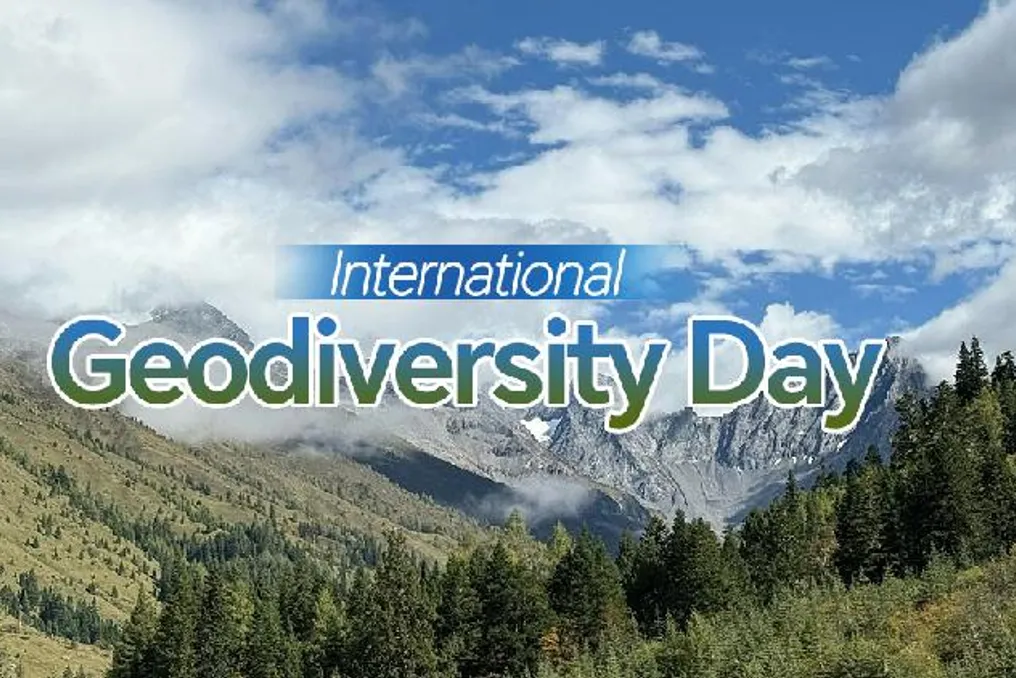
Every year on October 6th, the International Day of Geodiversity is observed, which highlights the critical significance of geodiversity in addressing the global environmental problems facing humanity.
This day was proclaimed by UNESCO in 2021 with the aim of raising awareness about geodiversity, promoting education in Earth sciences, and encouraging the protection and sustainable use of geological heritage.
Geodiversity is defined as the diversity of Earth's non-living nature, including minerals, rocks, fossils, soils, sedimentary rocks, landscapes, rivers, and lakes, as well as the processes that form them. According to UNESCO, it is the foundation upon which life and human society depend, as it provides the conditions for the emergence and flourishing of life by supporting ecosystems and the planet's environment. As UNESCO states: 'Without geodiversity, there would be no biodiversity.'
Geological resources have played a key role in the development of human civilization, providing raw materials for everything from stone tools to modern technologies such as solar panels and wind turbines. They support agriculture through soil and water, provide energy (such as geothermal), and shape diverse landscapes that inspire art and attract visitors.
Rocks and geological processes contribute to maintaining a healthy environment by regulating water systems, accumulating and releasing groundwater, and filtering pollutants before they reach aquifers. Furthermore, knowledge of geological and geomorphological processes is vital for reducing natural risks and combating climate change. This knowledge helps assess and mitigate threats from earthquakes, tsunamis, volcanic eruptions, floods, and landslides, while geological records of past climate changes provide valuable information for predicting future trends.
UNESCO Global Geoparks
As part of its Programme of International Earth Sciences and UNESCO Global Geoparks, UNESCO works to protect Earth's resources for future generations. In 2015, the 'UNESCO Global Geoparks' designation was established to promote the conservation and sustainable use of geological heritage. Currently, this network includes 241 geoparks in 51 countries, covering more than 882,000 square kilometers.
China has 51 Global Geoparks. Two recent additions in April were the Changshan Geopark in Zhejiang Province in eastern China and the Siguniang Mountain Geopark in Sichuan Province in southwestern China.
The Changshan Geopark, spanning an area of 1043.1 square kilometers, preserves a continuous stratigraphic sequence from the Neoproterozoic to the Cenozoic era, representing nearly a billion years of geological evolution in East Asia. It hosts China's first 'Golden Spire' (Global Stratotype Section and Point, or GSSP), as well as numerous fossils. Its unique geological landscapes also support local agriculture and community development.
The Siguniang Mountain Geopark, covering an area of 2764.01 square kilometers, is known for its complex tectonics, including folds, flysch deposits, and high granite peaks. It is the first UNESCO Global Geopark on the eastern edge of the Qinghai-Tibet Plateau and home to the largest and oldest Hippopotamus ramonoides forest, as well as over 300 vertebrate species, including giant pandas and snow leopards.