Amazon Web Services (AWS) announced an investment exceeding US$ 1 billion, equivalent to about R$ 5.2 billion, to be distributed over the next five years. This investment will be directed to communities in the United States that host its data centers, aiming to fund projects focused on education, professional training, energy optimization, and water resource conservation, according to local priorities.
This announcement comes amid growing resistance to the expansion of data centers in the country. Although these facilities are crucial for supporting cloud computing services and the advancement of artificial intelligence (AI), they have been questioned due to their high consumption of electricity and water.
According to Reuters, more than one hundred moratorium proposals for new data centers are under review in the US. States such as Indiana, Louisiana, North Carolina, Virginia, and Mississippi are among the localities eligible to receive funds from this new initiative.
Built Together Program
Amazon has named this program Built Together. The company stated that the goal is to add more than US$ 1 billion to the amount already invested in the communities where it operates data centers.
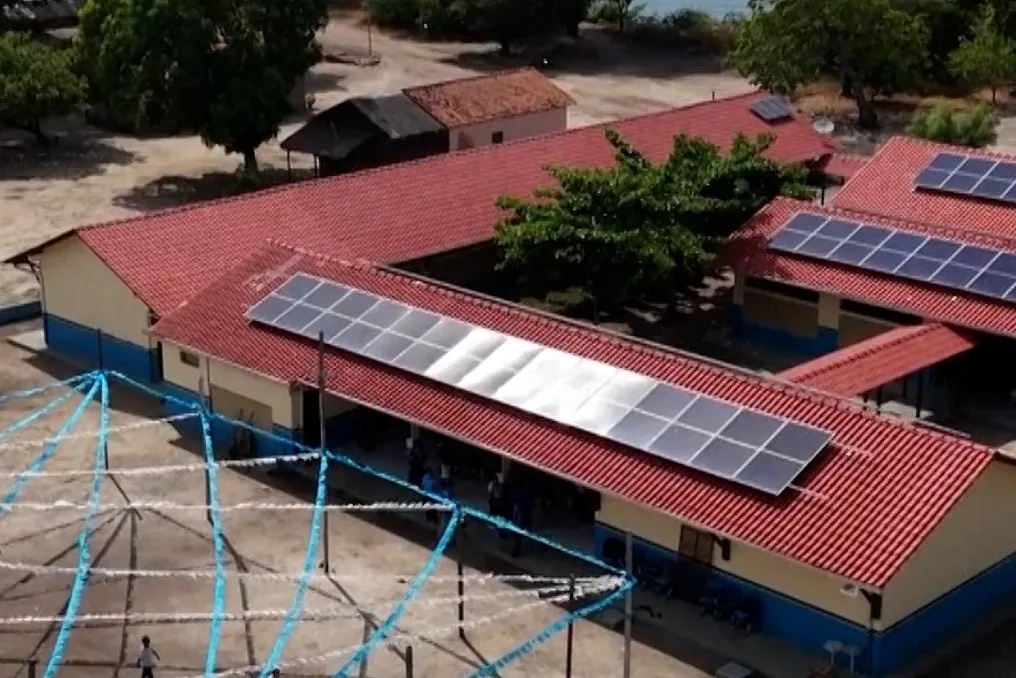
One aspect of the program focuses on reducing energy costs. Amazon plans to fund energy efficiency improvements in over 300 schools and community buildings, in addition to benefiting more than 30,000 residences located in counties hosting its data centers. Such improvements may include the installation of solar panels, water heaters, thermal insulation, air conditioning systems, and heat pumps.
The company estimates that these upgrades can result in a reduction of 20% to 40% in monthly energy bills, generating an average annual saving of approximately US$ 700 (about R$ 3,700) per residence.
The initiative also includes water projects. Amazon mentioned having contracted over 65 water recovery projects in communities adjacent to its global operations. These projects are expected to return more than eight billion gallons of water annually to the communities, a volume that, according to the company, exceeds more than double the water consumed by data centers in 2025.
AWS has set a goal to achieve water neutrality by 2030, which implies returning more water to communities than is used in its operational activities.
Funding for Local Projects
The third pillar of Built Together allocates funds for initiatives defined locally. Amazon informed that it will collaborate with community foundations and non-profit organizations to channel resources toward the needs identified by residents and regional authorities themselves. Potential projects include improvements to parks, roads, sports facilities, food security, affordable housing, schools, and disaster preparedness. The company intends to make millions of dollars available annually to each community, although the specific amount depends on local demands.
Matt Garman, CEO of AWS, emphasized the diversity of needs, stating that 'Every community is different. What is most important in a rural area of Oregon is not the same as in a suburban region of Virginia or a mid-sized city in Ohio.'
In addition to the financial contribution, Amazon announced changes in how it will deal with local authorities during the construction of data centers. The company has decided no longer to use non-disclosure agreements (NDAs) with government agencies involved in the projects. Furthermore, it committed to promoting public meetings in the areas of operation, disclosing project information in advance, and publishing annual reports on energy and water usage.
This change occurs at a time when residents and authorities in various regions question the impacts of large computing complexes. Energy consumption is one of the biggest concerns, given that AI workload-oriented data centers require vast amounts of electricity to keep thousands of processors continuously active. Cooling systems can also demand large volumes of water, depending on the technology used.
Amazon assures that it negotiates with utility providers, regulators, and power grid operators to ensure that the costs of energy and the infrastructure necessary for its data centers are borne by the company itself.
This community program takes place parallel to a much broader infrastructure expansion by Amazon. The company has already invested US$ 276 billion (approximately R$ 1.44 trillion) in data centers between 2011 and 2025. For 2026, the forecast is around US$ 220 billion (approximately R$ 1.15 trillion) in capital expenditures, mainly dedicated to expanding data centers and the infrastructure needed for AI.
The magnitude of these investments illustrates the intense competition for computing capacity. While corporations like Amazon expand the essential infrastructure for developing and offering AI services, this expansion generates debates about taxes, jobs, energy, water, and the effects on the communities where these complexes are installed. For AWS, data centers represent strategic infrastructure for AI development; for the receiving communities, the expansion implies managing the economic and environmental impacts of these installations.