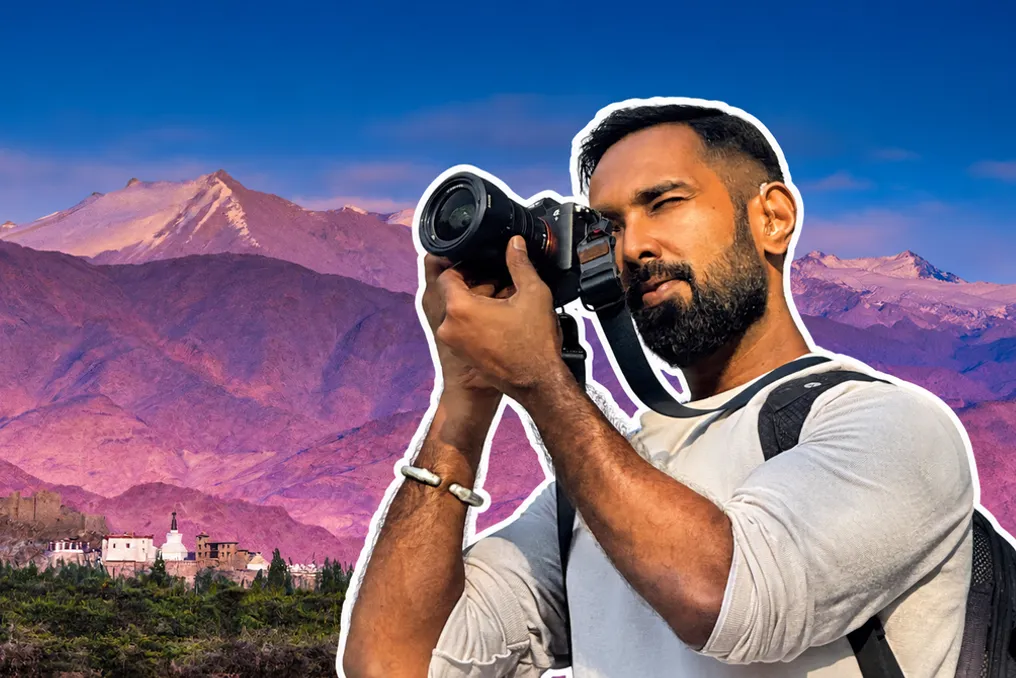
Srivatsan Sankaran, a photographer from Chennai who has hearing impairments, notes that most public places are not truly inclusive for him. Because his deafness is invisible, people often do not realize he cannot hear until he explains it to them, which requires mental effort from him before any interaction begins.
Sankaran's experience shows that accessibility in India must encompass more than just ramps, and that the burden of asking for help should not fall on the person needing access.
His creative interest has always been linked to color, contrast, patterns, movement, light, and how people interact with their environment; many of his photographs begin with observing these elements. He often studies a scene for a long time before deciding to photograph it, usually interpreting emotions through visual imagery, which shapes every frame.
Photography has become for him a way of understanding the world and connecting with people and places. As a person with hearing impairments, he uses photography as an important tool for interacting with his surroundings, allowing him to tell stories through images without relying on spoken language when communication exceeds his capabilities.
Entering an unfamiliar or inaccessible place requires constantly figuring out communication methods, understanding what is happening around him, and ensuring his own safety. Since his deafness is hidden, people rarely know about it without his warning. Sankaran emphasizes that accessibility must include not only physical infrastructure like ramps but also communicative accessibility, which is equally important.
This preparation process often happens even before he picks up his camera, increasing the mental load when visiting new places. Sometimes he consciously chooses not to wear hearing aids, especially in environments involving colors, water, dust, or other mediums, to avoid damage. Although this is a practical decision, it leads to greater isolation from surrounding sounds, forcing him to rely solely on sight to maintain vigilance and safety, which increases stress levels.
However, there is a liberating aspect to this. Without hearing aids, he perceives the environment almost entirely through sight. The absence of the expectation to listen makes him more visually aware, allowing him to notice subtle changes in facial expressions, movements, colors, and body language. Accepting his deafness instead of constantly fighting it has helped him feel more confident in such spaces, bringing immense satisfaction.
The inability to rely on sound, as hearing people do, has fostered strong visual awareness in him. He carefully studies gestures, expressions, movements, patterns, light, and changes in the environment. During shooting, he immerses himself in what he sees because he does not wait for sound or react to what he hears, becoming quieter, more observant, and more patient, which has helped shape his own photographic language.
Sankaran hopes that people will become more attentive to invisible characteristics. He insists that besides physical infrastructure, communicative accessibility is critically important. Technology can significantly improve the accessibility of cultural spaces through visual information, subtitles, real-time transcription, clear navigation, and better design. Unfortunately, he believes that many cultural sites in India still have a long way to go, as accessibility is often treated as a secondary concern rather than part of the initial planning.
He dreams of a future where people with disabilities do not have to constantly explain the need for accessibility, as it will be built into the space itself. For him, inclusivity means ending questions like 'How do I organize this while being deaf?' and having the freedom to focus on what he intends to shoot.