The Taunus Mountains, located north of Frankfurt in Germany, are known for their natural beauty. These mountains are also home to historical structures, including castles, fortresses, and ancient towns. Some of these settlements are so old that they date back to the Roman Empire, which occupied this region between the 1st and 3rd centuries AD and built extensive walls to defend the border territory against Germanic tribes.
One of the best-preserved fortifications in the area is Capersberg, which was used from the 2nd century BC to the mid-3rd century. The site was abandoned during the Fall of the Limes—a historical event marking the beginning of the Romans' withdrawal from their borders.
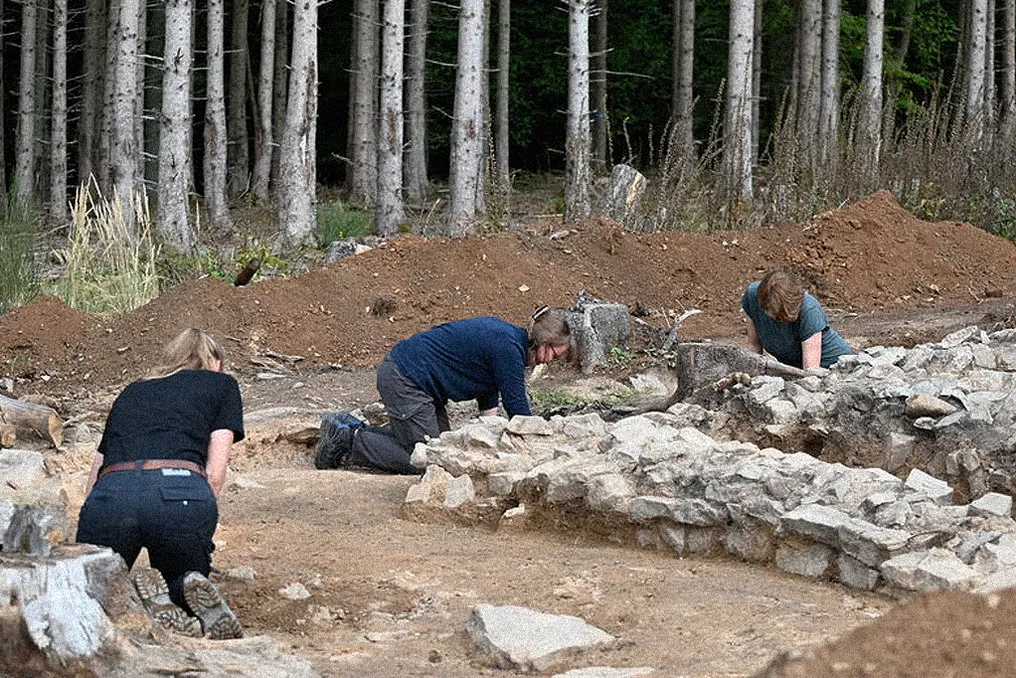
Near Capersberg was a vicus—a settlement that served as housing for merchants and families, which has not been studied sufficiently until now. A new study now presents the results of excavations that began in 2024.
Because it is a forested area with hills, it is typically not used for agriculture, which has contributed to the very good preservation of artifacts. It was no surprise when researchers discovered Roman archaeological traces just a few centimeters below the surface.
Archaeologists found a Roman temple dedicated to the god of war, Mars. Inside this structure, items related to this divine figure were discovered, such as a statue of Mars and a religious inscription. Additionally, a significant find was a statuette of the goddess of Victory, holding a palm branch and crowned with a laurel wreath.
The findings were not limited to this. To the archaeologists' surprise, they also discovered craft tools, such as bread baking ovens. There were no previous records of such practices in this region. A new hypothesis suggests that this site was used for these purposes before the construction of the vicus. It is assumed that the Romans buried these ovens during the occupation of the territory.
The discovery of pottery fragments dating to the period after the Fall of the Limes proved particularly surprising. These are the first archaeological evidence of this period found there, and they indicate that the site may have been occupied by Germanic peoples after the Roman departure.
Excavations are now expected to continue in 2027 to provide new information about the settlement of this region.