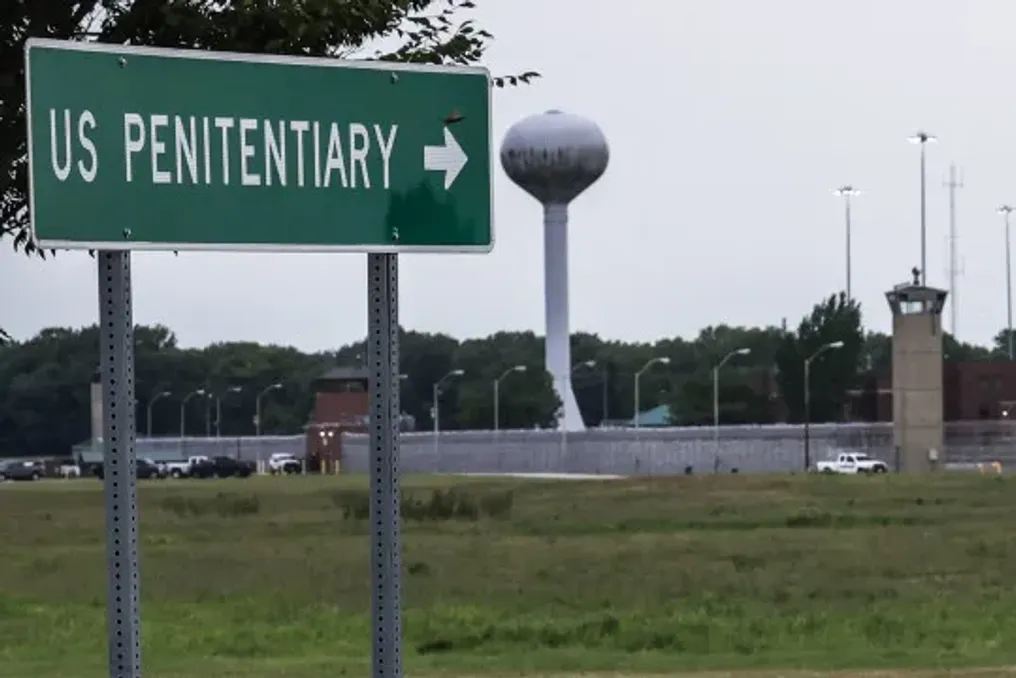
Christa Gail Pike, the only woman under a death sentence in the American state of Tennessee, survived the two doses of pentobarbital administered during her execution on Wednesday. This case raises questions about the judicial process and an unprecedented failure in carrying out the sentence.
The Crime and the Death Penalty
Currently 50 years old, Pike was sentenced to death for murdering Colleen Slemmer, a 19-year-old colleague from the Job Corps vocational training program in Knoxville, in 1995. The crime involved Pike and her boyfriend, who also attended the same institution.
The case gained significant notoriety in the United States, mainly because the couple registered a pentagram, a symbol linked to Satan, on the victim's body. According to the accusation, Pike acted out of fear that Slemmer would try to steal her partner. On January 12, 1995, she allegedly lured Slemmer to a wooded area where she attacked her with an axe and assaulted her with a piece of asphalt. Tadaryl Shipp, Pike's boyfriend, confessed to being responsible for drawing the pentagram.
Pike received the death sentence in March 1996, while her boyfriend was sentenced to life imprisonment, with the possibility of parole, due to his minority at the time of the offense.
The Plea for Clemency: 'She was a young woman with a mental illness'
Christa Pike requested clemency from the Tennessee court, claiming that her intention was only to fight with Slemmer, but the frantic attack got out of control. After the homicide, Pike was diagnosed with bipolar disorder and post-traumatic stress disorder.
In a statement, she declared: 'I was an 18-year-old young woman with a mental illness. It took many years before I even understood the gravity of what I had done.'
Although Pike does not deny her involvement in the murder, her defenders argue that her age at the time, her mental health issues, and a history of severe sexual abuse, including rape since childhood, should be considered.
Justice Almost Suspended Execution One Hour Before
On Wednesday, Christa Pike's execution was initially suspended by a US appellate court, which wanted to examine whether Pike's claims of sexual abuse and rape suffered in childhood were adequately assessed at the time of her death sentence. However, this suspension order was overturned by the Supreme Court.
Previously, on Tuesday, federal public defender Stephen Ferrell argued that Pike's conviction represented an exception, given that other 18-year-old individuals sentenced to death in Tennessee later had their sentences overturned.
The Two Lethal Injections and the 'Unprecedented Failure'
On Wednesday, Tennessee authorities were unable to execute Christa Pike after administering two doses of pentobarbital, a lethal drug. Pike remained conscious, conversed, and sang with the spiritual guide after the medication began. After the first dose, she continued to move and breathe audibly.
Witnesses reported that Pike was alive and making sounds even after the second attempt at lethal injection, whereupon she was transferred from the prison ambulance. Her lawyers informed that she was being treated in a hospital, but they do not know her current health status. The Tennessee Department of Corrections stated that 'all steps of the legal and established protocol for executions, approved by the Attorney General's Office, were followed.'
This protocol requires the administration of a second set of syringes with medication 'if the inmate is not dead' after the first. However, it does not detail what should happen if the person remains alive after the second dose. For Robin M. Maher, executive director of the Death Penalty Information Center, what happened to Pike is 'singular and unprecedented.' She explained that seven other people survived medical complications caused by the difficulty of execution teams accessing a vein to administer the drugs, but no one had remained alive after receiving the drugs from these executions.
On Wednesday night, Pike's lawyers filed an emergency request with the Tennessee Supreme Court to immediately halt and suspend the execution, alleging that she was suffering 'unnecessary agony' and that the procedure violated her right to be executed without being subjected to cruel and unusual punishments.
Suspension of Executions in the State of Tennessee
The Governor of Tennessee (USA), Bill Lee, announced a temporary halt to scheduled executions for 2026 following Christa Pike's survival. Lee stated in a press release distributed to local media that 'carrying out legally imposed sentences is among the most important responsibilities of the State, and the people of Tennessee expect this to be done not only legally and constitutionally, but also effectively.'
The governor requested an 'exhaustive' investigation into Pike's failed execution and suspended other executions scheduled for that year in the state. According to the Death Penalty Information Center, Gary Wayne Sutton's execution was scheduled for December 3rd in Tennessee.