How to make Mysore Pak: a recipe for a soft delicacy made from besan and ghee
Read more
Aaj Tak
www.aajtak.in

How to make Mysore Pak: a recipe for a soft delicacy made from besan and ghee

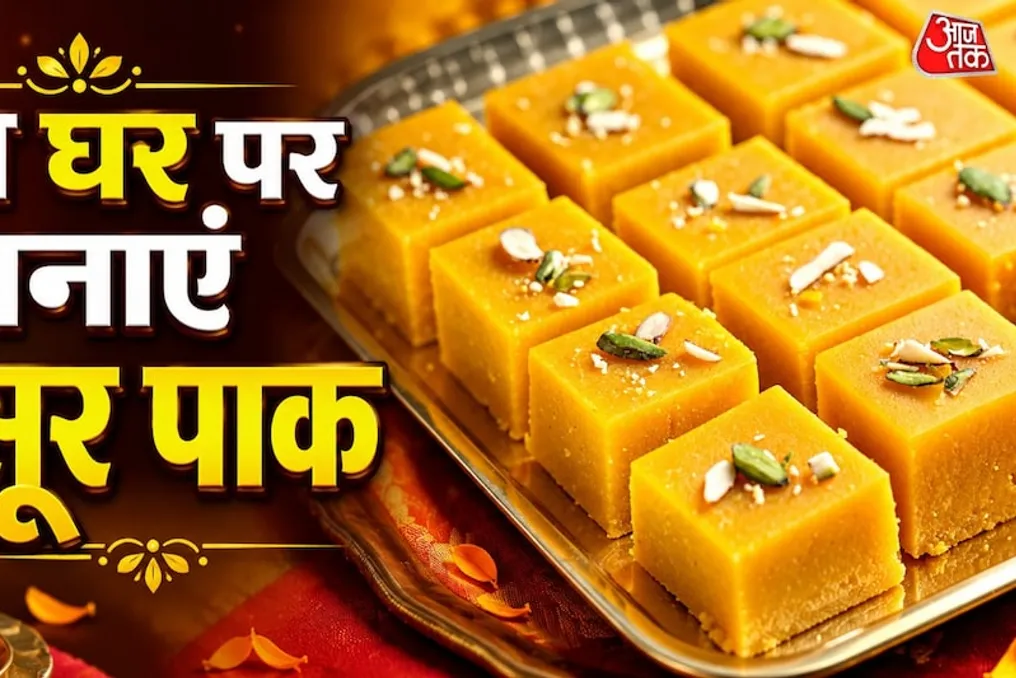
During holiday seasons or special occasions, there is always a concern about impurities in store-bought sweets. Instead of buying unhygienic and expensive confectionery, you can make the famous South Indian delicacy Mysore Pak at home using just three main ingredients: besan, ghee, and sugar.

People often complain that when making Mysore Pak at home, it turns out too hard or does not form the characteristic net structure of professional confectioners. However, if you mix 1 cup of sifted besan with half or one cup of warm melted ghee, and cook by gradually adding warm ghee into the correct syrup, your Mysore Pak will be tender, velvety, and melt-in-your-mouth.

The following components are needed for preparation: 1 cup of sifted besan, 1 cup of melted and slightly warm ghee, 1 cup of sugar, and 1/2 cup of water.

First, you need to prepare the besan mixture. In a bowl, take 1 cup of sifted besan and thoroughly mix it with half a cup of warm ghee using a whisk so that no lumps remain.

Next, prepare the syrup. Bring 1 cup of sugar and 1/2 cup of water to a boil in a saucepan. Cook over medium heat until a first-degree syrup consistency is achieved.

When the syrup reaches the desired consistency, reduce the heat and begin gradually pouring in the besan and ghee mixture while stirring constantly. Then, add the remaining half cup of warm ghee in small portions, continuing to stir. As the besan absorbs the ghee, foam and a net structure will begin to appear in the mixture.

As soon as the mass starts to pull away from the sides of the pan and acquires a net appearance, immediately turn off the stove. Immediately pour the mass onto a tray or into a ghee-greased mold. After 10 minutes, when it has cooled slightly, cut it into desired pieces. Serve after it has completely cooled.
Similar stories

Recipe for Crispy Fried Onion Leaves in 10 Minutes
Read more
www.aajtak.in

Recipe for Crispy Fried Onion Leaves in 10 Minutes

The change of season brings light cool breezes, heralding the arrival of winter. Winter not only brings relief from the heat but also makes many fresh green vegetables available in the market that people enjoy eating.

Fresh and juicy onion greens, which appear on the market during the winter period, not only improve the taste of dishes but also bring significant health benefits.

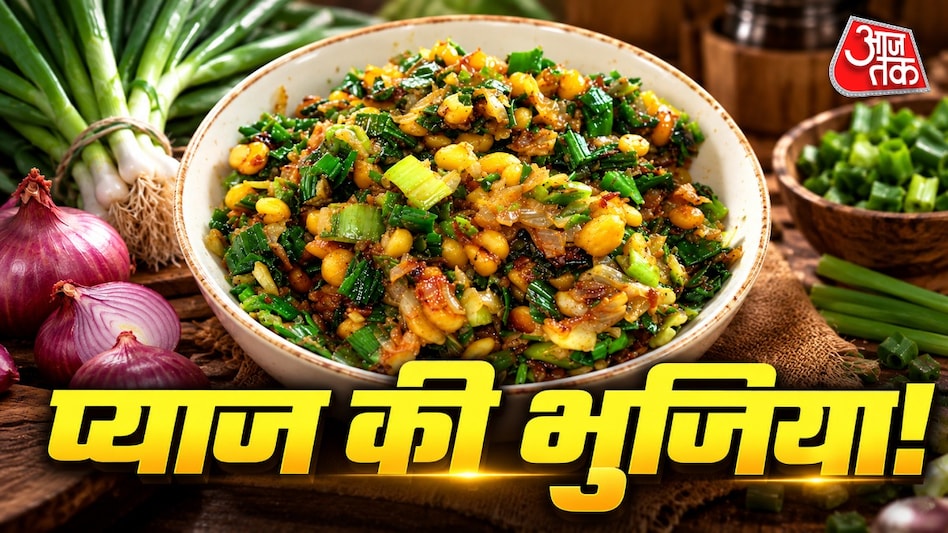
If you are tired of monotonous dishes like potatoes and pumpkin and want to cook something quick, spicy, and light, try fried onion leaves. This dish can be served as a side dish to roti, paratha, or dal-chawal.

Onion Leaf Fry Recipe

Below is a simple way to prepare this dish. After cooking is complete, sprinkle the dish with a pinch of hot masala and mix thoroughly. The ready hot onion leaf fry is ready to be served with warm roti, paratha, or puri.

Cooking Tips

It is important not to overcook the onion leaves during preparation, as this leads to a loss of their color and crispy texture. Therefore, after adding the leaves, they should be cooked for no more than 3-4 minutes. To achieve a traditional and authentic taste, it is recommended to use mustard oil.

Recipe for Turaai Bhaji in Maharashtrian Style with Green Chili and Garlic
Read more
www.aajtak.in

Recipe for Turaai Bhaji in Maharashtrian Style with Green Chili and Garlic

If you are tired of ordinary turaai dishes, try preparing it in the Maharashtrian style. This turaai bhaji, prepared using green chili, garlic, and roasted peanuts, has a unique taste. It can be served with roti, chapati, paratha, or dal-chawal.

The addition of peanuts and garlic radically changes the taste of turaai. Although many people may not like the taste of burdock, pumpkin, and turaai, especially considering that turaai always turns out bland and simple, the Maharashtrian cooking method might surprise you.

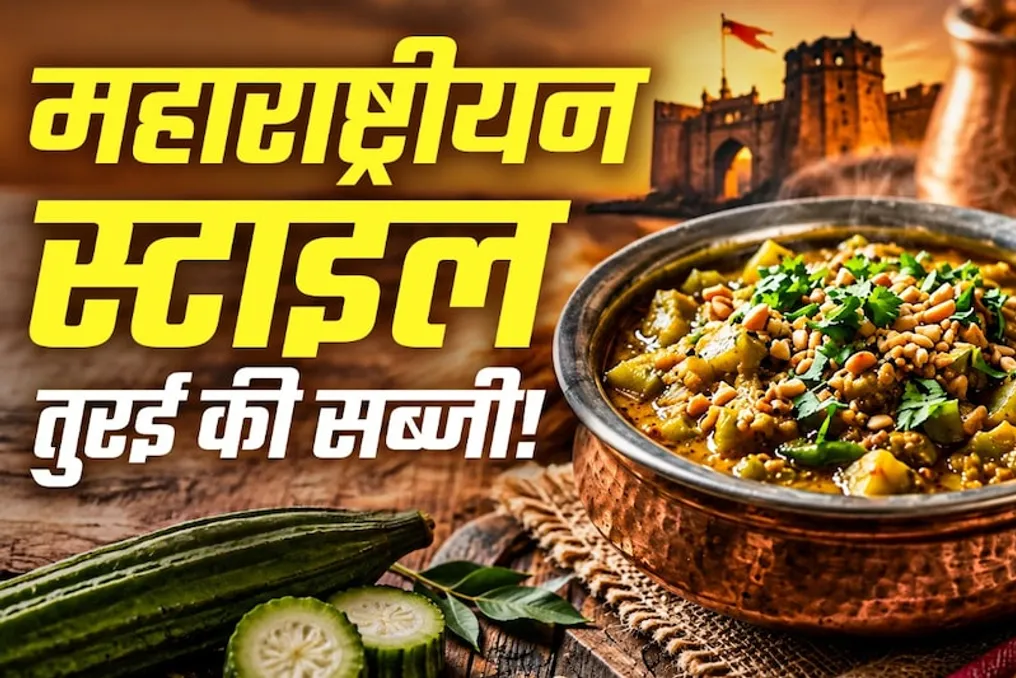
In Maharashtra, turaai is cooked in a special way called Dodkachi Bhaji. To prepare Dodkachi Bhaji, turaai, green chili, garlic, and roasted peanuts are used. These ingredients give even a simple vegetable an excellent taste and a light crunchy texture. Notably, this dish does not require a large amount of spices. It is served with roti, chapati, paratha, or dal-chawal.

To begin, thoroughly wash the turaai and remove the skin. Then, cut it into small pieces and set aside. The green chili and garlic also need to be cut into large pieces. The roasted peanuts should be crushed into coarse crumbs; it is important not to turn them into a fine powder, as the coarse crumbs retain crunch and flavor in the dish.

Heat oil in a pan, then add rai seeds and jeera, allowing them to sizzle. Next, add the chopped green chili and garlic and fry on medium heat until the strong aroma of garlic appears. After that, add the chopped turaai to the pan and mix well with the green chili and garlic. Cook the turaai for several minutes on medium heat. Since turaai contains a lot of moisture, it releases it during cooking, so no extra water needs to be added initially.

Cover the pan and let the turaai cook for some time, stirring occasionally so that the vegetables do not stick to the bottom. When the turaai becomes soft and most of the liquid evaporates, add the crushed roasted peanuts. Mix the peanuts thoroughly with the turaai and cook for another 2-3 minutes. During this time, the peanut flavor completely permeates the turaai, improving the texture of the dish. Garnish the finished vegetable with finely chopped green onion and turn off the gas.

The finished Maharashtrian turaai is prepared as a delicious snack, which is recommended to be served hot with roti, chapati, or paratha. It also pairs excellently with dal-chawal. If you are tired of eating the same type of turaai, you can try this Maharashtrian recipe.

Chirothe Recipe: A Traditional Dessert from Karnataka Prepared by Chef Sanjeev Kapoor
Read more
www.aajtak.in

Chirothe Recipe: A Traditional Dessert from Karnataka Prepared by Chef Sanjeev Kapoor

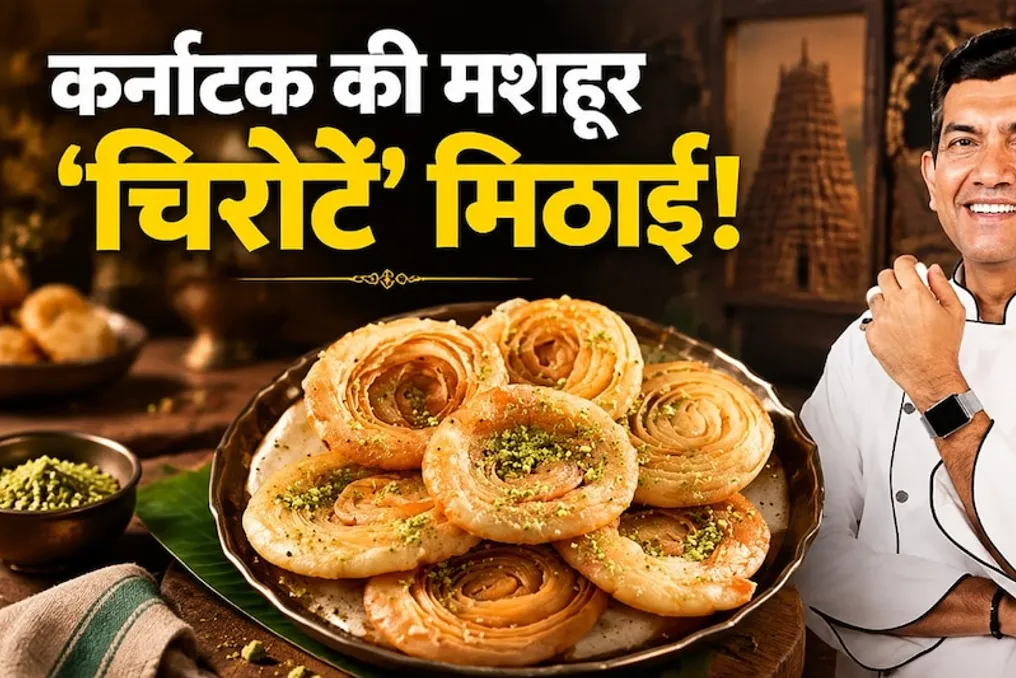
When mentioning South India, many people imagine dishes such as dosa, idli, and vada. However, the cuisine of Karnataka holds many traditional delicacies whose taste is unforgettable. One such dessert is chirothe. Although it resembles a small crispy flatbread externally, numerous thin layers are visible when cut. This is not a savory dish, but a delightful dessert.

In Karnataka, chirothe is traditionally prepared during festivals and wedding celebrations. This dessert, which is crispy on the outside and very light inside, is then dipped in sugar syrup, which enhances its flavor. If you want to cook something new and authentic at home, it is recommended to try the chirothe recipe proposed by the renowned chef Sanjeev Kapoor. Preparing this dessert is quite simple.

To prepare chirothe, ingredients for the dough, for the sugar syrup, and for creating the layers are required.

The first step is to mix flour, coarse grain (sooji), and salt in one bowl. A small indentation is made in the center of this mixture, into which hot ghee is added, and everything is thoroughly mixed by hand. Then, about a third of a cup of water is added to knead the dough. It is important that the dough is neither too stiff nor too soft. The dough is covered and left to rest for 10–15 minutes.

Next, sugar and one cup of water are mixed in a non-stick pan. Slightly crushed green cardamom pods are added, and it is cooked until the sugar is completely dissolved. After this, milk is added to the syrup and well mixed. The heat is reduced, and foam or impurities that float to the surface are removed with a spoon. The syrup is cooked until it reaches a thread-like consistency, after which the gas is turned off.

In a separate bowl, ghee is whipped, and then cornstarch is gradually added while stirring constantly until a smooth and thick paste is formed.

The dough is divided into three equal parts. A ball is formed from each part and lightly pressed. A little oil is applied to the rolling surface. One of the balls is placed on this surface and rolled into the shape of a thin flatbread. The paste of cornstarch and ghee is evenly spread on this first flatbread. The second flatbread, also coated with paste, is placed on top. Then the third flatbread is placed, and paste is again spread on it. After this, the entire set is carefully rolled up, and another layer of cornstarch paste is applied on top.

All three flatbreads are tightly rolled into a cylinder. The edges of the cylinder are folded inwards, and then pieces about 1–1.5 inches in size are cut. Each such piece is lightly rolled into the shape of a small disc-shaped flatbread.

Enough oil is heated in a pot. The small chirothe discs are dropped into the hot oil one by one. They are fried until light golden brown and have a crispy texture. The finished products are removed and placed on paper towels to remove excess oil.

The fried chirothe desserts are immersed in warm sugar syrup. Then they are taken out and placed on a rack to cool at room temperature. After the chirothe has completely cooled, it is beautifully served on a plate, sprinkled with pistachio powder, and served.

Popular