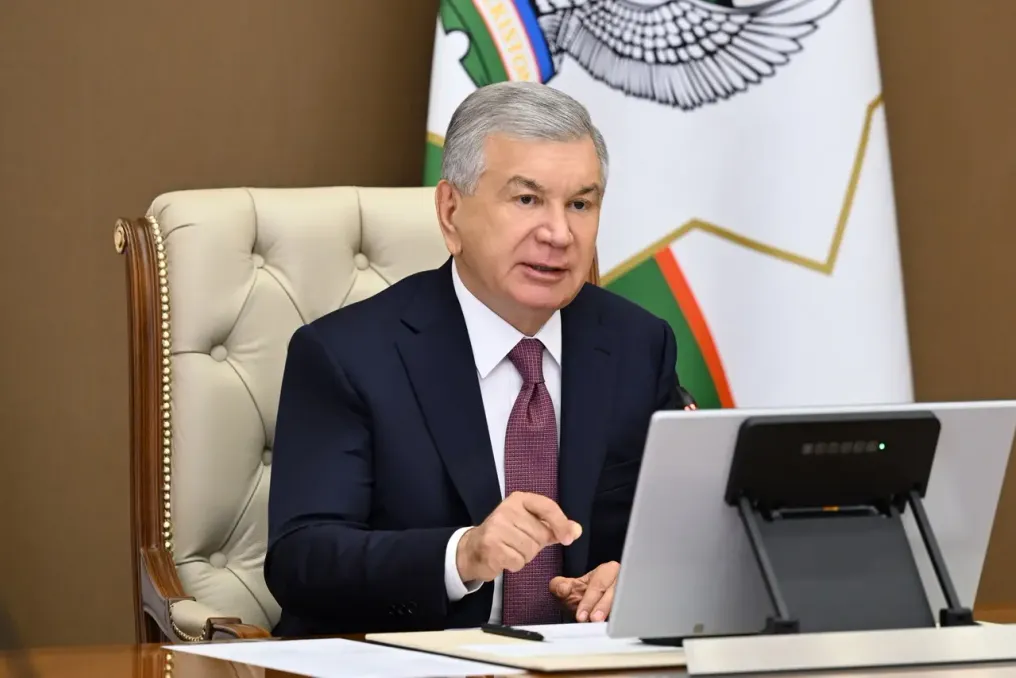
Mirziyoyev ordered expansion of support for vulnerable families in Uzbekistan
Read more
UzDaily
uzdaily.uz

Mirziyoyev ordered expansion of support for vulnerable families in Uzbekistan

President of Uzbekistan Shavkat Mirziyoyev reviewed proposals to strengthen social protection measures for the autumn-winter period, focusing on reducing expenses for vulnerable segments of the population and expanding targeted state assistance.

The presentation noted that rising prices for raw materials and energy carriers, disruptions in international logistics chains, and ongoing geopolitical tensions are increasing inflationary pressure in many countries. Under these conditions, measures aimed at alleviating the financial burden on citizens are of particular importance.

The proposed social support measures include expanding existing mechanisms for compensating costs for electricity, gas, coal, and utility services. Specifically, during the heating season, it is proposed to increase the basic consumption norm for electricity from 200 to 350 kilowatt-hours for areas without gas supply and for areas not receiving natural gas.

It was also proposed to consider providing vulnerable families with a one-time financial aid in December. Another measure provides for raising the threshold of average per capita household income used to determine eligibility for compensation of costs for electricity, gas, coal, and utility services.

It is planned to raise this threshold to 1.43 million soms for vulnerable families not included in the Social Register. This is expected to cover an additional 166,000 families with state support.

Furthermore, it is proposed to extend the mechanism for compensating part of the costs for electricity and gas consumption above the established basic norm until April 1, 2028. According to estimates, this measure will support 470,000 families over the year.

Work will continue to improve the energy efficiency of housing stock. Thermal insulation and equipping 3,000 houses with energy-saving equipment are planned for mahallas with difficult conditions.

The President instructed the Government to ensure the timely allocation of funds for the planned support measures, guarantee their targeted nature, and strengthen control so that aid reaches every needy person.

Specific instructions concerned the transformation of enterprises engaged in the production and supply of energy resources. Relevant agencies were instructed to improve management efficiency, reduce unnecessary expenses, and decrease losses in energy networks.
Similar stories

Uzbekistan to expand support for private schools to meet growing educational demand
Read more
uzdaily.uz

Uzbekistan to expand support for private schools to meet growing educational demand

The President of Uzbekistan, Shavkat Mirziyoyev, announced plans to increase support for private school education during a meeting with teachers and mentors before their professional holiday. These new initiatives were presented by the presidential press secretary, Sherzodom Asadov.

The need to expand school infrastructure is driven by the increasing number of students. This year, about 800,000 children entered the first grade, which is 10% more than the previous year. It is projected that the number of first-graders will reach one million by 2030.

To increase the number of places in educational institutions, it is planned to create an additional 180,000–200,000 places annually under investment programs. Special support measures will be provided to entrepreneurs willing to open private schools in 52 districts where existing schools experience particularly high demand.

Entrepreneurs will have the opportunity to take out loans to establish non-state schools at an annual interest rate of 10% for a term of seven years. Furthermore, founders of private educational institutions will receive compensation of 15% of equipment costs, up to a maximum of 1.5 billion soms. The state will also cover half of the costs associated with obtaining international accreditation.

Additional incentives will be introduced for property owners who provide their premises to schools; they will receive tax benefits on land and property. It is also planned to provide free leases of state buildings in all districts for school needs for up to 10 years.

Changes will also affect families paying for private school tuition. The tax deduction for parents will be doubled from 3 million to 6 million soms. Tax authorities will be obliged to organize the automatic refund of part of the income tax at the end of each month. According to the president, these measures will allow families to save from 6 to 7 million soms annually.

All these steps are aimed at expanding the private sector's participation in the field of school education amid the expected growth in the number of school-age children and the increased demand for new school places.

Uzbekistan expands financial support for the agricultural sector
Read more
uzdaily.uz

Uzbekistan expands financial support for the agricultural sector

Uzbekistan is adopting new measures to strengthen financial support for the agricultural sector. President Shavkat Mirziyoyev approved the relevant decree, which aims to increase the efficiency of financial assistance and improve the risk management system.

The new document provides for the provision of several subsidies for agricultural enterprises. For example, a subsidy of 500,000 soms will be paid for every ton of raw cotton harvested in 2026 (excluding fourth and fifth-grade cotton).

Additionally, cotton-textile clusters and enterprises created by them will receive 1.5 million soms for each hectare of land allocated for cotton cultivation in 2026.

Livestock farms will receive an annual subsidy of 500,000 soms per hectare of sown area where fodder crops are grown on main cultivated territories from 2027 to 2029.

The basis for making payments will be the conclusion of the Space Technology Research Agency. Also, from October 1, 2026, to June 1, 2027, entrepreneurs will be able to receive 2,500 soms per kilogram of imported chilled beef and lamb.

A pilot legal experiment is planned from January 1, 2027, to January 1, 2028, aimed at introducing a mechanism for subsidizing part of the expenses of agricultural producers for using water-saving irrigation technologies.

Payments will be made on a 'Results-based Subsidy' principle. The amount of such a subsidy will be determined based on the recipient's costs, as well as crop yield indicators, product quality, and other efficiency criteria.

The decree also introduces changes to the agricultural insurance system. Farms that have not had insurance claims for three consecutive years will be granted a discount on the insurance premium from 10% to 20% starting from the fourth year.

Simultaneously, 3% to 5% of insurance premiums will be directed to a reserve fund to finance preventive measures.

Popular