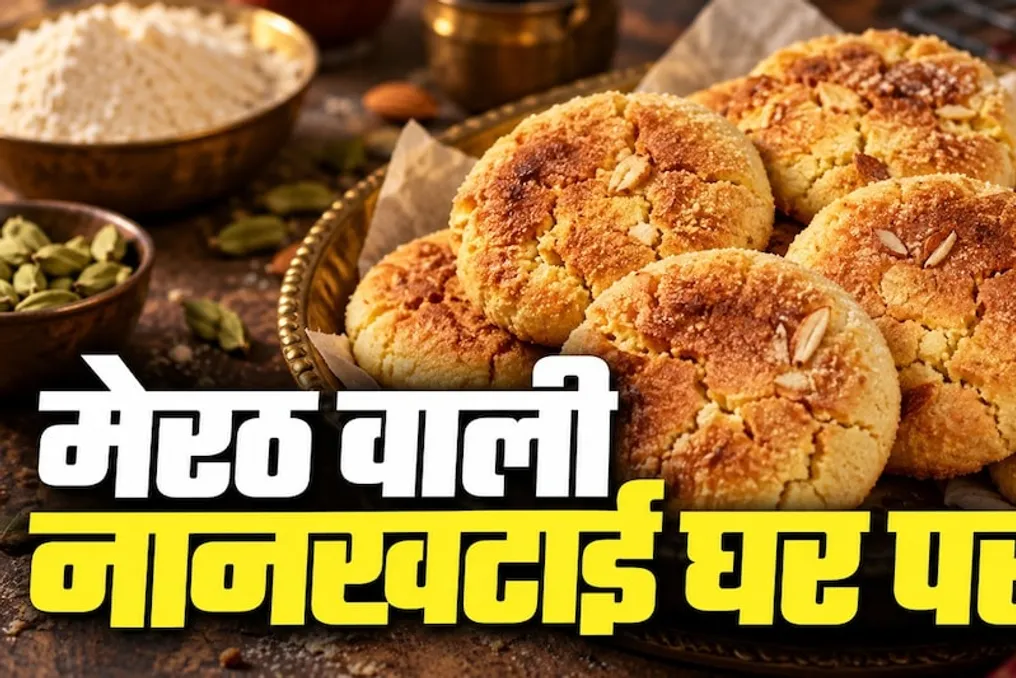
How to make famous Nankhatai from Merita in a multicooker: a simple recipe for crispy and delicious cookies
Read more
Aaj Tak
www.aajtak.in

How to make famous Nankhatai from Merita in a multicooker: a simple recipe for crispy and delicious cookies

The city of Merita, located in the state of Uttar Pradesh, is known for its numerous attractions, including scissor crafts, balls, and culinary delights. Among these culinary masterpieces, Nankhatai holds a special place—a sweet loved for its perfect combination: light crispiness on the outside and incredible softness inside, making it an ideal tea snack.

The popularity of Nankhatai is so great that it can be found in large cities like Delhi, where it is sold in both kiosks and specialized shops, despite originating from Merita.

Now, lovers of this sweet no longer have to wait for someone to bring it from Merita or search for it outside the home. You can prepare delicious Nankhatai yourself using a regular multicooker (cooker).

Ingredients for making Nankhatai

First, you need to mix flour (maida), coarse grain (sooji), and gram flour (besan) in a large bowl. Then, in another dish, whip ghee (clarified butter) and powdered sugar until a light and fluffy mass is obtained.

To this mixture, add baking powder and cardamom powder. After that, introduce the mixture of flour, sooji, and besan, and knead the dough to the desired consistency. It is important that the dough is not too stiff; if it seems dry, you can add one or two tablespoons of milk, although milk is usually not required with a sufficient amount of ghee.

Step-by-step cooking instructions

The multicooker is used for baking. About half a kilogram of salt is poured into the multicooker, which is then spread across the bottom. This salt can be saved and reused after sifting.

A rack or stand is placed on top of the salt. The multicooker is covered and heated on high heat for about 7–8 minutes, ensuring the steam valve does not activate.

After this, small balls are formed from the prepared dough and slightly flattened. These balls are placed on a plate lightly greased with ghee, leaving a small space between them. Each Nankhatai is decorated with a light cross-cut, and topped with finely chopped pistachios; almond pieces can be used instead of pistachios.

When the multicooker is well heated, the plate with the Nankhatai is placed on the rack. The multicooker is covered and baked on medium heat for about 10 minutes. After 10 minutes, the lid is opened to check for doneness: if the top has risen but the color is still light, baking must continue. At this stage, the heat is increased and baked for another 4–5 minutes.

Baking is complete when the Nankhatai acquires a light golden-brown hue. Since the plate will be very hot, it should be carefully removed. The remaining portions are prepared in the same way. After the Nankhatai are removed and completely cooled, they become even crispier and develop a brownish tint underneath. The finished sweets can be stored in an airtight container.


Similar stories

Recipe for Pure and Crispy Sabudana Papads for Fasting During Sharadiya Navratri 2026
Read more
www.aajtak.in

Recipe for Pure and Crispy Sabudana Papads for Fasting During Sharadiya Navratri 2026

With the approaching sacred festival of Sharadiya Navratri, which lasts for nine days, many desire something light, crispy, and tasty for evening tea. However, chips and papads available for sale often contain regular salt, unhealthy oils, and preservatives, which are undesirable during a fast.

Instead of store-bought snacks containing impurities, it is suggested to prepare 100% pure, vegetarian, and crispy sabudana papads at home using just one cup of sabudana. The preparation process is so simple that even beginners can achieve perfectly white, transparent, and crispy papads.

You will need: 1 cup of fine or medium sabudana, 4 cups of water (for boiling), 1 teaspoon of rock salt (fasting salt), 1/2 teaspoon of roasted or whole cumin, 1/2 teaspoon of ground black pepper or finely chopped green pepper, 1 tablespoon of finely chopped cilantro (optional).

First, wash the sabudana twice with clean water. Then, add half a cup of water to it and leave it covered for 3-4 hours so that the sabudana swells well and becomes soft.

In a large, thick-bottomed pot, bring 4 cups of water to a boil, adding 1 teaspoon of rock salt. When the water boils, pour in the soaked sabudana and cook over low or medium heat, stirring constantly, for 10-12 minutes. Gradually, the sabudana grains will become completely transparent, and the mixture will thicken and take on a glossy appearance. As soon as the mixture starts sticking to the spoon, remove the pot from the heat.

Next, stir in the cumin, ground black pepper, and chopped cilantro. Let the mixture cool slightly (do not cool it too much, otherwise, it may solidify).

On a clean plastic sheet spread out in the sun or under a fan, lightly brush with oil or ghee. Using a spoon, place a small amount of the mixture onto the plastic and carefully spread it into a round shape. It is important not to make the papads too thin, otherwise, they may break after drying.

Dry the papads in the sun for 1-2 days. After they are completely dry, they will become very hard and transparent. Then, heat oil or ghee in a pan and fry the papads. Upon contact with hot oil, the papads will double in size and become very crispy. They should be served hot with tea.

Completely dried papads can be stored in an airtight container and will maintain their appearance for a whole year.

Chef Kunal Kapoor's Masala Nimki Recipe for an Evening Snack
Read more
www.aajtak.in

Chef Kunal Kapoor's Masala Nimki Recipe for an Evening Snack

If you are craving something spicy and crunchy with your evening tea, you can make Masala Nimki at home. This article presents a simple recipe for preparing this delicious and crispy snack.

Instead of buying ready-made snacks from the store, you can prepare Masala Nimki yourself. This recipe, recently shared by Chef Kunal Kapoor on Instagram, will allow you to get nimkis that are crispy on the outside and aromatic on the inside.

To prepare the dough for the nimki, you will need: 2 cups of high-grade flour (maida), 3-4 tablespoons of ghee or oil, 1 teaspoon of cumin seeds (jeera), half a teaspoon of fennel (ajwain), 1 teaspoon of black pepper, 1 teaspoon of nigella seeds (kalandji), 1 teaspoon of salt (amount adjustable), and 1/2 cup of cold water or as needed.

For the spice mix, you will need: 1/2 teaspoon of black salt (kala namak), 1/2 tablespoon of regular salt, 2 tablespoons of amchur powder, 3/4 tablespoon of ground black pepper, and 1 1/4 tablespoons of Kashmiri red chili powder.

Additionally required: 2 tablespoons of ghee and 2 tablespoons of high-grade flour, as well as oil or ghee for frying.

First, in a large bowl, mix the high-grade flour, salt, cumin, black pepper, nigella seeds, and fennel. Add the ghee and mix thoroughly with your hands until it resembles crumbs. This ensures the crispy texture of the nimki.

Next, gradually add the cold water and knead a stiff dough. Cover the dough and let it rest for 10-15 minutes. Separately, prepare a smooth paste by mixing 2 tablespoons of high-grade flour and 2 tablespoons of ghee.

Lay out the prepared dough, roll it thinly using a rolling pin, ensuring uniformity. Then, apply a very thin layer of the flour and ghee paste over the dough. Roll the dough from one edge to form a long cylinder. Cut it into small pieces about 1 centimeter thick.

Take one piece, gently press it with your hand, and then roll it out as thinly as possible with a rolling pin. Shape it into a triangle, join the edges using a little water, and lightly press the center.

Heat the oil in a pan over medium or low heat. Fry the nimkis on low heat so they cook thoroughly and become crispy. Remove the nimkis in batches when they turn golden and crispy, and place them on a paper towel.

In a small bowl, mix the black salt, regular salt, amchur powder, ground black pepper, and Kashmiri red chili powder. After the nimkis are ready, sprinkle this spice mixture over them and mix thoroughly so that the spices evenly coat all the nimkis. Let them cool completely, after which they can be served with tea or stored in an airtight container.

Recipe for Crispy Khachori with Green Beans, Served with Spicy Vegetable Ragout
Read more
www.aajtak.in

Recipe for Crispy Khachori with Green Beans, Served with Spicy Vegetable Ragout

If you are tired of monotonous food like simple dal and roti all week, then this weekend is a good time to prepare something special and aromatic. Regardless of the season or the desire for a special weekend breakfast, crispy khachori with green beans will be an ideal choice.

When the filling of fried beans, seasoned with asafoetida, fennel, green pepper, and other spices, is placed in a crispy semolina shell and fried, its aroma fills the entire house.

Serving these hot, spicy, and juicy khachori with rich potato ragout creates such a delight that it is impossible to stop. Below is a simple way to prepare khachori of restaurant quality.

For the khachori dough:

2 cups semolina (or 1 cup semolina + 1 cup wheat flour)

1/4 cup clarified butter or vegetable oil (for moina)

1/2 teaspoon ajwain

Salt to taste

Cold water (for kneading the dough)

For the bean filling:

1.5 cups green beans (fresh or frozen)

1 tablespoon oil

1/2 teaspoon asafoetida (hing)

1 teaspoon cumin (jeera)

1 tablespoon fennel (chopped)

1 tablespoon whole coriander (coarsely ground)

1-2 green peppers and 1 inch ginger (grated)

1 tablespoon chickpea flour (besan) (to absorb moisture and enhance flavor)

1/2 teaspoon turmeric and red pepper powder

1 teaspoon amchur powder and garam masala

Salt and black salt to taste

Oil for frying

Preparing the dough: In a bowl, mix the semolina, salt, ajwain, and moina oil. Rub well with your hands until the flour starts to form a lump. Then gradually add cold water and knead a soft and elastic dough. Cover it with a damp cotton cloth and leave it for 20 minutes.

Preparing the filling: Lightly crush the green beans in a blender without adding water to obtain a coarse crumble. Heat 1 tablespoon of oil in a pan. Sauté cumin, asafoetida, ground coriander, fennel, ginger, and green pepper. Add 1 tablespoon of chickpea flour and fry on low heat for one minute. Then stir in the crushed beans and all dry spices (turmeric, red pepper, amchur, garam masala, salt), frying for 4-5 minutes until the mixture dries out. Let the filling cool and form small balls.

Shaping the khachori: Take a piece of dough, stretch it at the edges to form a bowl shape. Place a ball of filling in the center and carefully seal the edges, thoroughly enclosing the filling. Press with your fingers to give the item a flat shape.

Frying: Heat the oil in the pan to a low or medium heat (the oil should not be too hot, otherwise the khachori will not become crispy). Place the khachori in and let them float gently. When they start to expand and take on a light golden color, increase the heat to medium and fry on both sides until a crispy and golden crust is achieved.

Serving: The finished, crispy, and hot khachori with green beans should be served with spicy and juicy potato ragout and green paste.

Popular