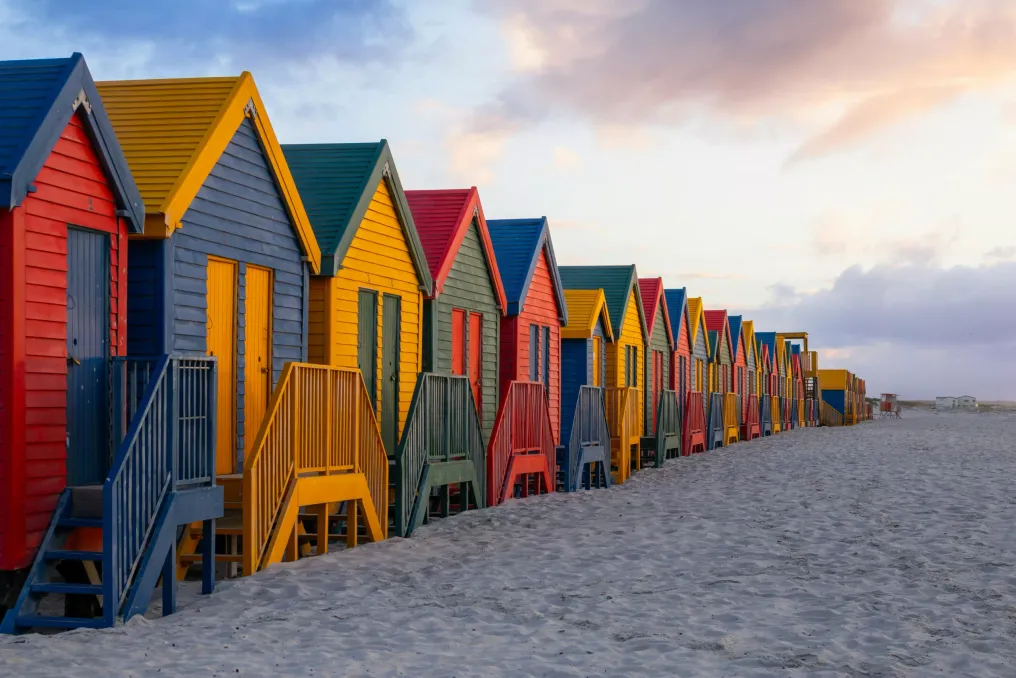
Coastal towns across the country offer hiking trails on cliff edges, impressive viewpoints, historic lighthouses, estuaries, wildlife habitats, and hiking paths that reveal another facet of the ocean. In some places, the best views are from a mountain overlooking the sea, while in others, they are from a winding coastal trail or estuary where fresh water meets the Indian Ocean.
These six locations are worth visiting if you want to experience the coast without making typical beach holidays the central event.
Hermanus
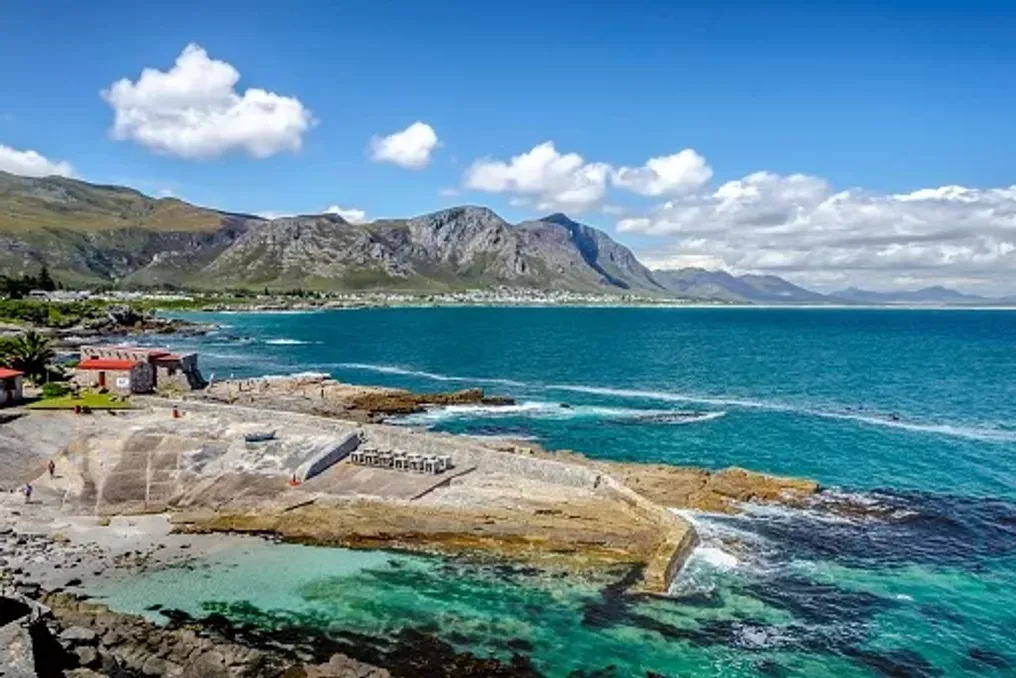
Hermanus is one of South Africa's most renowned destinations for viewing marine life from land. The city's cliff path stretches over 12 kilometers along Walker Bay, equipped with benches and over-water viewpoints. The route runs from New Port towards Grotto Beach and offers numerous opportunities to stop and admire the bay.
During whale season, visitors can see southern right whales arriving for mating and calving. Bryde's whales can be observed year-round, and humpback whales pass by the coast between June and November. The appeal of this location is not limited to whales: the trail crosses coastal vegetation, rocky shores, and small coves, making the walk worthwhile even during quiet periods.
You can start near Old Port and follow sections of the Cliff Path at your own pace. Gearing's Point is another useful viewpoint over Walker Bay, and Silver Point is particularly popular for whale watching. If you visit outside whale season, the route will still offer breathtaking ocean views and the chance to see seabirds and marine life beneath the cliffs.
Knysna
Knysna is a coastal town where the ocean is best perceived as part of a much larger landscape. The famous Knysna Heads consist of two sandstone formations framing the entrance to the Knysna Estuary. From the Eastern Head viewpoint, visitors can look through the lagoon at mountains while seeing the Indian Ocean in the distance. This viewpoint has several observation decks, making it a convenient spot to pause and take in the scale of the landscape.
At the foot of the Eastern Head, Ponnant Point offers another perspective beneath the cliffs, with a walking track running along the base of the headland. For a more active experience in Featherbed Nature Reserve on the Western Head, there is a 2.2-kilometer coastal walk as part of an organized tour. This route opens up views along Garden Route and across the Knysna Lagoon.
One can also drive towards Brenton-on-Sea and stop at a high viewpoint overlooking the Indian Ocean. During whale season, this spot is used for land-based whale watching. Thus, Knysna is more about understanding how the forest, lagoon, cliffs, and ocean interact than simply sitting on a patch of beach.
Mossel Bay
Mossel Bay boasts over 60 kilometers of coastline, but one of the best ways to enjoy it is from above. Cape St Blaize Lighthouse stands on the cliffs where the town transitions into a rugged stretch of coast. The lighthouse has been operational since 1864, and its elevated position provides visitors with expansive views across the bay and along the cliffs. This setting also allows for a combination of coastal scenery with history, as St Blaize Cave is located beneath the lighthouse, and the St Blaize Trail begins nearby.
The St Blaize Trail, stretching 13.5 km along the cliffs west of the lighthouse towards Dana Bay, takes about six hours and has a moderate difficulty level, following a 30-meter line above the shoreline. It is a good choice for travelers wishing to turn a coastal viewpoint into a full day outdoors. One can expect to see cliffs, ocean views, fynbos, and rare signs of marine life, rather than a traditional beach plan.
If you are not ready for a full hike, a simple visit to the lighthouse and exploring the Point will give you a similar sense of the landscape during a much shorter outing.
Cape St Francis
Cape St Francis is home to one of East Cape's most distinctive coastal landmarks—the Sealy Point Lighthouse. Built in 1878, this lighthouse stands on a peninsula surrounded by the ocean and remains operational. According to the St Francis Tourism Board, it is the tallest stone lighthouse in South Africa, reaching a height of 27.75 meters. The lighthouse provides an exceptionally good opportunity to feel the ocean from land, as the view changes with the ascent.
Tours allow visitors to climb 154 steps to the lantern room, located 28 meters above ground, to gain wide views of the surrounding coast and Cape St Francis itself. Tours are weather-dependent. Furthermore, the lighthouse gives the place a strong maritime character. Instead of just looking at the ocean from the beach, one can be inside an active coastal beacon built to safely guide ships past reefs. It is an ideal stop on a trip along the East Cape, especially for those interested in coastal history, architecture, and landscapes.
Port St Johns
Port St Johns offers perhaps the wildest interpretation of this idea. Known as the Pearl of the Wild Coast, the town is situated between Sullivan's Mountains and Thezigher at the mouth of the Umzimvubu River. High cliffs, subtropical vegetation, and sandy beaches at the river mouth create a coastline that feels far removed from typical resort towns. The landscape is particularly impressive from above. A walk to Eagle Nest takes about an hour and leads to a viewpoint overlooking the town, and Thezigher Mountain has a cliff-edge viewpoint used for picnics and evening gatherings.
Port St Johns has a network of walking trails, including routes around the town, coastal areas, and nearby nature reserves. The local tourism organization also lists routes such as the Lighthouse Loop, as well as trails to Sullivan's Mountain and Thezigher Mountain. The Silaka Reserve offers another way to experience the coast, featuring local forest, short hikes, birdwatching, and rocky shores. This area is also home to wildlife, including the blue duiker and bushbuck.
Marine life remains part of the experience without the need to charter a boat. Dolphins are regularly seen in the open sea, and whales can be spotted seasonally. The combination of cliffs, river, forest, and ocean makes Port St Johns particularly appealing for this type of coastal getaway.
St Lucia
St Lucia completely redefines a coastal town. Here, the Indian Ocean is part of a much larger wetland landscape. St Lucia is adjacent to iSimangaliso Wetland Park, South Africa's first World Heritage Site, where coastal forests, lakes, dunes, estuaries, and marine environments form one interconnected ecosystem. Lake St Lucia, nearby, is a vital estuarine system and one of the most significant wetlands in South Africa. More than half of the KwaZulu-Natal waterfowl feed, rest, or nest around the lake, and its waters serve as an important spawning ground for fish species.
The St Lucia area is ideal for travelers who wish to incorporate wildlife viewing into their coastal experience. Depending on the area explored, the landscape may offer encounters with hippos, crocodiles, antelopes, and a wonderful variety of birds. Areas of the Western Shores and Charter's Creek in iSimangaliso offer views of Africa's largest estuarine lake, and four of the 'Big Five' can be found in the surrounding landscape. The estuary can also be explored on foot or from designated viewpoints, observing mangroves, reeds, and the changing landscape around the water. Here, the ocean is not just a place for swimming; it is part of a vast ecological system where wetlands, wildlife, and the coast meet.
These towns demonstrate that a coastal holiday does not have to revolve around swimming or sunbathing. In Hermanus, the cliffs transform the ocean into a wildlife viewing theatre. Knysna reveals the connection between the estuary and the sea. Mossel Bay combines cliffs with maritime history, while Cape St Francis places the coast under a historic lighthouse. Port St Johns brings the drama of the Wild Coast, and St Lucia shows how closely the ocean is linked to wetlands and wildlife. Next time you visit the South African coast, look beyond the sand. Some of the country's most memorable ocean experiences begin where the land ends.