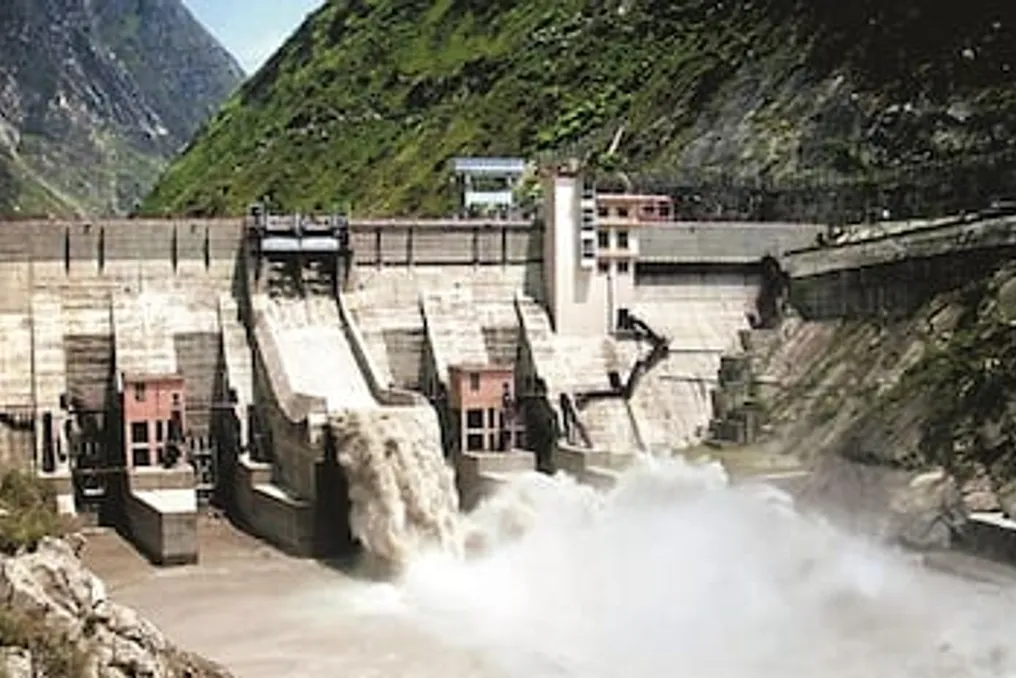
Adani Power and Druk sign agreement to build 770 MW hydroelectric power plant in Bhutan
Read more
Business Standard
business-standard.com

Adani Power and Druk sign agreement to build 770 MW hydroelectric power plant in Bhutan

Adani Power has signed an agreement with Bhutan's state energy company, Druk Green Power Corp Ltd (DGPC), to implement the 770 MW Chamkharchhu-I hydropower project in the Kingdom of Bhutan.

According to the statement, Adani Power and DGPC signed a Shareholders Agreement (SHA) to launch this project. This project is the second major collaboration between the partners following the signing of the Wangchhu Hydroelectric Project agreement, which has a capacity of 570 MW, in September 2025. Furthermore, it falls under a broader Memorandum of Understanding (MoU) for hydropower development worth 5000 MW, signed between Adani Group and DGPC in May 2025.

The signing ceremony took place in the presence of the Prime Minister of Bhutan, Lhendi Dasho Tshering Tobgay, and other high-ranking officials. This 'run-of-river' type project will be located on the Chamkarchhu River in the central district of Zhemgang, Bhutan. It will be implemented under a Build, Own, Operate and Transfer (BOOT) model with a 49:51 equity partnership between Adani Power and DGPC, providing a concession period of 30 years from the date of commercial operation (COD).

The project aims to strengthen Bhutan's clean energy potential and improve regional energy cooperation. Construction is expected to begin in the first half of 2027, with commissioning planned within six years of the start of work. Anil Sardana, Managing Director of Adani Power Ltd., noted that hydropower will play a key role in accelerating the energy transition of South Asia, and this project will contribute significantly to enhancing energy security, reducing carbon intensity, and advancing common sustainable development goals. It will also allow for the export of surplus green energy to India during the summer months, creating long-term value for both countries.

Dasho Chewang Rinzang, CEO of DGPC, added that the 770 MW Chamkarchhu-I project will help strengthen Bhutan's energy security, especially during the winter months, and will also open up opportunities for optimizing and exporting surplus clean energy to India.
Similar stories

Uzbekistan and JICA signed a partnership program for the period 2026–2030
Read more
uzdaily.uz

Uzbekistan and JICA signed a partnership program for the period 2026–2030

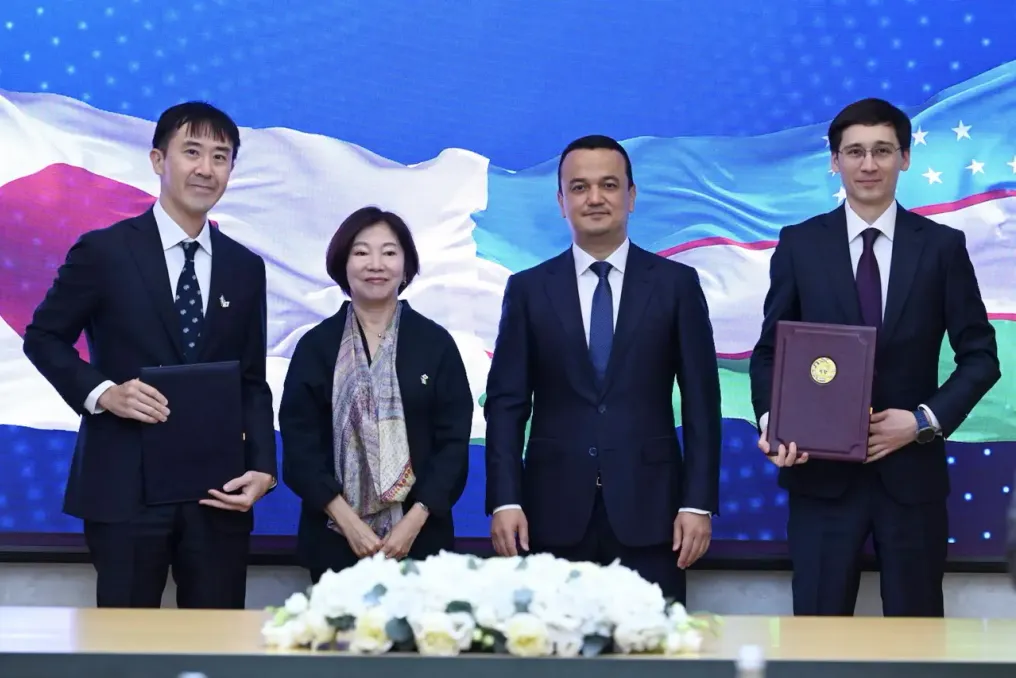
The Minister of Investment, Industry and Trade of Uzbekistan, Laziz Kudratov, met with Katsura Miyazaki, Senior Vice President of the Japan International Cooperation Agency (JICA), on October 5.

During the meeting, the parties reviewed the current state and prospects of bilateral cooperation, as well as discussed the implementation of existing joint projects and the preparation of new initiatives.

Particular attention was paid to the development of free economic zones (FEZs). The participants highly appreciated JICA's technical assistance in developing master plans for FEZs and creating conditions for attracting foreign investment, including investments from Japanese companies.

Following the negotiations, the parties signed a new Partnership Program for the period from 2026 to 2030. This document provides for the implementation of fifteen promising projects covering transport and energy infrastructure, human capital development, healthcare, and agriculture.

POWERCHINA connects gigawatt solar energy and molten salt tower project in Qinghai
Read more
pandaily.com

POWERCHINA connects gigawatt solar energy and molten salt tower project in Qinghai

POWERCHINA has connected its gigawatt complex to the power grid, which includes photovoltaic generation and a solar thermal plant using molten salt, located in Qinghai province. This was reported by the state media agency CCTV on October 1. This project is the first clean energy project of this scale in China, combining photovoltaic production, solar thermal energy storage, and electricity-to-heat conversion.

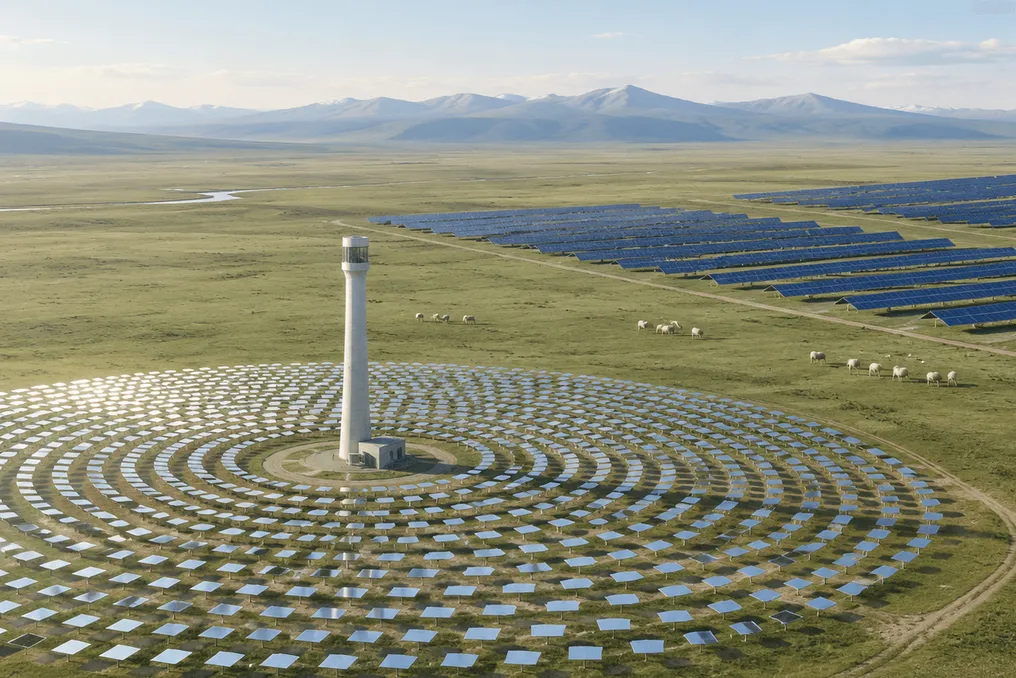
The facility is situated in Gunhe County, within the Hainan Tibetan Autonomous Prefecture of Qinghai Province. It integrates a 900-megawatt photovoltaic station and a 100-megawatt molten salt solar thermal plant. According to The Paper, the solar thermal component utilizes 10,310 pentagonal heliostats with a total reflective area of about 500,000 square meters around a 219-meter high receiver tower, while the photovoltaic section employs approximately 1.9 million modules.

This project is part of China's second batch of large-scale wind and solar bases. During the day, the heliostats focus sunlight onto the receiver, heating the molten salt, which is then stored. When energy is required, the hot salt heats water into high-temperature, high-pressure steam, which drives a turbine. This allows the station to shift daytime solar energy to evening hours and cloudy periods, transforming renewable sources from weather dependency to demand-matching generation.

Most of the generated electricity will be sent to Henan Province via an extra-high voltage direct current line rated at plus-minus 800 kilovolts, connecting Qinghai and Henan. Upon commissioning, the project is expected to supply an average of about 2.2 billion kWh annually to the grid, which will save approximately 690,000 tons of standard coal and reduce carbon dioxide emissions by about 2.07 million tons, according to CCTV.

The investment and operation of the project are carried out by POWERCHINA's new energy division, with POWERCHINA Northwest Engineering Corporation serving as the engineering, procurement, and construction contractor. Local meadows where sheep can graze have been preserved around the photovoltaic arrays. With the launch of the project, the Talatan area in Gunhe has become home to China's first three-tower solar thermal base, consisting of about 63,000 large mirrors forming three circular arrays of heliostats arranged in a triangle.

Solar thermal plants serve as peak power and long-term energy storage facilities. As of the end of August 2026, China had 2.2 GW of operational solar thermal capacity, with another 3.1 GW under construction, representing the largest cumulative figure globally. Furthermore, Qinghai possesses 710 MW of operating and 1.35 GW of under-construction solar thermal capacity, and national policy aims to reach 15 GW of solar thermal capacity by 2030.

Popular