Currency Risk Management Strategies for South African Agricultural Exporters
Read more
Food For Mzansi
foodformzansi.co.za

Currency Risk Management Strategies for South African Agricultural Exporters

South Africa's agricultural sector is demonstrating rapid growth, achieving high export volumes of approximately 266.3 billion rand last year. According to recent agricultural reports, this figure includes exposure to foreign exchange (FX) fluctuations and contributes significantly to the trade surplus of about 124.7 billion rand.

Bianca Botess, Managing Director of Citadel Global and an expert in currency operations and rates, highlighted the presence of currency risks in agriculture. She noted that analyzing and understanding currency movements should be based not on the transaction date, but on how these movements interact with the production calendar.

Botess explained the difference between export crops and confirmed fertilizer orders, emphasizing the impact of cash flows. Experts propose various strategies for farmers to help them structure or hedge against currency risks.

She clarified that a confirmed fertilizer order differs fundamentally from an estimate of an export crop that has not yet been harvested or classified. Confidence in such cash flows should determine the amount of hedging and the selection of the appropriate instrument. The expert team has experience in assessing such risks and building an approach based on the farmer's timeline, risk appetite, and business objectives.

Furthermore, Botess mentioned a strategy they use for managing currency risks: combining trades, forward contracts, and ensuring balance, confidence, flexibility, and participation. This approach involves not only focusing on the total exposure simultaneously but also managing risks arising at the production, sales, and other procurement stages.

Botess added that their goal is to analyze and understand currency risk in business and find ways to properly protect cash flow, rather than trying to predict the strength of the rand in the process. However, she also clarified the process of matching cash flows instead of simply converting currency and what farmers need to know to ensure proper management of these flows.

Botess gave an example: if a producer receives euros from export sales but has input costs denominated in euros, there is an opportunity to more purposefully match these flows instead of arbitrarily converting the currency. This is where hedging through Corporate Foreign Currency accounts (CFC) can provide real benefit.

She explained that by assessing the timing, currency, and degree of certainty of each cash flow, it is possible to help structure how currencies are preserved, cross, or hedged within CFC accounts, continuing to apply appropriate instruments where natural offsetting is insufficient.

The expert also described the concept of a budget rate—the rate against which the season was planned—and the functioning of markets against this budget rate. Botess emphasized that the budget rate serves as a benchmark for seasonal planning. If the market moves favorably relative to this rate, it may be worthwhile to increase confidence in known or highly probable exposures. The main task is risk management, not trying to guess the peak or trough of the currency market.

In conclusion, Botess stressed the importance of having an FX policy that helps farmers manage and structure risks related to currency and cash flows. She stated that currency volatility cannot be eliminated from agriculture, but it can be managed in a more structured way, providing commercial farmers with greater certainty regarding raw material costs, export revenues, and ultimately, the margin upon which their business depends.

Similar stories

Increase in vegetable supply may lower prices for buyers in South Africa
Read more
foodformzansi.co.za

Increase in vegetable supply may lower prices for buyers in South Africa

Fresh produce markets in South Africa saw sharp price fluctuations this week, driven by double-digit increases in the cost of potatoes and tomatoes, while the price of onions remains abnormally high compared to 2025 levels. However, as harvest volumes increase in key production areas, the market may soon change direction.

According to the latest report from agricultural economist Konsa Moraba, prepared by Agricultural Market Trends (AMT), the current price rise is largely due to temporary stock shortages, but incoming supply could quickly exert downward pressure on several commodities.

Moraba noted: 'High prices attract attention. The growth in supply tells you whether this price will hold.'

Potatoes showed a jump of over 15%, reaching an average of R77.49 per 10 kg. Although low initial stock levels initially supported the price, Moraba indicated that larger inflows during the week could reduce the average weekly figure.

Tomatoes were the main driver of the increase, rising by 44% to R12.24/kg, despite a 7% weekly volume increase. Current prices are 19% higher compared to last year, mainly because overall market volumes remain about 9% lower than in the same period last year.

Moraba predicts that high prices will persist until October, but warmer weather, weakening demand mid-month, and seasonal supply influx starting in mid-November are likely to ease pressure on consumers.

Onions continue to hold at record high prices—R148.48 per 10 kg, which is 268% higher than last year. Despite a slight decrease of about 3% last week, a major short-term market correction is unlikely.

Moraba explained that as long as large volumes have not started arriving from the Northern Cape, and some producers in Limpopo have finished harvesting, limited supply may maintain relatively stable prices.

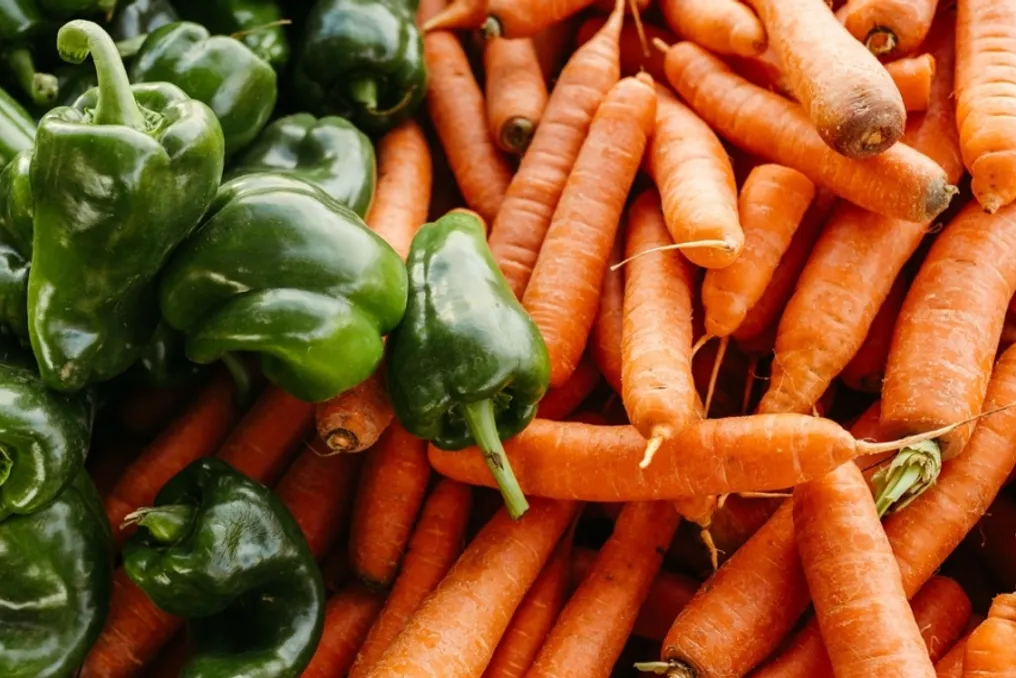
Other changes among vegetables included: carrots rose by 4% to R3.93/kg, despite a 40% surge in volume; bell peppers averaged R13.74/kg, while green peppers rose to R10.43, and yellow (R23.87) and red (R24.03) decreased; string beans increased by 23% to R21.92/kg, sweet potatoes jumped to R5.92/kg, butternut reached R8.93/kg, and cucumbers cost R11.99/kg; garlic fell another 10% to R79.43/kg.

The fruit sector showed a mixed picture, combining strong volume pressure and seasonal transitions. Bananas dropped to R8.79/kg after a sudden 36% increase in weekly supply. Moraba noted that supply may stabilize or decrease by the end of the year, which will support prices.

Apples and pears showed a slight drop to R10.28/kg and R8.76/kg respectively. Since overall market volumes are significantly lower than in the last two years, both crops are expected to rise by the end of the year.

Oranges slightly recovered to R2.56/kg but remain 41% cheaper than last year, thanks to increased annual volumes, reduced export shipments, and quality issues. Meanwhile, lemons strengthened to R5.09/kg, and grapefruit rose to R5.21/kg.

Among subtropical and niche items, avocados fell by 5%, although reduced supply at the end of the year should ease the situation for producers. Table grapes strengthened to R74.55/kg ahead of the first local harvest in early or mid-November, pineapples rose to R8.58/kg, and blueberries reached R56.87/kg.

As market conditions develop, producers and buyers should closely monitor volume flows rather than relying solely on sharp price spikes.

How unity, technology, and added value contribute to the profitability of farms
Read more
foodformzansi.co.za

How unity, technology, and added value contribute to the profitability of farms

Success in modern South African agriculture depends on the ability to adapt, establish thoughtful partnerships, and ensure resilience to climate change. Following the Nampo Cape 2026 event, Daniel Rossouw from Nedbank shared his thoughts on the key trends shaping South Africa's agricultural sector and how strategic collaboration can guarantee long-term commercial sustainability.

As Head of Agricultural Sales at Nedbank, Rossouw noted that this year's Nampo gathering gave the sector a new impetus and a shared sense of purpose. Faced with complex market and operational challenges, industry stakeholders are increasingly uniting to protect productivity and build sustainable growth.

Under the theme 'grow together,' the event highlighted the growing demand for collaboration across the entire agricultural ecosystem. Discussions brought together representatives from organized agriculture, agribusiness, financial institutions, and political leaders, including the Minister of Agriculture and the Minister of Land Reform and Rural Development.

Rossouw emphasized: 'For me, the drive towards greater unity in agriculture was a truly outstanding moment, and I believe very deep discussions took place.' These meetings focused on critical regional and national issues, such as the future viability of the Western Cape grain industry, current biosecurity efforts related to rinderpest vaccination, and the role of local government in maintaining rural infrastructure to support agricultural logistics.

On the exhibition floor, farmers' interest was concentrated on innovations designed to optimize efficiency and reduce environmental risks in crop and livestock farming. Demonstrations of high-quality equipment included localized weather forecasting systems and data management platforms, as well as renewable energy sources designed to protect farms from utility costs.

Equipment developed for climate-smart agriculture also took center stage, with an emphasis on zero and minimum tillage machinery that minimizes soil disturbance. For Nedbank, the main focus was on regenerative agriculture and creating practical links in the value chain to help clients effectively implement sustainable farming principles.

Highlighting the link between environmental stewardship and farm performance, Rossouw asserts that economic success and environmental responsibility are inseparable. Long-term profitability depends on conserving and restoring natural resources, especially soil health and water availability.

He explains: 'You cannot talk about profitability and sustainability without the other. It is a completely integrated system.' He adds that ultimately, any activity of a farmer or agribusiness must be profitable for more than one generation while caring for natural resources.

This focus on long-term resource management underlies the ability of a farm to remain economically viable amid changing climatic cycles and market conditions.

A significant shift in the sector is the move towards vertical integration. Since raw material producers are typically price takers in open commodity markets, moving into processing, local packaging, and specialized export logistics offers a direct path to generating additional profit. Rossouw notes: 'We definitely see a major opportunity beyond primary agriculture.' He continues that instead of increasing raw material production, the focus is on vertical integration, both up and down the value chain. If these connections can be established and greater integration achieved, he believes it will significantly benefit the raw material producer in terms of profitability.

This shift aligns closely with national development goals within the Agricultural and Agri-processing Master Plan (AAMP), which prioritizes localization, export expansion, infrastructure development, and digital integration. By integrating operations upstream or downstream, producers can reduce their exposure to raw material price volatility.

Overcoming market changes, implementing technologies, and adapting to climate requires continuous financial support and a personalized approach to risk management. Financial institutions play a crucial role by going beyond traditional banking services, providing structured, climate-smart solutions that allow producers to diversify, adopt new technologies, and expand into value-adding areas.

To learn how Nedbank can partner with your agricultural business to navigate market transitions and transition to more climate-resilient practices for long-term profitability, contact business@nedbank.co.za or reach out directly to your regional Nedbank business manager.

Popular