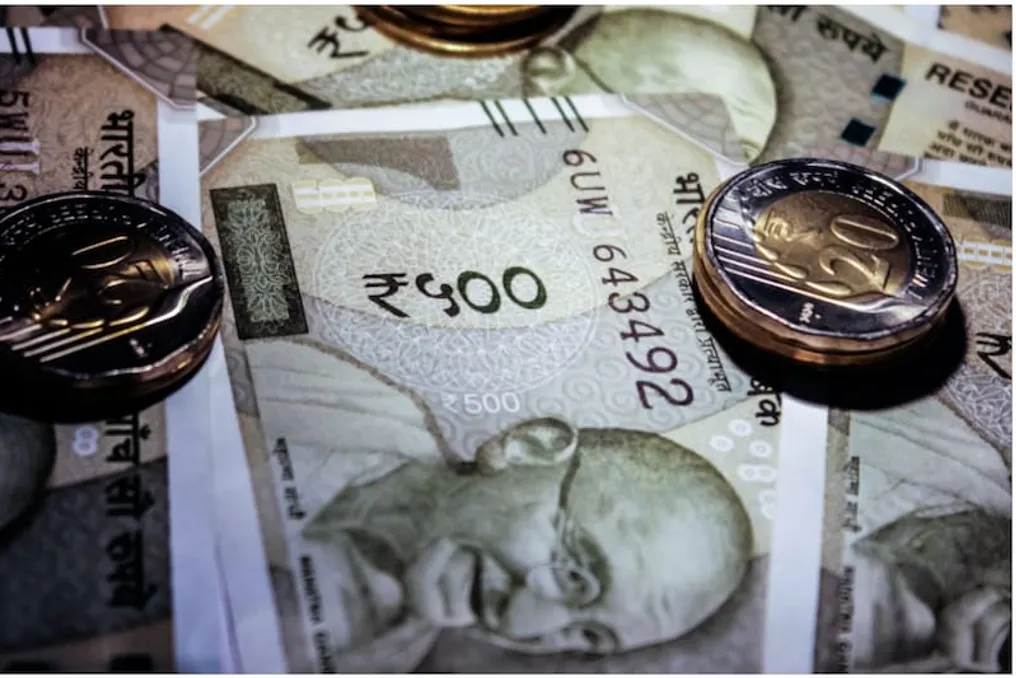
According to the index, San Jose is the city with the highest per capita income in the world
Read more
Aaj Tak
www.aajtak.in

According to the index, San Jose is the city with the highest per capita income in the world

A city's economic power cannot be assessed solely by the overall size of its economy; the sum of income per resident is a more indicative measure. Based on this criterion, American cities hold leading positions in the global ranking.

According to the Global Cities Index 2026 from Oxford Economics, San Jose in the USA leads in per capita income, with an average income of $238,700 per person. Notably, 27 out of the world's 40 cities on this list are American.

This data is based on GDP and population figures for 2025, and the amounts are stated in US dollars. San Jose ranks first with a per capita GDP of $238,700, being the center of many major Silicon Valley technology companies where technology and other large industries are actively developing.

Following it are San Francisco at second place with $181,889 per capita, Dublin as third with $159,732, and Basel as fourth with $156,312. Seattle takes fifth place with $152,030.

Among other significant US cities, Boston ranks eighth with $135,264, and New York ranks tenth with $129,253. Other American cities in the top 20 include Salt Lake City, Durham, Washington D.C., Bridgeport, Hartford, Denver, Des Moines, Los Angeles, Austin, and Nashville.

The ranking of New York serves as a good example for understanding the differences between total GDP and per capita GDP. Although New York's overall economy is very large compared to many other cities, when calculating per capita GDP, economic production is considered relative to the population, not the total size of the economy.

This is why even relatively small cities, such as Salt Lake City, Durham, Des Moines, and Omaha, can make it into the top 40. This means that having a high per capita income does not necessarily require being a very large city.

Similar stories

Monaco: A country where a high standard of living and no income tax make it attractive to the wealthy
Read more
www.aajtak.in

Monaco: A country where a high standard of living and no income tax make it attractive to the wealthy

Imagine a place where luxury cars like Lamborghini, Rolls-Royce, and Defender are everywhere; where homes resemble royal palaces or villas, and only elite yachts cruise on the water. For many, this seems like a scene from a dream, but there is a country where such things are commonplace.

What remains a fantasy for ordinary people is a familiar way of life for the residents of this country. If you find yourself here, seeing an ordinary car on the road would be a real marvel, as everyone possesses super-luxurious vehicles. Residential houses also look like expensive villas.

This small country is located on the European continent. Its population is about 40 thousand people, and its area is 1.95 square kilometers. In this country, more than a third of the population has net capital exceeding 1 million dollars, equivalent to 83,459,100 rupees. The average annual income per citizen here is estimated at 20 million rupees. Another feature of this country, situated between Italy and France in the Mediterranean Sea, is that no citizen is required to pay income tax.

Monaco, known worldwide for its picturesque views and casinos, has become a haven for many celebrities, including Formula 1 driver Lewis Hamilton, tennis player Novak Djokovic, and British industrialist Sir Philip Green. The country's economy largely depends on tourism.

People prefer this country for work and residence because local residents are exempt from income tax, and companies pay lower taxes compared to other states. Monaco is considered a preferred place for wealthy individuals, as well as for financial and insurance companies. The Monaco real estate market is among the most expensive in the world. Real estate accounts for 7.8% of the country's GDP, construction for 9.1%, and wholesale trade for 10%.

This country has also earned the nickname 'capital of the rich' because it has the wealthiest population in the world relative to its size. Monaco has ten towns, one of which is home to over 5,000 very wealthy people. Of the total population of 40 thousand, only the residents of these ten towns are considered native Monégasque; the rest are wealthy people who have arrived from other countries.

S&P Global raises India's economic growth forecast to 7% for 2026-27
Read more
www.aajtak.in

S&P Global raises India's economic growth forecast to 7% for 2026-27

The confidence of major global agencies in the pace of India's economic growth continues to rise. The rating agency Standard & Poor's Global (S&P Global) has raised its forecast for India's growth, despite the complex global situation, high oil prices, and geopolitical tensions.

The agency increased the forecast for India's real GDP for the fiscal year 2026-27 from 6.6% to 7%. This increase came after economic indicators in the June quarter were better than expected. According to S&P, strong industrial activity, domestic consumption, goods exports, and government investments helped the economy, with consumption growth in India proving particularly resilient.

Investment activity in India also remains the strongest among leading economies in the Asia-Pacific region, allowing India to be considered one of the main growth drivers in the region.

Nevertheless, S&P warns of some future challenges. The agency forecasts a slight slowdown in growth rates in the second half of the current fiscal year. The additional momentum given to the economy through GST rationalization and income tax reduction is gradually weakening. Furthermore, weather will play an important role; up to September 9, the total rainfall in the country was about 15% below normal, which could significantly affect agriculture and rural consumer demand.

S&P forecasts that average consumer inflation in India in the current fiscal year will be around 5.1%. Consequently, attention will be paid to inflation and food prices. The agency expects the Reserve Bank of India (RBI) may raise its policy rate by 25 basis points during the current fiscal year. Thus, despite strong growth, there is pressure from the need to tighten policy due to rising inflation.

The most serious external challenges for India are the cost of crude oil and the dynamics of the rupee. If oil prices remain high amid Middle East conflicts, this could affect import bills, inflation, and the Indian rupee exchange rate. India imports over 80% of its required fuel. According to S&P, by mid-September, the Indian rupee had weakened by more than 5% against the US dollar. Despite this external pressure, the resilience of domestic consumption and investment remains, making the domestic economy India's main strength.

The rating agency adjusted the forecast for India's real GDP for 2026 by 0.4 percentage points, while the forecast for 2027 remained unchanged. According to S&P estimates, the next three fiscal years may look like this: 2025 – 7.8%; 2026 – 7.0%; 2027 – 7.2%; 2028 – 7.0%; 2029 – 6.8%.

India surpasses China and Japan in GDP growth rates according to S&P forecasts. China is projected to grow at 5.0% in 2025, 4.3% in 2026, 4.3% in 2027, 4.4% in 2028, and 4.2% in 2029. Forecasts for Japan are 1.2% in 2025, 0.8% in 2026, 0.9% in 2027, 0.9% in 2028, and 0.7% in 2029. South Korea is projected to show figures of 1.1%, 3.5%, 2.7%, 2.4%, and 1.9%. Although Taiwan's forecast for 2026 is 10.9%, higher than India's, this is attributed to strong activity in technology and artificial intelligence.

S&P is not the only one positive about India's growth. On September 18, Moody's Ratings also raised India's GDP forecast for the fiscal year 2026-27 from 6% to 7%. The agency attributed this to strong private consumption, investment, public infrastructure spending, and the strengthening of the services sector. Thus, there has recently been an improvement in growth forecasts for India from global rating agencies.

India's strong growth means that the foundation of demand and investment in the domestic economy currently remains solid. However, another side of the coin is important for investors: the inflation forecast of 5.1%, a possible 25 basis point rate hike, expensive oil prices, pressure on the rupee, and the risk of growth slowdown in the second half of the year cannot be ignored. In the coming months, key indicators for India's growth rate will be agricultural production, food inflation, crude oil prices, and the next RBI decision.


Popular