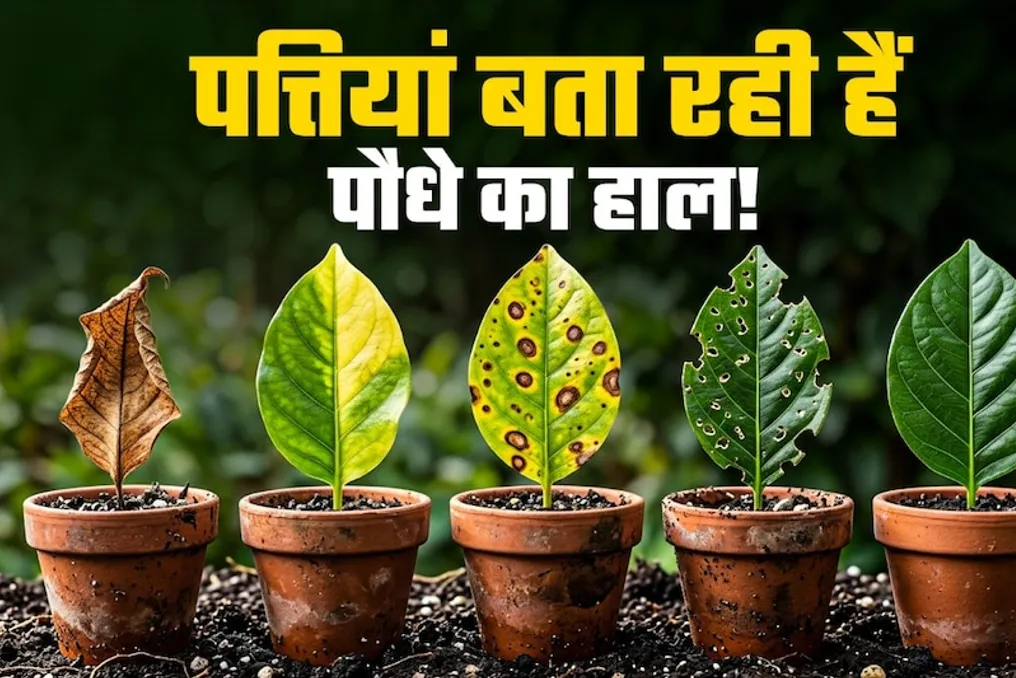
If you are interested in gardening, you probably have many plants at home. When they look lush and green, it is pleasant, but sometimes they suddenly start to yellow, the edges dry out, or strange spots appear on them. In such cases, many people immediately fertilize the plant or assume the cause is insufficient watering and increase the amount of water. However, the problem is rarely uniform.
It is interesting that although a plant cannot speak, its leaves fully reflect its state of health. By analyzing the color, curling, wilting, or markings on the leaves, one can largely understand whether the plant is suffering from a lack of moisture, receiving too much sun, being overwatered, or if it has been attacked by insects. Therefore, if you notice that the plant's leaves have turned yellow, brown, scorched, or have taken on an uneven appearance, you should first investigate these signs before adding fertilizer.
If the edges of the leaves become brown and dry, or if the leaves themselves begin to curl upwards, this is often a sign of dehydration. Especially in hot weather, rapid drying of the soil in the pot can cause this reaction. In such situations, instead of surface watering, it is recommended to thoroughly moisten the plant so that the moisture reaches the roots and penetrates deep into the soil. It is also necessary to check if the soil is too dry.
If yellow or burnt marks are observed on the leaves, it is possible that the plant is receiving excessively intense solar radiation. This problem is especially noticeable in species that do not like direct, very bright light. Instead of moving such a plant into complete darkness, it is better to find a place where direct sunlight is less, but there is still a sufficient level of illumination.
If the leaves lose their bright green hue and become pale, and the plant's growth slows down, the cause may be a lack of light. Such a plant should be gradually moved to a brighter location. At the same time, it is important to avoid a sudden transition to prolonged exposure to strong sunlight; the increase in illumination should happen gradually, based on the plant's needs.
Not all leaf yellowing means a lack of water. If the leaves turn yellow while becoming soft or wilted, and the soil remains constantly moist, this may indicate overwatering. In this case, you should temporarily reduce watering and be sure to check the drainage holes in the pot. It is important that excess water can drain freely from the pot, otherwise, constant dampness can remain around the roots.
The appearance of sudden round spots, markings, or moldy growths on the leaves may indicate a fungal infection. To prevent this, you should avoid prolonged wetting of the leaves and ensure good air circulation around the plant. Removing the most affected leaves can also be a helpful action.
If you discover in the morning that the edges of the leaves are nibbled or have small and large holes in them, it may mean that the plant has been damaged by insects. You need to carefully examine both the top and bottom sides of the leaves. If you find pests or their eggs, they should be removed promptly and measures taken to eliminate the plant disease.
As a rule, healthy plant leaves look green, firm, and uniformly colored. They should not develop sudden large spots, unusual curling, wilting, or holes. Thus, caring for plants is not just about monitoring watering and fertilization; daily inspection of the leaves is also extremely important. Often, the plant begins to signal illness even before it gets sick, and timely understanding of these signs allows for proper care and prevention of the problem worsening.