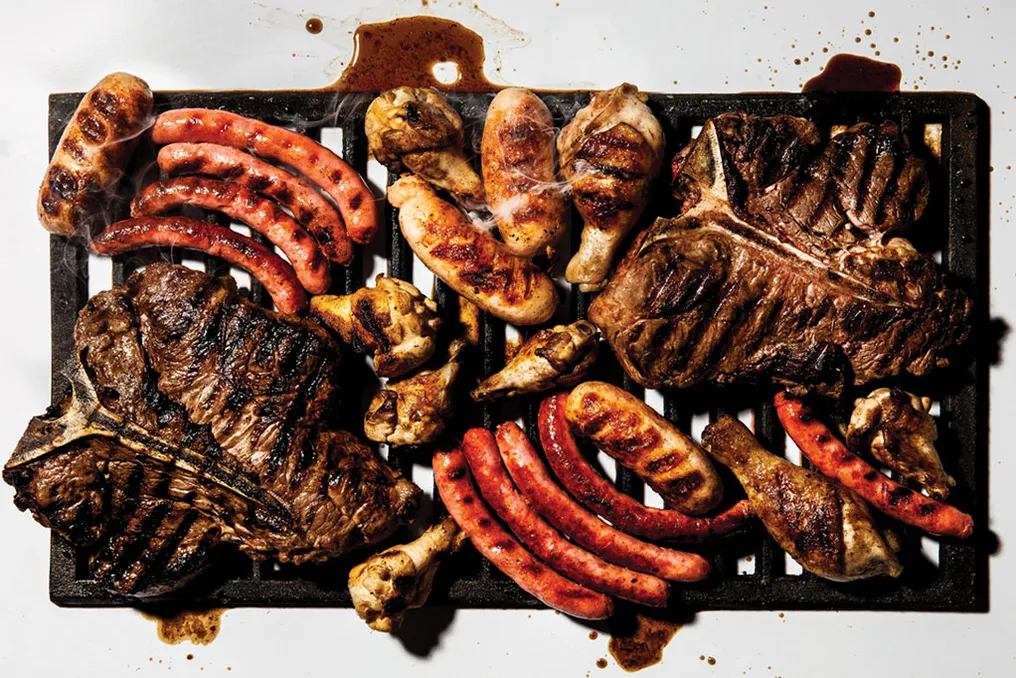
Food preparation methods such as smoking, frying, or grilling can increase contaminant formation
Read more
Super Abril
super.abril.com.br

Food preparation methods such as smoking, frying, or grilling can increase contaminant formation

The way food is prepared has the power to affect the population's exposure to polycyclic aromatic hydrocarbons (PAHs), substances primarily generated by the incomplete combustion of organic material. Common culinary techniques, such as baking, grilling, smoking, toasting, and frying, can promote the creation of these compounds, some of which are linked to cancer risk.

Due to a lack of information in Brazil on how to safely identify the presence of PAHs in food and regarding public exposure, a team of researchers from the Faculty of Pharmaceutical Sciences of Ribeirão Preto (FCFRP), affiliated with USP, conducted an analysis of the main scientific findings published on the subject between 2014 and 2024. This study aimed to point out the gaps in data generation concerning these contaminants in the national territory.

The research was conducted during Gabriel Henrique Savietto's master's degree, under the guidance of Professor Marília Cristina Oliveira Souza, and its results were published in the journal Food Additives & Contaminants Part A. The researcher explained that PAHs result from the incomplete combustion of organic matter, being lipophilic compounds, meaning they have a high affinity and ease of dissolving in fats, oils, and nonpolar solvents.

Savietto emphasized that this lipophilic property facilitates the accumulation of these contaminants in the human body, given that they are found in animal products, such as fish and other aquatic products.

The occurrence of PAHs during preparation is closely linked to the processing conditions applied. High temperatures, incomplete combustion, and the contact of fat with extremely hot surfaces are factors that can drive the formation of these compounds. The researcher mentioned that, in grilled foods, the dripping of fat onto the hot surface can contribute to the formation of these contaminants, which end up present in the final product.

One of the greatest health dangers lies in the carcinogenic potential of certain PAHs. However, Savietto clarified that simple exposure to the compounds does not guarantee cancer development; he warned that continuous exposure can increase the risk of diseases in various organs and is associated with changes in several bodily systems.

Therefore, the researcher advocates that educating the population about the existence and formation mechanisms of PAHs in food can reduce exposure. Changes in cooking habits can mitigate this formation. In the case of fried foods, the repeated use of oil at high temperatures also contributes to the increase in PAHs. For grilled foods, it is crucial to prevent fat from dripping directly onto very hot surfaces to reduce the incidence of these contaminants.

Thus, small adjustments in preparation procedures, such as controlling temperature and heating time, make a significant difference. Savietto reinforced that, in grilled items, direct contact with combustion products and the dripping of fat onto hot surfaces promote the formation of PAHs and, consequently, their presence in the finished food.

The studies revealed that, in Brazil, research on PAHs remains mainly concentrated in the South and Southeast regions, which hinders the analysis of contamination in food from other parts of the country. Researchers consider this fact an obstacle to understanding how different dietary patterns and processing methods impact contamination levels.

For Savietto, this disparity not only compromises the understanding of food safety but also exposes differences in monitoring and research structure among the various regions. He stated categorically: 'We cannot talk about food safety for the entire Country when the production of knowledge and monitoring of contaminants does not reach all regions equally.'

Despite the findings across various types of food, the lack of data prevents the precise determination of which products consumed in Brazil present the highest risk of contamination. The reviewed studies indicate higher concentrations of contaminants in items subjected to processes such as smoking, roasting, frying, and grilling. Fish and seafood, along with processed meats and processed foods, are among the evaluated products.

The Sanitary Surveillance Agency (Anvisa) is responsible for regulating PAHs in Brazil, but this regulation has restrictions. Currently, it focuses mainly on benzo[a]pyrene in certain food categories, while international standards, notably European ones, encompass more food groups and consider PAH4, which is a set of four PAHs used in risk and contamination assessment.

However, Savietto pointed out that legislation alone is not enough without an effective monitoring system. He informed that the article produced highlights crucial limitations in the inspection and monitoring of PAH contamination, citing the scarcity of data and the insufficient production of information to fully assess the levels of these contaminants in different regions and foods in the country. Furthermore, he mentioned the lack of standardization in laboratory analyses, which hinders the comparison of results and the elaboration of more solid risk assessments.

A total of 36 studies were considered for the analysis. The results showed that the situation is not alarming in cases of acute exposure, but the scenario changes drastically when considering chronic exposure, as the population may come into contact with contaminants through different foods over the years.

However, Savietto warns that it is still not possible to accurately quantify this long-term risk for the entire Brazilian population, making this a central point that needs to be addressed by future investigations, especially those expanding research to less studied areas.

Similar stories

Video shows truck transporting giant wind turbine blade on narrow road in China
Read more
autopapo.com.br

Video shows truck transporting giant wind turbine blade on narrow road in China

A video released by CGTN, the Chinese state broadcaster, shows a truck driver maneuvering a large wind turbine blade along a winding and narrow dirt road located in the Nanling Mountains, in Hunan province, southern China.

In several sections of the route, there are no side protective barriers, meaning that any directional slip could put the truck and its cargo at imminent risk of falling into a cliff.

The cargo specifications vary depending on the source consulted. The American portal Jalopnik mentions a 52-meter long blade being transported to the summit of Baoding Mountain, situated at approximately 400 meters in altitude. Meanwhile, SlashGear reported images citing a piece measuring 118 meters and weighing 40 tons.

To move loads of this size, specialized vehicles and trailers equipped with hydraulic lifting systems are used. According to the YouTube channel Trucker Culture, the base of the blade is fixed to the trailer structure, and the mechanism allows the load to be raised by up to 60 degrees.

This inclination serves to reduce the space occupied by the assembly, facilitating passage through sharp curves, steep sections, and areas with obstructions such as trees, houses, bridges, and power lines. Furthermore, it prevents the cargo from getting stuck or exceeding the road limit excessively.

Support vehicle convoys accompany the operation to identify and remove any obstacles, in addition to guiding the driver. In the most restricted points, the coordination of meticulous and precise movements is carried out through radio communication, especially when the maneuver margin is minimal.

Weather conditions represent another risk factor. Since blades are designed to capture wind, intense gusts can destabilize the cargo even during transport. At high altitudes, sudden weather changes have the potential to halt the convoy until it is safe to continue the journey.

As China is the world's largest producer of wind energy, the frequent installation of turbines in mountainous areas makes operations like this relatively routine in the country. In 2016, equipment manufacturer CIMC released a video showing the transport of 90 blades, each 52.4 meters long, to the top of Baoding Mountain in Yunnan province, at an altitude of 2,900 meters.

According to the company itself, this route contained 212 curves and ramps with an incline greater than 30 degrees, and each movement required about five hours.

More recently, in 2023, 75-meter blades were transported in a similar manner along a narrow road in Sichuan province, destined for a wind farm located at an altitude of 3,500 meters.

How to make coco peat at home from coconut shells to improve soil quality
Read more
www.aajtak.in

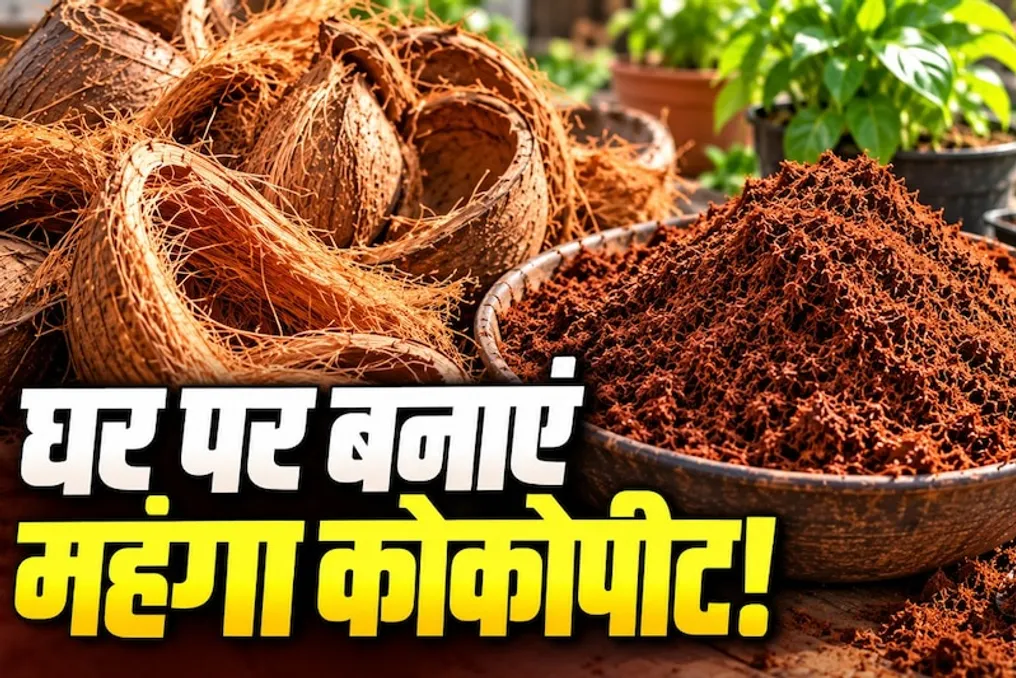
How to make coco peat at home from coconut shells to improve soil quality

If you have houseplants, your gardener has probably advised you to buy coco peat in a store. Coco peat is very beneficial for plants, but the product sold in stores is expensive, which makes people hesitate to purchase it. Nevertheless, if you are avoiding buying coco peat due to its high price, you might be interested to learn that you can prepare it yourself.

After consuming a coconut, its shell is often thrown directly into the trash bin. But if you have indoor plants, stop before throwing away the coconut shell next time. Although it may look unattractive, it can be quite useful for the soil in your pots. With its help, you can make homemade coco peat, which is used to maintain a light and airy soil structure for plants. Next, we will tell you exactly how to make coco peat from coconut shells.

Why is coco peat needed in potting soil?

Simply fertilizing the soil is not enough for good plant growth; it must also have the ability to retain moisture and provide easy access to air for the roots. Sometimes potting soil becomes hard after watering. In such cases, coco peat can be very useful.

According to gardening experts, coco peat is not a fertilizer because it does not provide the plant with necessary nutrients. Its main function is to improve soil structure and regulate moisture. It is capable of retaining water in the soil for some time, preventing the soil from drying out quickly, and also helps keep the soil loose, preventing it from becoming too dense.

How to make coco peat at home from coconut shells

Coco peat can also be useful when growing plants from seeds. At the initial stage, seeds require constant moisture, and coco peat helps maintain this moisture, creating optimal conditions for seed germination. When the young sprout grows a little, it can be transplanted into nutrient-rich soil, such as compost or vermicompost.

What amount of coco peat should be added?

When preparing soil for a pot or growing bag, it is crucial to pay attention to proportions. You can mix approximately 30–50 percent coco peat into regular soil. Excessive addition of coco peat can lead to a decrease in essential nutrients for the plant, since coco peat itself is not a fertilizer. Therefore, it is recommended to use it together with fertilizers such as compost or vermicompost.

Thus, waste can be turned into useful gardening material. Next time, after using a coconut, think before throwing the shell in the trash bin. Small efforts can reduce your gardening expenses. This allows you to reuse coconut shells while helping to maintain soil moisture and looseness for plants.

Popular