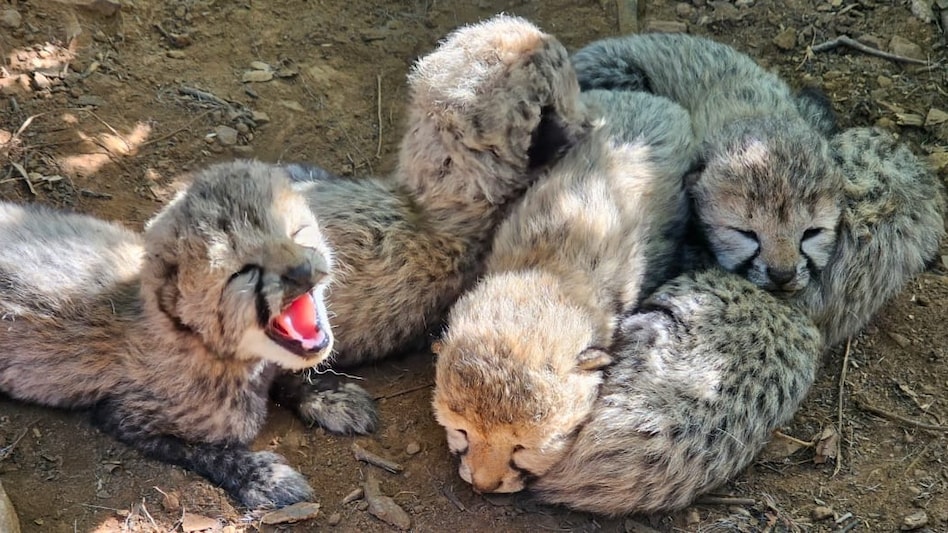
Another significant milestone for the Cheetah Project was recorded in Kuno National Park in Madhya Pradesh state: female cheetah KJP21, who is 32 months old, gave birth to five healthy cubs. Thanks to the birth of these five new cubs, the total number of cheetahs in India has increased to 60 individuals. Of these, 41 cheetahs were born on Indian soil.
The birth of KJP21 is an important achievement for the Cheetah Project. She is the third female to give birth in India after Mukhi and KGP12. This marks another significant stage in the expansion of the new cheetah population in the country.
All five cubs born in Kuno National Park are in good health. Their arrival has raised the cheetah population count in India to 60. Out of these, 41 cheetahs were born in India. Thus, the process of restoring the cheetah population in the country continues to develop through the birth of a new generation on Indian territory. It is particularly significant that KJP21, a female born in India, gave birth to cubs here, indicating that cheetahs born in India are now participating in reproducing the next generation.
These five cubs brought another important achievement. The father of these cubs is a male cheetah brought from Botswana. Consequently, the birth of these five cubs marked the beginning of the Botswanan genealogy in India. This added a new genetic line to the growing cheetah population in the country. The birth of five cubs is especially important because it initiated the Botswanan lineage against the backdrop of the expanding cheetah population in India.
Before KJP21, females Mukhi and KGP12 were the ones who gave birth to cubs on Indian soil. Now KJP21 is also on this list. The birth of five healthy cubs by 32-month-old KJP21 is an important step in expanding the new generation of cheetahs under the Cheetah Project. Furthermore, the number of cheetahs born in India has increased to 41 individuals.
The birth of another generation of cheetahs on Indian soil has become an important chapter in the history of the Cheetah Project. These five cubs appeared amid scientific efforts to conserve cheetahs in Kuno National Park, including monitoring and scientific management. This achievement represents another vital stage in advancing the cheetah restoration campaign in India. The arrival of five new cubs has contributed to the expansion of the new generation of cheetahs in Kuno, bringing the total number of cheetahs in the country to 60.
On the occasion of this event, Chief Minister Mohan Yadav congratulated veterinarians, forest officials, field staff, the management team, and all employees associated with the Cheetah Project. He highly praised the dedication, commitment, and continuous efforts of the people involved in the Cheetah Project. The birth of a new generation of cheetahs in Kuno was made possible by the efforts of veterinarians, forest officials, field staff, and the management team associated with the Cheetah Project. With the appearance of five cubs, the number of cheetahs in India reached 60, of which 41 were born in India.
In conclusion, the birth of five healthy cubs by KJP21 in Kuno National Park added another important chapter to the history of the Cheetah Project. The total number of cheetahs in the country has reached 60, and the number of cheetahs born in India has risen to 41. Since the father of these cubs is a male brought from Botswana, their birth also initiated the Botswanan genealogy in India.