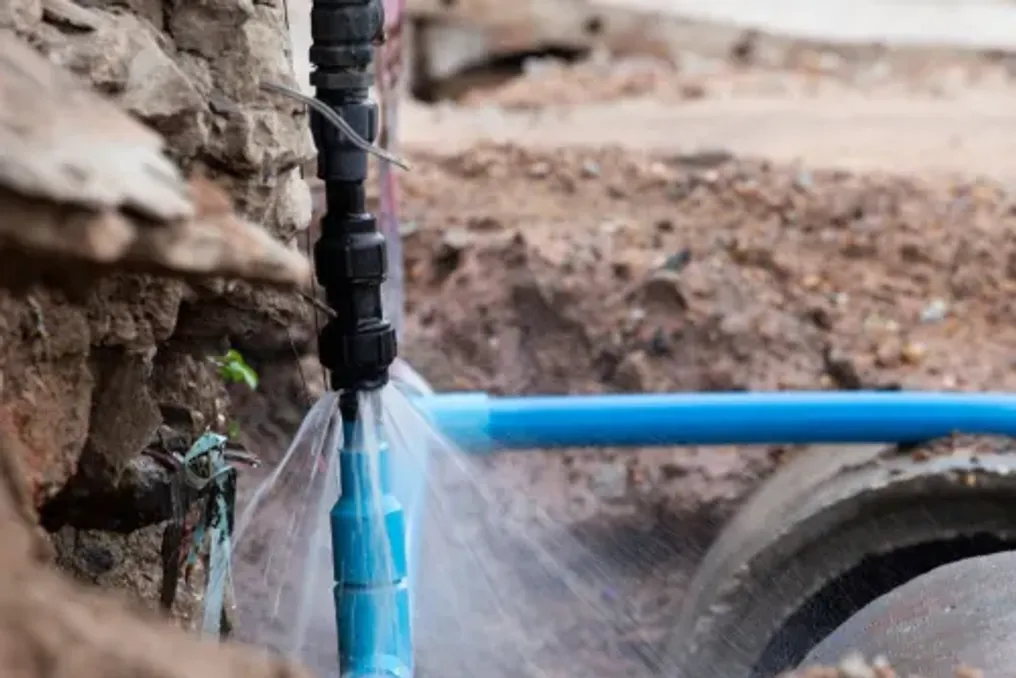
The Minister of Water and Sanitation, Pemmy Majodina, reported that restoring and modernizing outdated water infrastructure in 107 municipalities will require approximately 400 billion rands.
According to her, 107 out of the country's 144 municipalities face critical or recurring water supply issues. This information was disclosed in Majodina's written response to a parliamentary question posed by MK Party MP Siyabonga Mkhize.
This disclosure comes as residents of the municipalities continue to experience severe shortages and interruptions in water supply due to the deteriorating condition and aging of the infrastructure.
Municipalities in poor or critical condition
Siyabonga Mkhize requested information on the number of municipalities experiencing critical or regular water supply failures, referencing the National Water Resources Action Plan published on July 23, 2026, as well as details on national-level interventions, allocated funds, anti-corruption measures, and timelines for restoring reliable water supply.
In her response, Majodina clarified that the National Water Resources Action Plan is based on existing data from government institutions. She noted that the department primarily uses the Blue Drop, No Drop, and Green Drop reports for 2025 to identify municipalities with recurring water supply system failures.
Majodina emphasized that the latest water supply status reports issued by the Department of Water and Sanitation in 2026 provide the most comprehensive and accurate assessments of municipal service performance. These assessments offer the best available picture of municipalities facing systemic water supply problems and having an elevated risk of repeated service interruptions.
According to the 2026 reports, 107 out of 144 of the country's water authorities were in poor or critical condition based on one or more key water supply performance indicators. Majodina added that the National Water Resources Action Plan provides a framework for supporting municipalities suffering from constant service disruptions through a combination of direct support and broader industry reforms.
Direct intervention in three municipalities
Under the plan, the department provides direct support to municipalities through Section 63 of the Municipal Services Act, as well as through interventions where water boards are directed to assist on behalf of the department. Direct interventions under Section 63 have been implemented in three municipalities: the local municipality of Emfuleni in Gauteng, and the district municipalities of uMkhanyakude and uThukela in KwaZulu-Natal.
Majodina reported that the Section 63 intervention in Emfuleni recently concluded, while the intervention in uThukela is in its early stages. She noted that current efforts are focused on planning, coordination, and creating the necessary institutional and financial conditions for effective future implementation.
These interventions run parallel to interventions under Section 139 of the Department of Local Government and Traditional Affairs, which placed the affected municipalities under administration.
Support provided to other municipalities
Majodina also mentioned that interventions aligned with the National Water Resources Action Plan are being implemented in other priority municipalities. In the local municipality of Maluti-a-Phofung in Free State, support is aimed at restoring the functionality of the main water supply infrastructure and improving operational efficiency by engaging executive agents.
In the local municipality of Matjabenng, also located in Free State, measures focus on stabilizing water supply systems through infrastructure repairs and operational support. The plan also includes strengthening Metro Trading Services reforms to address systemic issues in metropolitan areas, including Johannesburg and Ekurhuleni.
Majodina explained that these reforms are focused on strengthening governance, financial management, and allocating funds for water and sanitation services in metropolitan areas to improve operational performance, accountability, and long-term sustainability.
400 billion rands is an infrastructure requirement, not a budget
Majodina stressed that the National Water Resources Action Plan does not involve the direct allocation of funds to specific municipalities. Instead, it serves as a strategic foundation for enhancing the effectiveness and coordination of existing funding mechanisms, as well as attracting additional funding from public, private, and commercial sources.
She stated that no additional funding was allocated for direct interventions under the NWAP. However, based on existing water supply infrastructure needs, the Department of Water and Sanitation estimates that approximately 400 billion rands are required for the 107 water authorities.
Majodina clarified that this estimate of 400 billion rands represents an infrastructure need, not an approved budget. Over the past five years, the department has transferred about 65 billion rands to municipalities. In the current fiscal year, the department has been allocated 13.7 billion rands for infrastructure grants to municipalities.
Of this amount, the Regional Main Infrastructure Grant finances 70 main infrastructure projects across all provinces, and the Water Supply Infrastructure Grant will support 341 projects. Approximately 80% of the allocated funds are directed to the 107 water authorities with the worst performance.
Government outlines anti-corruption measures
Majodina reported that the department has strengthened financial control and implementation oversight through conditional grant frameworks, project monitoring, regulatory supervision, financial reporting, audit requirements, and consequence management. Independent oversight is conducted by the Auditor-General, while the Ministry of Finance and the Department of Local Government and Traditional Affairs provide additional financial and managerial controls.
The 2026 National Water Resources Action Plan also identifies corruption and crime as priority areas. Majodina stated that the National Joint Operations and Intelligence Unit (Natjoints) within the plan is establishing a technical committee to guide Workstream 5 on safety and security.
This workstream will be based on initiatives undertaken within the Water Sector Anti-Corruption Forum, launched by the minister in partnership with the Special Investigation Unit. Measures implemented through the forum include preventing and detecting corruption through enhanced oversight, information sharing, whistleblowing, and audits, as well as investigating allegations, recovering losses, and applying consequences to involved parties.
No timeline for restoring reliable water supply
Majodina stated that the department cannot name a specific date by which reliable water supply will be restored to all affected communities. She explained that circumstances vary between municipalities and individual water supply systems, depending on infrastructure condition, funding availability, project readiness, technical competence, and governance.
Although some interventions are already underway and progressing in this direction, it should be noted that most water authorities are struggling, indicating a decline across the entire sector rather than isolated incidents. The department is implementing long-term institutional reforms aimed at reversing this decline in water supply reliability.
The National Water Resources Action Plan provides for a coordinated program over short, medium, and long-term periods. Majodina concluded that the government's goal is to restore reliable services as quickly as possible, and projects in different municipalities will have their own timelines and phases according to approved project plans and funding.