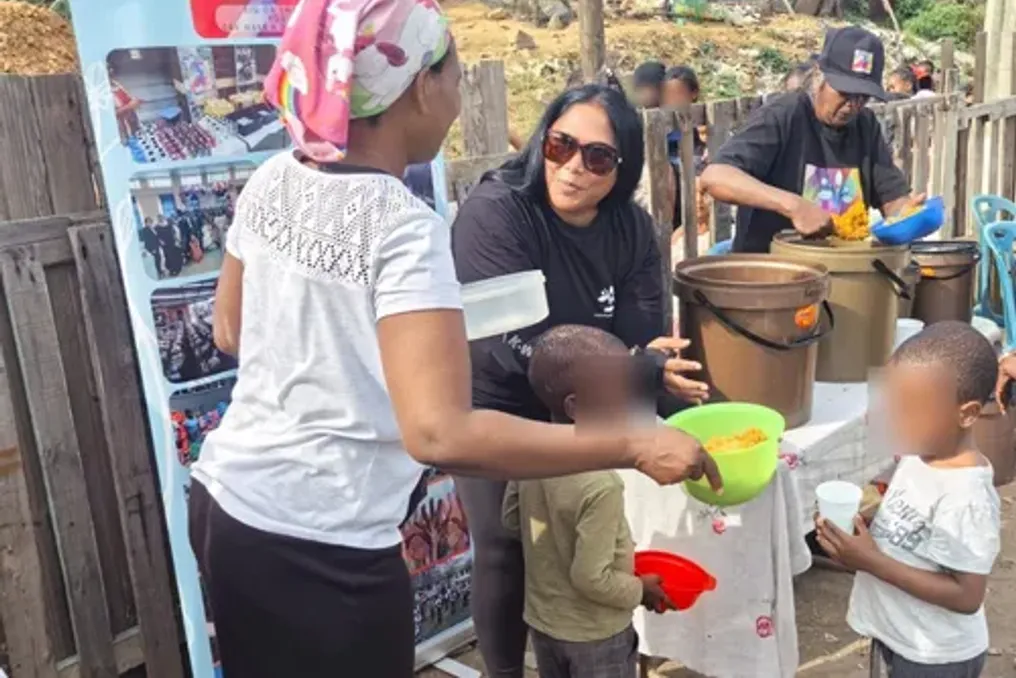
Non-profit organizations are filling gaps for thousands of vulnerable people by providing school lunches, community meal programs, and distributing bread and food parcels.
However, they warn that emergency food aid has its limits, and sustainable funding, employment opportunities, and skills development are needed to address the root causes of hunger.
Shubnam Bhogal, founder of Aurora Hands of Hope, noted that the problem of food insecurity is very real and evident. Their work covers communities such as Welbedacht East, Mount Moriah, Phoenix, Verulam, Tongaat, and Merewent.
Bhogal stated that they help parents trying to stretch limited income across the whole family, elderly people dependent on assistance for basic meals, as well as unemployed individuals and children in families where there is simply not enough food. She also saw people who work but still struggle to cover expenses. The rising cost of basic goods is putting increasing pressure on families. Many people turn to them not because of a single crisis, but because their financial situation remains strained.
According to her, for many families, income must first cover rent, electricity, transport, and other essential living expenses before anything is left for food.
The organization's initiatives include community meal programs, distribution of bread, groceries, and dry goods, as well as support for soup kitchens. Their regular feeding programs reach over 1200 people weekly. The organization aims to reach more people, but their capacity directly depends on the support received. The biggest challenge is sustainability, as the need is constant, but donations and sponsorships are not always stable.
Bhogal specified that feeding requires food, transport, kitchen equipment, gas, packaging, and volunteers, while bread distribution needs constant sponsorship and incurs logistical costs with every event. They constantly strive to bridge the gap between needed aid and available resources, emphasizing that food insecurity must be addressed more broadly than just emergency feeding, requiring greater focus on skills development, employment, and income generation.
The organization is preparing for Diwali and Christmas events to provide food, necessities, and support to vulnerable families.
Aneshni Yegambraam, treasurer of Seva Hands, reported that their main program is a school feeding program that feeds 810 students weekly. They serve communities including Riet River, Motala Heights, Isipingo, Phoenix, Chatsworth, Merebank, Gillitts, Clare Estate, Reservoir Hills, and Newlands East.
Yegambraam stated that their work is based on the belief that no child should go to school hungry. By providing consistent nutritional support, they aim to promote the well-being, dignity, and educational experience of the students. Schools reported that student attendance reached 100% on meal days, which, in her opinion, indicates that the program not only meets the immediate need for nutrition but also encourages students to attend school.
Furthermore, the organization conducts an annual initiative to provide food parcels to support families facing food insecurity. Over the past year, they have observed an increase in demand for food aid due to the rising cost of living and unemployment. Despite being a small NGO with challenges such as limited funding and growing demand, they provided support during Covid-19, floods, unrest, and other emergencies, while continuing their current initiatives. However, they cannot always meet the entire demand, and their commitment remains focused on the school feeding program while assisting with other urgent needs as possible.
Lisa Sukdev, a representative of Food for Love Africa, reported that their organization operates 11 kitchens across South Africa, specializing in preparing nutritious meals. These meals are then collected by non-governmental, non-profit, and community organizations and distributed daily in schools and communities. Some kitchens are located in Phoenix, Verulam, and Chatsworth in Durban, as well as in Pietermaritzburg, Nelspruit, and Gauteng.
Sukdev noted that demand is growing year on year, and even middle-income earners sometimes ask for food because the cost of living is increasing faster than their income. She emphasized that this has a devastating impact, especially on schoolchildren, who unfortunately are served unbalanced meals at school despite the national nutrition program. As of August 31st, the organization has provided 50 million meals over the last six years. Although the organization operates on a volunteer and donor basis, their capacity is limited, and they require funding and donations of fresh vegetables, gas, oil, rice, and grains.
To promote food security, the organization will hold its largest annual fundraiser—The Rice Drive—on October 3rd. Collection points for the convoy at River Range Ranch in Verulam will be located at The Saxony in Springfield Park and Sibaya Casino, starting at 9:30 AM. They call on businesses and communities to come together and contribute. Rice is a staple ingredient in the prepared meals. The event will feature supercars, motorcycles, live performances, children's entertainment, and a free lunch for all visitors who can see the cooking process in the kitchen and learn how it is done most economically.