In the Canada Super60 match, the ball crossed the boundary without touching the batter, and the umpires awarded the team 5 runs instead of six
Read more
Aaj Tak
www.aajtak.in

In the Canada Super60 match, the ball crossed the boundary without touching the batter, and the umpires awarded the team 5 runs instead of six

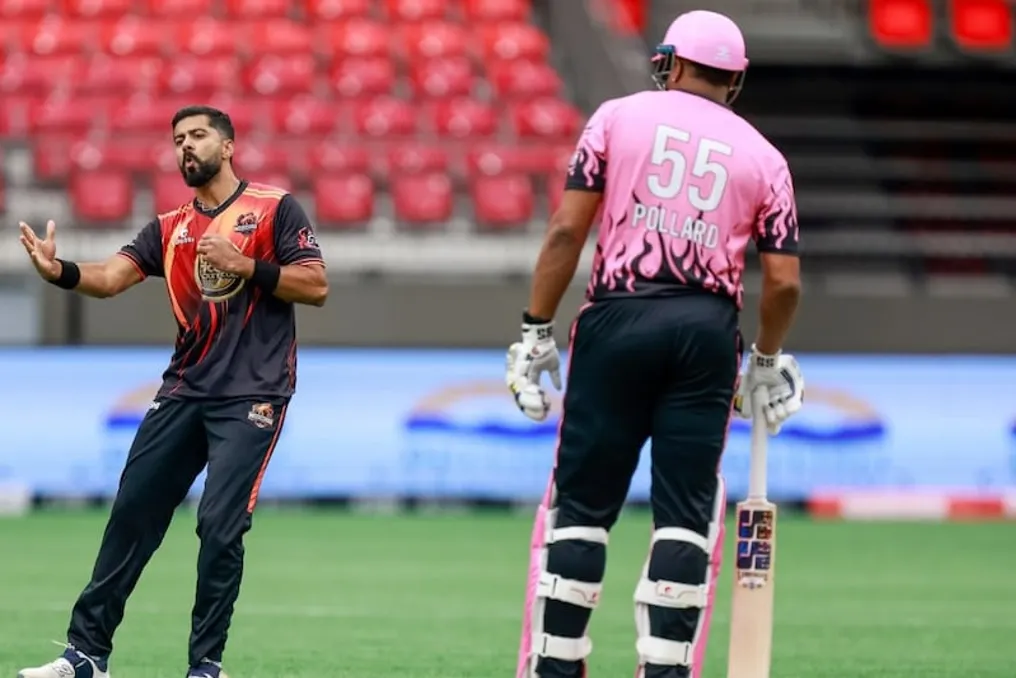
Sometimes scenes occur on the cricket field that can confuse spectators. Such a situation happened during the semi-final of the Canada Super60 tournament when a ball bowled by Ali Khan went beyond the outfield without hitting the batter. Although it looked like a six at first glance, according to cricket rules, the batting team was awarded five, not six, runs.

This incident took place in the match between 'Toronto Secers' and 'Mississauga Masters', held at BC Place stadium in Vancouver. Ali Khan was bowling and delivered a bouncer to Kiran Pollard, who was significantly out of Pollard's reach. The ball flew over the fielder and went outside the outfield. After the ball crossed the boundary, the question arose: is this a six or a wide?

Understanding the rules of cricket here is crucial. A six is only counted if the ball hits the batter's bat and then crosses the boundary. In this case, the ball did not make contact with the batter's bat, so it is not considered a six. Since the ball was a wide and crossed the boundary without contact with the bat, the batting team was awarded a total of 5 runs for the wide.

Video of this unusual moment went viral on social media, sparking active discussion among cricket fans. The video shows the ball leaving the field, which at first glance resembles a six. However, cricket rules clarified the situation: since there was no contact with the bat, it is not a six.

This match took place in the first semi-final of the Canada Super60. 'Toronto Secers' batted first and scored 130/4 in 10 overs. In response, the 'Mississauga Masters' could only reach 121/7, resulting in a victory for 'Toronto Secers' by a margin of 9 runs. In the match, Kiran Pollard scored 40 runs off 16 balls for Toronto, and Andries Gauss played without being dismissed, scoring 33 runs.

Similar stories

Kuldeep Yadav reaches 200 ODI wickets, surpassing Shane Warne in balls bowled
Read more
www.aajtak.in

Kuldeep Yadav reaches 200 ODI wickets, surpassing Shane Warne in balls bowled

In the match between India and West Indies, players from the West Indies demonstrated strong play, dealing a serious blow to the Indian bowlers. John Campbell, Shai Hope, and Amir Jangu each scored a century, bringing the West Indies total to 405 runs. In rainy conditions, Kuldeep Yadav recorded a significant record.

In his 123rd ODI match, Kuldeep Yadav completed his 200th wicket, becoming the second fastest bowler in Indian history to reach this milestone. He is only surpassed by Mohammed Shammi, who took 200 wickets in 104 ODIs. Following him are Ajit Agarkar (133), Zaheer Khan (144), and Anil Kumble/Javagal Srinath (147).

Kuldeep secured his 200th wicket of Kemi Paul, who was caught by Virat Kohli in the long-on region after 45.1 overs. This moment marked Kuldeep's achievement of a double century in ODIs. Furthermore, Kuldeep surpassed Shane Warne in the number of balls required to achieve 200 ODI wickets, completing them in only 6319 deliveries. Among spinners, only Shaklan Mushtaq (5451) and Rashid Khan (5782) achieved this result with fewer balls. Following Kuldeep are Adam Jampa (6385), Adil Rashid (6881), and Shane Warne (6983).

Despite the record attack by the West Indies, Kuldeep remained among the few Indian bowlers who managed to partially contain the pace of the game. In his full quota of 10 overs, he took 2 wickets, conceding 65 runs, resulting in an economy rate of 6.50.

Before the West Indies reached 405 runs, Campbell scored 101 runs off 68 balls, Hope scored 104 runs off 94 balls, and Jangu scored 114 runs off just 77 balls. This was a rare sight in one ODI match where three batsmen score a century.

Cooper Connolly catches impressive ball in air in match between South Africa and Australia
Read more
www.aajtak.in

Cooper Connolly catches impressive ball in air in match between South Africa and Australia

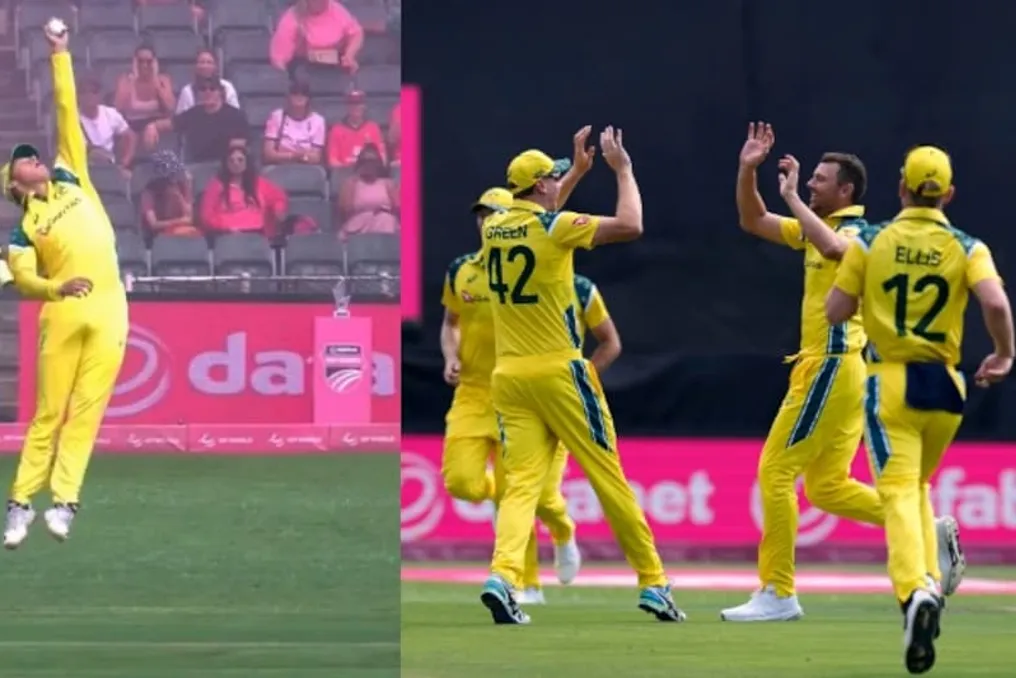
During the second one-day format match between South Africa and Australia, held at Wanderers Stadium in Johannesburg, an incredible moment was demonstrated. Australian captain Mitchell Marsh decided to win the toss and start the game with a ball throw.

On the very first serve, Josh Hazlewood threw a short ball outside the off stump, which quickly flew towards Aiden Markram. Cooper Connolly, positioned at cover point, jumped to the left and caught this stunning ball with one hand, astonishing everyone present.

Thus, the first player for South Africa was dismissed without scoring any runs, and the atmosphere at Wanderers Stadium instantly quieted down. Cooper Connolly, who caught the ball, impressed the bowler himself, Markram.

For Aiden Markram, returning to the field, this match turned out to be extremely unsuccessful. It was the first time in his ODI career that he was dismissed on the very first ball. Thanks to this 'golden duck', he became the sixth South African player dismissed on the first ball in ODI cricket.

The Australian team started this match very strongly, which helped them try to make up for lost ground as they were trailing in the series. In this match, Mitchell Starc rested, and Javier Bartlett was included in the squad instead.

South Africa had previously won the first ODI match by a margin of 67 runs, and now their goal is to win the entire series. However, Cooper Connolly's impressive delivery at the start of the match gave this game new energy.

Captain Shreyas Iyer clashed with the umpire during India vs Japan match
Read more
www.aajtak.in

Captain Shreyas Iyer clashed with the umpire during India vs Japan match

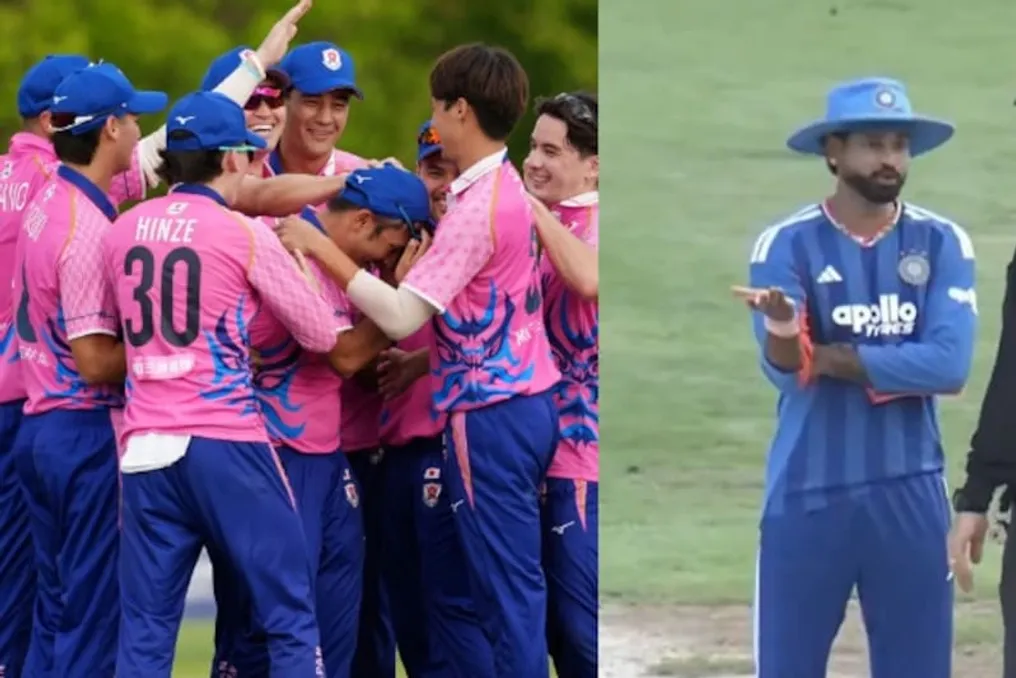
The T20 match between India and Japan in Sano turned out to be much more exciting than expected. Due to rain, the game was shortened to five overs, and India, batting first, scored only 32 runs.

After this, the Japanese team managed to create serious problems for the Indians, and the match went down to the final over. It was in this decisive moment that a tense drama unfolded, leaving everyone in attendance holding their breath.

The situation reached its peak tension in the final over. Japan needed only a few runs to win, and the pressure on the field was immense. Akshar Patel was bowling when umpire Chris Thorpe ruled that one of Akshar's balls was a wide.

The series of wides was already causing difficulties for the Indian team, and the umpire's decision caused strong disappointment for bowler Akshar Patel. However, the situation did not end there. Indian captain Shreyas Iyer lost his composure and immediately walked towards the umpire.

It was evident from the broadcast how angry Iyer was about the decision, and he expressed his dissatisfaction in a very aggressive manner. At such a critical moment in the game, awarding an extra run could have been fatal for India, and Iyer's anger was caused by this.

Considering the anger of the Indian team's captain and the pressure from the players, field umpires Chris Thorpe and Chris Brown held a discussion. Following this, a dramatic turn occurred: the umpires changed their initial decision and ruled the ball as valid. This review fundamentally changed the course of the match.

In this thrilling game, the Indian team maintained psychological resilience after the drama and managed to stop the runs scored in the last balls, thereby preventing Japan from winning. Ultimately, India won this intense confrontation by a margin of two runs. In the five-over match, India scored 32/4, while the Japanese team managed only 30/3.

Popular